
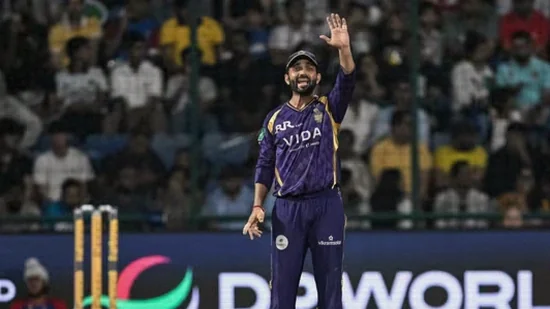
Kolkata Knight Riders’ IPL 2026 campaign ended with a financial picture that looks healthier than the season’s overall feel. This wasn’t a perfectly balanced team built purely on blockbuster buys, nor was it carried by the most expensive names in the squad. The numbers suggest a different route to profitability: more affordable assets overperformed, while several premium additions failed to deliver value at the level their price tags implied.
Key takeaways
- KKR recorded an adjusted value of ₹118.80 crore against a cost base of ₹84.59 crore, resulting in an estimated profit of ₹34.21 crore.
- The surplus was not powered only by star purchases; it was largely repaired by contributors such as Ajinkya Rahane, Finn Allen, Angkrish Raghuvanshi, Kartik Tyagi and Anukul Roy.
- Player-performance output alone is valued above ₹112 crore, with an additional ₹6.17 crore attributed to the captaincy layer.
- Cameron Green, Varun Chakaravarthy and Matheesha Pathirana collectively dragged the balance sheet, offsetting some of the value created by others.
- Rahane’s low-cost contract at ₹1.50 crore generated ₹14.57 crore of total worth, including ₹6.17 crore from captaincy.
The profit number, and what it actually hides
The ₹34 crore-plus headline profit reflects that KKR created more total value than they consumed across the league stage. In model terms, the player-performance segment alone contributed more than ₹112 crore, while leadership input added ₹6.17 crore. In a tournament where margins were tight across the board, that leadership premium becomes a meaningful part of the final ledger.
However, the profit should be read as a recovery story rather than a clean “premium-led” outcome. KKR’s expensive end did not consistently translate into returns. Cameron Green, Varun Chakaravarthy and Matheesha Pathirana together produced a major drag on the financial balance sheet. Green delivered positive output, but the model still placed his worth below what his slab of cost suggested. Varun stayed involved, yet his contribution fell well short of expectations for a ₹12 crore player. Pathirana’s active-window cost was softened through an active-window treatment, but even then his estimated worth remained extremely small.
Value multipliers that lifted KKR
Ajinkya Rahane stands out as the most important financial contributor in KKR’s 2026 season. With a price of ₹1.50 crore, Rahane generated ₹14.57 crore of total worth and left a surplus of ₹13.07 crore. That figure isn’t only about batting. A substantial portion came from captaincy, where the model credits him with ₹6.17 crore.
This distinction matters because it changes how the season should be judged. Rahane’s impact isn’t evaluated solely through runs or tempo; in the ledger, he functions as a value multiplier—turning a low-cost deal into a large tactical and managerial lift. Without that captaincy component, KKR would still remain profitable, but they would lose one of their clearest “value story” entries.
Finn Allen and Angkrish Raghuvanshi are highlighted as the cleanest batting surplus cases. Allen converted a ₹2 crore cost into ₹12.74 crore of worth, finishing with a ₹10.74 crore profit. Angkrish was even closer to the ideal developmental asset profile, producing ₹13.46 crore worth against a ₹2.79 crore cost. KKR didn’t need either of them to be headline reputation picks; they needed them to turn opportunity into returns, and both did so with unusual efficiency.
On the bowling front, Kartik Tyagi delivered the sharpest return on investment. His ₹0.30 crore cost translated into ₹9.60 crore worth, producing a ₹9.30 crore profit—an outcome that is especially impactful given how low his contract was relative to the rest of the squad. Anukul Roy also added understated surplus, generating ₹4.27 crore worth for a ₹0.40 crore cost.
Where the premium bracket fell short
Cameron Green is described as the most complicated case because his season produced meaningful output even if it didn’t meet the price expectations. He generated ₹16.17 crore of worth, which is substantial by ordinary standards. The issue was the purchase expectation: at ₹25.20 crore, KKR were not paying only for solid contribution. They were paying for match-defining dominance, and the model shows KKR closed ₹9.03 crore short of that requirement.
Varun Chakaravarthy’s shortfall is presented as more straightforward and severe. His ₹12 crore investment returned only ₹5.78 crore of worth, leaving a deficit of ₹6.22 crore. For a retained-premium spinner, that underperformance line is heavy. The point isn’t that he contributed nothing—it’s that his season did not come close to matching the financial weight KKR carried for him.
Matheesha Pathirana’s ledger is even colder. His active-window cost was ₹6 crore, but his worth was only ₹0.14 crore, producing a loss of ₹5.86 crore. Tejasvi Singh also hurt the ledger, with the overall result leaving KKR in the red by ₹3.22 crore on his account. Sunil Narine was near break-even, posting ₹11.41 crore of worth against a ₹12 crore cost, but even that relatively balanced outcome underlines the larger theme: KKR’s expensive group did not create the gap their season needed.
Final reading ahead of 2027
KKR’s financial season earns credit without needing romantic storytelling. The adjusted profit of ₹34.21 crore is a strong end result. The ledger indicates that KKR extracted excellent value from undervalued names and also received a significant leadership premium from Rahane.
At the same time, it brings a warning. KKR didn’t become profitable because their highest-cost players fully justified the auction table. Instead, the season rose on the back of low-cost and mid-cost performers who pulled the ledger upward enough to compensate for premium misses. That makes the balance sheet successful, but also slightly unstable.
For 2027, the key question is not whether KKR can find value—they clearly can. The real test is whether the franchise can stop relying on bargains to cover luxuries, and instead build a squad where the expensive pieces contribute close to their price expectations.
Method note and disclaimer
This analysis uses a monetary valuation model that converts player impact into estimated rupee values for batting, bowling, fielding, and captaincy contributions. Player cost is adjusted for season or appearance context where applicable. Fielding-only substitute entries are excluded from the cost base unless the player’s appearance falls under a special replacement scenario, such as a concussion-sub case. The numbers are model-based estimates designed for analytical and editorial interpretation, and they are not official IPL salary accounting or franchise financial reporting.
