
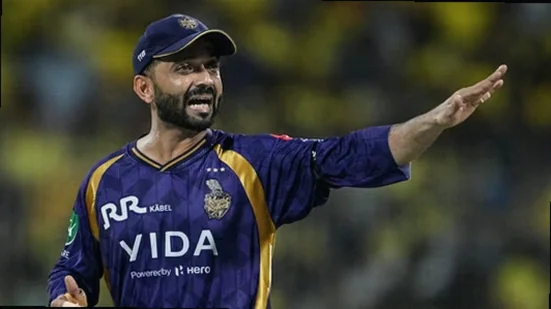
Kolkata Knight Riders sit right at the foot of the IPL 2026 points table after six outings, still searching for their first win. They have managed just one point from a match that ended without a result, making their start to the season feel bleak in every sense. Injuries, absences, and the constant shuffling of combinations have all played a role, but the core issue remains straightforward: the performances so far have not been good enough across the two innings.
The obvious line of thinking is to lead with sympathy. Harshit Rana was ruled out. Akash Deep was also ruled out. Matheesha Pathirana was unavailable at the beginning of the campaign, while Mustafizur Rahman dropped out of the pace options as well. For a T20 team, losing multiple fast-bowling resources is a major setback—particularly for a side that had expected its seam attack to provide variety, control, and the ability to reset after spells. Yet those setbacks explain only part of the slide. They account for instability, but they do not fully justify why the team is stranded at the bottom so early.
That is what the IPL 2026 record up to Match 25 underlines. KKR are averaging just 154.5 runs per innings, the lowest tally in the league sample. On the other hand, they are surrendering 201.0 runs per innings, the highest in the group. Their batting run rate stands at 9.30, while their bowling economy is 10.17. This does not look like a respectable team being dragged down by one missing department. It looks like a side that is being outplayed in both phases of the game.
The pace losses damaged the structure before the season could settle
There is a strong case for KKR being impacted by how their campaign was built. Their plans clearly revolved around pace resources expected to offer options, keep control, and help them recover through the course of an innings. When those ingredients are removed early, the squad’s balance and execution suffer.
Harshit Rana’s absence mattered beyond the simple loss of another Indian fast bowler. He was part of the team’s overall balance. Akash Deep’s withdrawal further weakened the domestic seam group. Pathirana’s delayed availability reduced the premium overseas pace threat KKR had backed to deliver wickets and death-over quality. Mustafizur’s exit also removed another left-arm seam variation from the mix. Taken together, it meant KKR never truly got to unleash the attack they had intended to use consistently.
The fallout is visible most sharply in the powerplay. KKR have conceded 301 runs in 150 legal balls during the first six overs, which works out to an economy rate of 12.04. They have taken only three wickets in that period, meaning they are letting batters go for roughly 50 balls before the first breakthrough. That is a disastrous pattern because it is not only about boundary leakage—it is about allowing opponents to settle, line up their shots, and operate from a position of control almost immediately.
This is where the availability story carries weight. Teams can sometimes absorb a batting absence or two by reshaping roles. But fast-bowling instability is far harder to mask, especially at the start of a tournament. Early-innings bowling is built on trust, rhythm, and repeatable plans. KKR have had too little of all three. They are not beginning innings on their own terms; instead, they are often chasing the match from the first ball.
There is, however, an important qualification. The bowling is not completely broken from start to finish. In overs 7 to 11, KKR have been comparatively more effective, conceding 168 runs from 120 deliveries at an economy of 8.40. That suggests there is some control once the ball gets older and when spin and matchup-based bowling begin to matter more. Sunil Narine has still contributed with his economy, and some of the middle-overs squeeze remains in place. The issue is that the good spell is too short. KKR lose too much too early and then ask the rest of the innings to repair damage that should not have been done in the first place.
The batting has been a bigger failure than the injury story
If the bowling needs context, the batting demands criticism. There is no comfortable way to avoid that conclusion. KKR’s batting struggles have not been undermined in the same direct manner by the Harshit-Akash-Pathirana-Mustafizur absences. Their problem is simpler: the unit has underperformed.
The team’s average score of 154.5 is not a random dip. It reflects a batting group that has not stamped itself on games in a sustained way. Across 598 legal balls, KKR have accumulated 927 runs, producing a run rate of 9.30. Their dot-ball rate is 33.61%. More than 62% of their runs have come through boundaries, which adds to the sense that their scoring has been concentrated into bursts rather than built through consistent pressure.
These figures point to a clear weakness. KKR look overly reliant on release shots, and they have not been consistently effective at controlling the gaps between deliveries. They are not creating pressure through tempo, choosing instead to live off sudden acceleration. That approach can work in one innings, but it does not hold up over a whole season.
The individual numbers mirror the same story. Angkrish Raghuvanshi leads with 190 runs at a strike rate above 157. Ajinkya Rahane has 152, while Cameron Green has 135. Those outputs are valuable, but they are not the kind of totals that can drag a struggling team upward on a regular basis. At present, there is no batter in the lineup producing a season-defining impact that consistently shapes matches from the centre. KKR’s runs are arriving in fragments rather than through sustained command.
The innings phase breakdown sharpens the criticism. In the powerplay, KKR score at 9.31, which does not look disastrous at first glance, but their dot-ball percentage there is 43.60%. That is a sign of an uneven start—there are boundaries, but not enough control. Between overs 7 and 11, they do build at 10.40, showing they can create momentum. The problem is what comes next: the pressure drops away. From overs 12 to 16, their rate slips to 8.55, and at the death—often where contests are decided—they score at only 9.06. That is not the profile of a side that can flirt with momentum without actually owning it.
KKR do not control enough phases to win regularly
This is the most important cricket point of the season. Strong T20 sides do not have to dominate every segment of the game, but they do need to seize enough phases to create match control. KKR are not doing that. With the ball, they are being hit hard in the powerplay. With the bat, they are not finishing innings with enough authority.
Their most reliable period with the ball is the first middle stretch, yet it cannot carry the entire side. In batting terms, they have one noticeable burst in overs 7 to 11, but it does not grow into a full-innings surge. As a result, KKR spend parts of matches reacting instead of shaping the contest.
This is why the season feels worse than simply an injury-riddled campaign. Teams missing players often still show a clear identity. They might bat brilliantly while bowling poorly, or they may defend well even if they cannot post huge totals. KKR do not currently have that clarity. Pace losses damaged their structure, but the batting has not offered a counterweight. Their best phase is too limited, while their worst phase is too harmful. Between those extremes, the overall pattern looks unstable.
Unlucky, yes. But also genuinely bad
The cleanest conclusion is not that KKR have been unlucky or only bad. It is that they have been both, with the poorer cricket doing most of the damage. The injury and absence setbacks are real and significant. Losing Harshit Rana and Akash Deep, starting the season without Pathirana, and then losing Mustafizur from the pace mix would hurt any squad. That context matters, and it helps explain why KKR’s attack has looked improvised and why the powerplay has become such a recurring problem.
But bottom-of-the-table teams without a win do not end up there on squad issues alone. They get there because the cricket beneath the disruption is not strong enough. KKR’s batting has been too soft for too long. Their bowling has shown one decent holding phase, but too little authority elsewhere. Their senior players have not consistently shaped enough matches. Their phase control has been weak. The numbers do not suggest a side that is merely waiting for personnel to return—they suggest a struggling team whose flaws have been exposed quickly once the early safety net disappeared.
KKR have had rotten luck, but they have also played rotten cricket. Injuries have lowered the ceiling, and the performances have lowered the floor. That combination is why they are at the bottom.
