
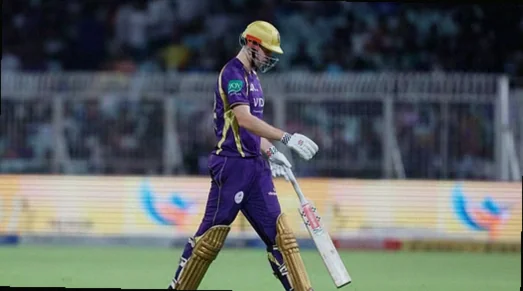
Kolkata Knight Riders’ IPL 2026 campaign ended with an uncomfortable truth: the franchise’s biggest overseas gamble did not fully justify its auction premium, even though Cameron Green delivered meaningful cricketing value at times. KKR entered the tournament with Green as a central piece of their balance-sheet planning, and while the season kept them competitive deep into the league phase, the final accounting suggested the overall return was far tougher than the promise that came with a record-style outlay.
Green’s auction price and the financial gap
KKR secured Cameron Green for ₹25.20 crore, positioning him as an all-round solution who could extend batting depth, contribute overs, safeguard the fielding unit, and swing match momentum across both disciplines. With the league season now finished, the analysis has no remaining-match buffer to soften the numbers. In that completed-season ledger, Green’s recovered worth is ₹16.17 crore, leaving KKR with a ₹9.03 crore hole on their investment.
The season’s story is not that Green failed to contribute. The rating-adjusted framework assigns him a substantial match impact value of ₹16.17 crore. The problem is straightforward: the purchase price was set at ₹25.20 crore, and at that level, KKR needed sustained elite output over multiple weeks, not a pattern defined by a couple of very strong performances and several instances where the cost line stayed ahead of the on-field return.
When the numbers are translated into cost-recovery terms, Green gave back 64.17% of his auction price. That implies KKR effectively lost about ₹35.83 for every ₹100 committed to him—an outcome that becomes especially significant for the franchise’s highest-profile overseas acquisition in the auction history of the league.
Per-match cost and how often value crossed the line
Looking at the season through a per-appearance lens, Green’s counted outings totaled 14. Spread across those games, his IPL 2026 season cost KKR ₹1.80 crore per match. His value surpassed that per-match threshold only twice, meaning the investment did not consistently pull its weight against the spending level. Even though some other matches were close enough to prevent the ledger from turning into an outright financial collapse, the overall direction remained negative.
At a price like this, a top-tier overseas all-rounder cannot simply create occasional spikes; the match economy has to tilt toward his contribution often enough to justify the bill. Green did generate those surges, but not frequently at the level required to erase the recurring shortfalls.
The two games that saved the season from a harsher verdict
Green’s ledger includes two standout matches that delivered genuine surplus value. These performances matter because they keep the narrative from becoming only a failure label; they show KKR why they pursued Green’s profile in the first place.
-
In Match 60 vs Gujarat Titans, Green’s adjusted worth reached ₹5.99 crore, producing a profit of ₹4.19 crore for that match.
-
Earlier, in Match 25 vs Gujarat Titans, he again looked like a premium buy, with worth of ₹4.51 crore and a profit of ₹2.71 crore.
-
Those two nights demonstrated the kind of match-shaping influence expensive all-rounders are expected to provide—batting impact, contextual importance, and all-round presence combining into a high-return equation.
In these games, the price did not look irrational. It looked ambitious—but it also looked correct for the moment. The question for KKR became what happened between those peaks.
Near-par returns that softened the fall, but didn’t create surplus
Between the big highs, Green produced several performances that landed close to his per-match cost yet still failed to turn into net gain. They prevented the ledger from collapsing completely, but they were not enough to build an overall surplus.
-
In Match 38 vs Lucknow Super Giants, the Super Over win brought Green value of ₹1.79 crore—almost identical to his ₹1.80 crore per-match cost, but still marginally short.
-
In Match 51 vs Delhi Capitals, his adjusted worth came in at ₹1.67 crore, again hovering near par while remaining negative on the ledger.
These close-to-break-even nights diluted the damage, but they did not reverse the trend. The final result still reflected a season where the investment did not deliver enough repeatable upside.
The worst nights that erased the buffer
While Green’s highs proved the concept, several heavy defeats within individual matches dragged the accounting down sharply. These are the games that erase the cushion created by the best performances.
-
In Match 22 vs Chennai Super Kings, Green’s adjusted worth dropped to -₹0.45 crore, translating into a match loss of ₹2.25 crore.
-
In KKR’s final league match against Delhi Capitals, his value was again negative at -₹0.21 crore, causing a match loss of ₹2.01 crore.
At a purchase price of ₹25.20 crore, these dents are not minor. When the cost line is already high, a few negative swings can dominate the season’s arithmetic.
Batting carried the ledger; bowling didn’t complete the all-round case
Green’s strongest department, and the main reason his season value did not collapse further, was batting. He scored 322 runs off 221 balls, striking at 145.70. His batting average stood at 32.72. In impact terms, his batting produced 346.81 points, clearly ahead of the other areas of his contribution.
That imbalance is central to understanding the investment outcome. KKR bought an all-rounder, but the monetary ledger suggests the financial case was held together primarily through batting rather than a fully integrated all-round impact.
Still, those batting figures are not trivial. A strike rate above 146 with that volume gives a middle-order or floating role enough attacking credibility, and the rating-adjusted layer also rewards context and pressure beyond raw scorecard weight. Green was not a passenger with the bat; he provided productive phases that kept his model relevance alive.
The issue was that his bowling returns did not match the commercial expectation tied to his profile. Green bowled 22 overs, took seven wickets, and conceded at an economy rate of 10.64 runs per over. Seven wickets can help in isolation, but the run rate reduced the premium value. At this auction cost, KKR needed Green’s bowling to either control phases more reliably or land higher-leverage breakthroughs with greater regularity.
Instead, the bowling contribution sat closer to supplementary value than to the kind of premium all-rounder value KKR were paying for.
Fielding, however, was a positive. Green took eight catches and the ledger shows no drops. That added 58.90 impact points and removed avoidable deductions. But fielding alone cannot rescue the financial season of a ₹25.20 crore investment. It can polish an already strong ledger; it cannot bridge a ₹9.03 crore deficit when batting is doing most of the heavy lifting and bowling is not returning enough.
KKR’s uncomfortable verdict: not a failure, but a failed price
The fair conclusion is uncomfortable for KKR. Cameron Green did not look like a broken player in IPL 2026; he looked like a player with real impact. The investment, though, did not land at the level required for the spending level.
The ledger indicates he delivered ₹16.17 crore of value across the season while KKR committed ₹25.20 crore. The gap between those two figures defines the whole narrative: KKR did not buy Green merely to be useful in the squad. They expected him to shape matches consistently—tilting match-ups, protecting balance, influencing multiple phases, and reducing dependency on other parts of the XI.
What KKR received was a batting-led season with two major value returns, a handful of near-par matches, and too many games where the cost line ran ahead of the cricket.
Even the model’s base impact worth was harsher, sitting at ₹9.03 crore, and the rating-adjusted method lifted him to ₹16.17 crore by crediting context-sensitive quality that plain scorecard reading might miss. That actually strengthens the conclusion: even after granting that extra credit, Green still ended up ₹9.03 crore short versus his auction price.
For KKR, the danger is clear—purchasing a rare profile over repeatable return. Green’s skill set is exactly the sort of thing auctions reward, and rare skill sets come with rare price tags. But in IPL 2026, the flashes were real, the recovery was respectable, and the loss was still heavy.
Method note and disclaimer
This analysis is based on a completed-season monetary ledger for Cameron Green. Because KKR’s IPL 2026 campaign is finished, Green’s full ₹25.20 crore auction price is charged against the output produced in that season rather than being spread across possible future matches. Where relevant, fielding-only noise is excluded from the appearance logic, and the final worth is calculated using a rating-adjusted monetary model that combines match impact, role value, batting, bowling, fielding, and context-sensitive manual ratings.
The figures should be treated as an analytical estimate of cricketing value translated into monetary terms, not as an official IPL accounting record or a statement about salary judgment. The model is designed exclusively for measuring performance return against auction cost and may differ from franchise evaluations that can include off-field value, squad balance, injury coverage, marketing impact, and long-term planning.
