
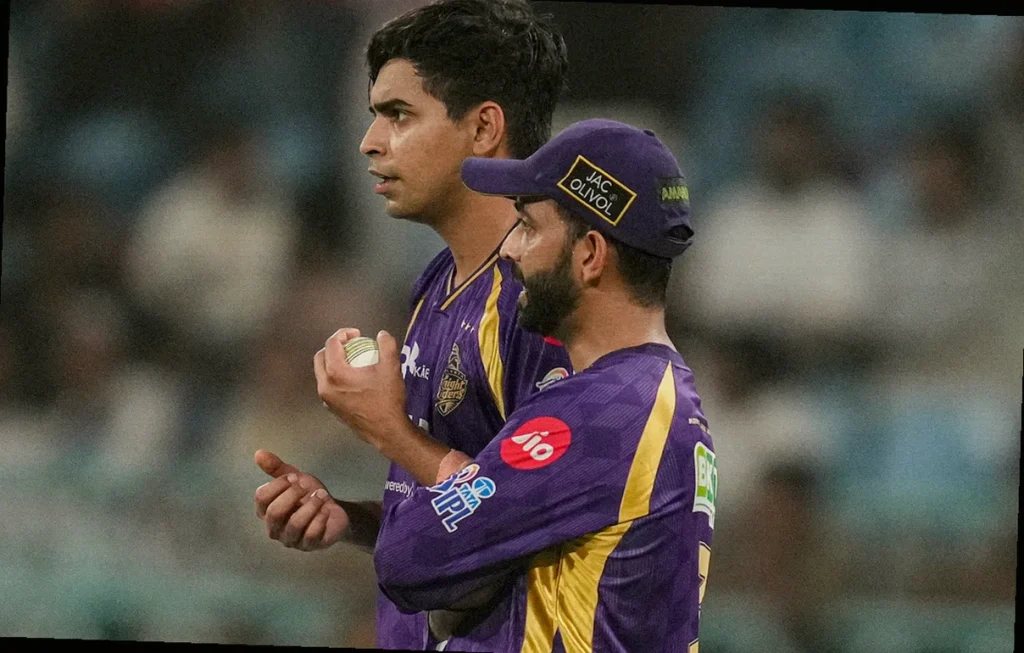
Lucknow Super Giants and Kolkata Knight Riders delivered a tense IPL 2026 Sunday thriller that went right down to a Super Over, the tournament’s first of the season. With 17 runs required to defend in the last over, KKR handed the ball to young fast bowler Kartik Tyagi—an assignment that quickly became a test of nerves.
Quick facts
- Match: Lucknow Super Giants vs Kolkata Knight Riders (IPL 2026)
- Stage: Sunday’s game; tournament’s first Super Over
- KKR’s target to defend: 17 runs in the final over
- Bowler tasked: Kartik Tyagi
- Key incident: Tyagi bowled two full tosses above the waist to Himmat Singh
- Review: Second full toss was reviewed; decision upheld for the batter
- Crucial outcome: Mohammed Shami hit a six off the last ball to level scores and force a Super Over
Tyagi opened the pressure with two full-toss deliveries that went above Himmat Singh’s waist height. On the surface, that set alarm bells ringing because the usual punishment rules can prevent a bowler from continuing after two such high full tosses. Yet in this instance, the next steps played out differently—Tyagi was allowed to complete the over.
The second high full toss did not escape scrutiny. Tyagi challenged the call, but the review outcome went against him, with the ruling siding in favour of Himmat Singh. Even so, many watching from the stands and screens were surprised that Tyagi remained in the attack, until the finer detail of the IPL regulations came into focus.
Why Tyagi wasn’t suspended
The explanation sits in Clause 41.7 of the IPL 2026 Playing Conditions, which draws a separation between an “unfair” and a “dangerous” ball. Under these provisions, a ban applies only after a second delivery is judged to be “dangerous,” not merely after an unfair-looking high ball.
Clause 41.7.1 states that any delivery that passes—or would have passed—above the waist height of the striker, who is upright at the popping crease, is to be treated as unfair, regardless of whether it is likely to cause physical harm. It also specifies that if the umpire deems the ball to fall under this category, the umpire must call and signal a No ball immediately.
Clause 41.7.2 goes on to define what makes a delivery dangerous. It says the ball becomes dangerous when the umpire at the bowler’s end believes there is a risk of injury to the striker. In reaching that judgement, the umpire must ignore any protective gear the batter is wearing, and factor in elements such as the speed, height, and direction of the pitch, the striker’s skill, and the repeated nature of such deliveries.
In the moments after the two high full tosses, Tyagi was initially taken off the field as KKR prepared to swap him out with Anukul Roy, anticipating the suspension. However, once the umpires confirmed that the second full toss was not classified as “dangerous,” the decision was reversed and Tyagi was permitted to return.
That sequence still left Himmat Singh to face the Free Hit, and he made it count by smashing four runs off that delivery. Tyagi then steadied the situation on the next ball, taking a wicket immediately, and conceded only one run in the two balls that followed.
Even after the wicket and the tight finish, the endgame swung in a dramatic fashion through Mohammed Shami. An unexpected burst from Shami brought LSG level with KKR’s total, and he did it by striking a six off the last ball—forcing the match into a Super Over.
