
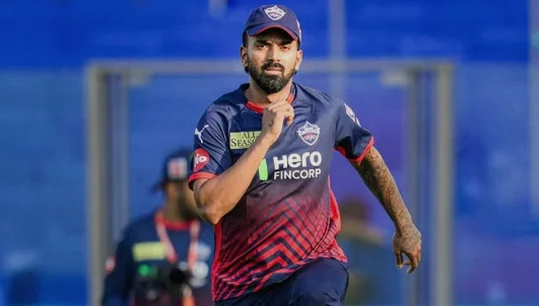
The shortest format of white-ball cricket is changing fast, and the way teams approach powerplay batting has been at the centre of it. New-age openers such as Abhishek Sharma, Vaibhav Sooryavanshi and Priyansh Arya have helped redefine what “starting aggressively” looks like in T20. Even established names are adjusting, and KL Rahul is a clear example of a player reshaping his mindset to stay relevant in the modern IPL.
The 34-year-old wicketkeeper-batter, who grew up in Bengaluru, made his Indian Premier League debut in 2013 with Royal Challengers Bengaluru. Over the years, he went on to represent four additional franchises and has amassed more than 5600 runs across 145 innings. Rahul’s rise peaked in a big way in 2018 for Punjab Kings, when he struck 659 runs at a strike rate of around 159.
That season set a benchmark for him, and he followed it with another standout campaign three years later. In 2020, he won his first Orange Cap after scoring 670 runs, though his strike rate dipped to roughly 130. Since that breakthrough, Rahul has largely delivered on the big stage, with 500-plus runs in every IPL season except IPL 2023.
2018 breakthrough to 2023 setback
During IPL 2023, while leading Lucknow Super Giants, Rahul managed 274 runs in nine matches. His campaign ended early when he was ruled out for the remainder of the season due to a significant right thigh injury. It was a sharp interruption after the consistency he had shown in previous years.
Still, questions have lingered about his T20 strike rate in the years following his peak, often sitting in the 130–140 band for most seasons. What’s different now is the appearance of a more attack-minded Rahul—one who is not simply stabilising the innings but looking to play with a lot more freedom from the start.
2026 IPL: Powerplay-first Rahul
In the 2026 IPL campaign so far, Rahul has emerged as one of the leading contenders for the Orange Cap. He has already scored 433 runs in nine matches at a strike rate above 185, a number that marks a noticeable shift in approach. With more games still available, his total is expected to grow further if Delhi Capitals manage to qualify.
The key to this transformation is his intent during the powerplay. In that phase, only two fielders are allowed outside the 30-yard circle, and Rahul is using the field restriction to attack early rather than wait for later overs. The result has been a more proactive style at the top, aligned with how modern T20 teams want their openers to operate.
Rahul also explained the shift in thinking publicly, focusing on how the powerplay has become even more decisive in recent seasons. He pointed out that teams increasingly follow a pattern: those who dominate the first phase often carry that advantage into the rest of the chase or innings. He added that, earlier, matches were more commonly settled between the 14th and 20th overs, whereas now the powerplay has taken on greater weight.
He said the message from management this season was clear: bat at the top and play with freedom. Rahul noted that teams are targeting totals of around 60 in the powerplay overs, and having that instruction gave him time to map the plan to his own skills. His goal, as he described it, has been to go into each game with that intent—knowing success won’t always come, but the direction is correct.
Rahul’s quote, as he put it, framed the mission simply: maximise the powerplay because that is the demand of both T20 cricket right now and his team’s plan for the season. The aggressive freedom he has adopted seems to be directly connected to that focus.
Mindset, resilience and the white-ball journey
Beyond IPL numbers, Rahul has often been defined by mindset and resilience. He has repeatedly bounced back after difficult stretches, and he has spoken about how he was once viewed through a narrow lens in white-ball cricket. At one stage, he was overlooked for T20 and tagged primarily as a Test specialist due to his technique and patience at the crease.
Over time, he has challenged that perception, not only from outside but also within his own approach. Rahul has become a significant figure in India’s ODI setup in recent years, scoring around 3400 runs in 86 innings at an average close to 51. As the calendar turns, India will look to build on those returns while attention shifts to the 2027 ICC Men’s Cricket World Cup following the IPL.
In T20 internationals, Rahul has scored 2265 runs in 72 matches for India. However, he has not played the format since being dismissed for 5 in the semifinal of the 2022 T20 World Cup against England.
Rahul reflected on that earlier era as well, saying that ten years ago he would have given anything to be part of a T20 team. He recalled how he wasn’t rated as a T20 player and was not considered a strong white-ball option, with people calling him a Test batter instead. For him, breaking out of that mould, developing his white-ball game, and reaching this point is something he is proud of.
He acknowledged that along the way there were mistakes and areas where he could have done better. But he stressed that the pride comes from giving his best every time he played, and preparing to give himself the best possible chance to succeed.
Quick facts
- KL Rahul is a 34-year-old wicketkeeper-batter from Bengaluru.
- IPL debut: 2013 for Royal Challengers Bengaluru.
- IPL franchise record: played for five franchises in total, with 5600+ runs in 145 innings.
- Breakthrough season: 2018 for Punjab Kings—659 runs at a strike rate around 159.
- First Orange Cap: 2020 for Punjab Kings—670 runs at a strike rate around 130.
- IPL 2023: 274 runs in nine matches for Lucknow Super Giants; ruled out after a right thigh injury ended his season.
- 2026 IPL to date: 433 runs in nine matches at a strike rate above 185, making him a leading Orange Cap contender.
- Rahul’s stated focus: maximise powerplay batting with greater freedom at the top of the order.
- ODIs for India: around 3400 runs in 86 innings at an average near 51.
- T20I record for India: 2265 runs in 72 matches; last T20I involvement ended with dismissal for 5 in the 2022 T20 World Cup semifinal vs England.
