
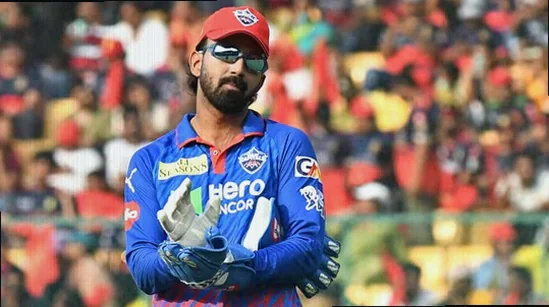
What’s going on with KL Rahul? For Delhi Capitals supporters, the concern isn’t limited to a dip in batting form—it’s the combination of struggles with the bat and worrying mistakes behind the stumps that has raised serious questions. When a top-order batter is producing numbers but failing to change the course of games, and at the same time letting chances slip as a wicketkeeper, the margin for error quickly disappears. In that context, DC effectively have far fewer reliable options to drive victories, especially when games swing on small moments.
Key takeaways
- Against Sunrisers Hyderabad on Tuesday night, KL Rahul’s wicketkeeping errors directly helped Abhishek Sharma stay alive on 49 and go on to score 135.
- The key incident came in the ninth over of SRH’s innings, when Rahul failed to complete an easy run-out chance at the striker’s end.
- Rahul has recorded two fifties this season: 92 versus Gujarat Titans and 57 versus Royal Challengers Bengaluru.
- In the chase against GT (211), DC still needed help at the finish, with Miller’s late efforts preventing a heavier defeat.
- Against RCB, DC chased 176, but Rahul’s innings fell away after a promising start, echoing concerns from the GT game.
Wicketkeeping mistakes that changed the game
The most troubling part for DC has been Rahul’s work behind the wicket. During SRH’s innings, Abhishek Sharma was nearing a big breakthrough when a simple opportunity was handed over. In the ninth over, Abhishek nudged a delivery off his pads and attempted a quick two. The fielder collected the ball and fired it to the striker’s end almost immediately, making the dismissal look routine.
But Rahul couldn’t gather and execute the chance. The result was costly: instead of SRH being denied momentum early, Abhishek survived and went on to post 135, pushing Delhi fully out of the contest.
This wasn’t even an isolated lapse. A few days earlier, in a match against Chennai Super Kings, Rahul had committed a similar sort of error. Ayush Mhatre—benefiting from the opening—went on to score a fifty. For a franchise relying on sharp execution in tight T20 margins, those are the kinds of moments that keep piling up pressure.
Batting output, but not the finishing impact
Rahul’s batting record so far includes two fifties. He made 92 against Gujarat Titans and followed it with a 57 against Royal Challengers Bengaluru. On paper, those scores look like substantial contributions, but the concern is the impact relative to the situation and the team’s finishing needs.
In the GT chase, DC were chasing 211 to win. Rahul got them moving and looked set to take the game deep, but the finish never truly came from his end. Without the late work from Miller, Delhi could have ended up losing by a large margin. There was also a dramatic twist in the climax: with the equation reading 2 off 2, Miller suffered a mental lapse and surrendered the match in a way DC wouldn’t have expected.
When it comes to RCB, the chase target was 176. Rahul began well and gave DC a solid platform. However, just like the pattern that surfaced in the GT fixture, his innings lost momentum against the flow of the game, and the opportunity slipped away rather irresponsibly.
Even if supporters could forgive a batter for not always showing a ruthless “killer instinct” with the bat, the glove work is a different issue. The article argues that such wicketkeeping errors are simply not acceptable, particularly for an established player expected to deliver under pressure in the shortest format.
What DC should do next
With IPL intensity and constant movement across venues, the piece suggests DC must address Rahul’s role and performance quickly. One possibility raised is that Rahul may want to step back from wicketkeeping duties, or at least take a break from time to time. If that is the direction, Delhi would need to identify a practical solution—because the team needs Rahul primarily as a batter more than as a wicketkeeper, especially if their batting unit still hasn’t looked consistently potent.
At the same time, the expectations from the stands remain high. Rahul is viewed as a key figure by Delhi Capitals fans, with hopes that he can provide the spark and help guide the franchise to its first IPL title. The comparison is made to Shreyas Iyer’s situation at Punjab Kings—where fans were hoping he would revive a dormant side. Against those expectations, the article’s conclusion is blunt: Rahul has not delivered enough to match the belief placed in him.
