
Punjab Kings suffered a brutal swing in their chase after a costly moment in the middle overs, with Heinrich Klaasen surviving a clear chance on 9. Sunrisers Hyderabad then built on that reprieve to post 235/4 in Hyderabad and eventually defeat PBKS by 33 runs. Klaasen struck 69 off 43 balls, while Ishan Kishan added 55 off 32. Despite Cooper Connolly’s unbeaten 107 that kept Punjab in the hunt deep into the chase, the damage from earlier missed opportunities proved too heavy to recover from.
Hyderabad sets 235/4 as Klaasen and Kishan take control
SRH’s total was shaped by two phases: early momentum from Kishan and the long, high-impact rebuild from Klaasen after a lifeline. Kishan provided the early surge, while Klaasen supplied the innings-defining acceleration that made Punjab’s bowling task tougher as the match moved into the middle overs. With Connolly later firing for PBKS, SRH still managed to hold the scoreboard pressure, and the final margin reflected how expensive those early reprieves became.
Klaasen’s reprieve shifted the ninth-over storyline
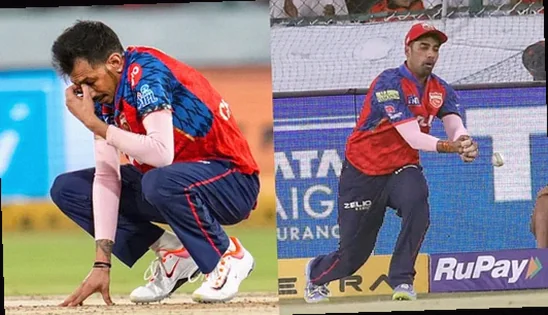
The most decisive error arrived on the fourth ball of the ninth over. Yuzvendra Chahal bowled to Klaasen when SRH were already in motion, yet still within Punjab’s reach. Klaasen attempted a sweep but failed to place it properly, with the ball running to Shashank Singh at deep backward square. Punjab had effectively set up the dismissal: Chahal had created the opportunity, Klaasen had offered the wicket, and Shashank had the catch to finish it. Instead, the chance was dropped.
Klaasen had been on 9 when he was let off, but he went on to finish with 69. He added another 60 runs after that moment, and PBKS ultimately lost by 33—turning one missed take into a match-turning gap in the score progression.
The fielding slip’s cost: money-model impact of the dropped catch
Beyond the cricketing consequence, the reprieve carried a quantifiable “impact” price in a cricket impact framework used by the author. In that approach, Klaasen’s full innings contribution is valued at ₹3.69 crore. Shashank’s dropped catch occurred when only 9 of Klaasen’s 69 had been scored, meaning the remaining 60 runs are treated as the portion of output enabled by the survival.
- Model estimate for Klaasen’s full innings impact: ₹3.69 crore.
- Runs added after the reprieve: 60 (from 9 to 69).
- Share of post-drop output: the remaining 60 accounts for roughly 87% of Klaasen’s innings output in the model’s framing.
Using that structure, the missed catch is assessed as unlocking approximately ₹3.21 crore of Klaasen’s eventual match value for SRH.
- Delivery-by-delivery stricter view (only balls faced after the reprieve): around ₹3.09 crore.
- Broader linked view (connecting the drop to the share of final innings value that came after survival): about ₹3.21 crore.
- Both views place the “mistake cost” at above ₹3 crore.
In plain terms, the error was not just a fielding lapse; it transferred a valuable asset to SRH. Chahal produced the wicket-ball, Shashank failed to complete the dismissal, Klaasen transformed the life into a high-value innings, and SRH reaped the benefit.
Chahal’s created chances weren’t cashed in
The damage from that first dropped chance was amplified by another missed opportunity off Chahal later in the innings. When Ishan Kishan was reprieved, he capitalised immediately—adding 37 runs after that drop and finishing on 55 off 32. In the same impact-money framework, the post-drop segment for Kishan is valued at roughly ₹1.36 crore.
Taken together, the two missed catches off Chahal—one against Klaasen and one against Kishan—enabled 97 runs after the reprieves. The combined post-drop batting value is assessed at approximately ₹4.45 crore.
- Post-drop runs enabled after the two missed catches: 97 runs combined.
- Post-drop value for Kishan (after his reprieve): ~₹1.36 crore.
- Combined post-drop value from Klaasen and Kishan reprieves: ~₹4.45 crore.
That figure is presented as a better reflection of the hidden loss than bowling economy alone. Economy measures runs conceded, and wicket columns record dismissals completed—but neither stat records the catch that should have ended Klaasen on 9, the 60 runs that followed, or the ₹3 crore-plus value handed back to SRH through one dropped opportunity.
Connolly’s century couldn’t erase the first-innings damage
PBKS’s chase made the first-innings waste feel even sharper. Connolly’s unbeaten century—107*—gave the visitors a route into the game, but a 236 chase requires near-perfect execution, particularly against a side that has already seized momentum through key phases. Punjab’s fielding had already taken away that margin. SRH’s 235 therefore carried not only runs, but at least one avoidable, match-defining middle-overs innings inside it.
Klaasen did not need a second invitation after the ninth-over reprieve. Punjab gave him one, and he added 60 more to finish with 69. SRH went on to win by 33.
The match also left Shashank’s season as a catcher under fresh scrutiny. This drop added a hard number to a theme that had already been raising questions, with the reprieve valued at about ₹3.21 crore in this impact framework.
Method note on the rupee impact calculations
The valuation is based on a cricket impact model created by the author. It evaluates batting contribution using runs scored, scoring rate, match situation, phase pressure, and role difficulty, then converts that impact into a rupee figure using the player’s auction price and expected season usage. For the dropped-catch computation, the model isolates the batter’s output after the reprieve and compares it with the player’s final match value. This is not an official IPL metric, and it is not a salary calculation or franchise valuation.
