
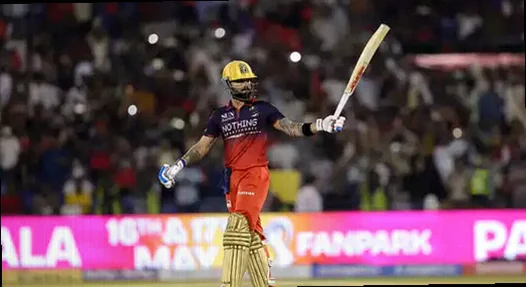
Virat Kohli roared back after back-to-back scores of zero, smashing a record-boosting ninth IPL century—and his third when chasing—as Royal Challengers Bengaluru chased down Kolkata Knight Riders’ 192 with precision in Raipur. The six-wicket victory, wrapped up with five balls remaining, moved RCB to the summit of the points table on net run rate and to 16 points, a total no franchise in a 10-team IPL has ever failed to convert into a playoff berth. For KKR, the loss ended a four-match winning streak and left them with an outside ceiling of 15 points, even if they win each of their remaining three home matches—meaning their progress may hinge on other results.
Key takeaways
- RCB completed a six-wicket chase of 192 against KKR with five balls still left in the innings.
- Kohli struck his record-extending ninth IPL hundred and remained unbeaten in the successful run chase.
- The win took RCB to the top of the table on net run rate and to 16 points.
- KKR’s four-match winning streak was snapped, leaving them potentially short of playoff qualification.
- Kartik Tyagi and Bhuvneshwar Kumar played key roles, with Tyagi finishing as the leading wicket-taker in the chase.
Match summary: scores and result
Kolkata Knight Riders posted 192 for 4 in their 20 overs. Angkrish Raghuvanshi top-scored with 71 off 46, while Rinku Singh made 49 not out off 29. Bhuvneshwar Kumar recorded figures of 1 for 34 as KKR’s innings ended at a challenging total.
In response, Royal Challengers Bengaluru reached 194 for 4 in 19.1 overs to win by six wickets. Virat Kohli led the chase with 105 not out from 60 balls, and Devdutt Padikkal contributed 39 off 27. Kartik Tyagi was the standout with 3 for 32.
How KKR’s 192 was built in Raipur
Rajat Patidar won the toss and opted to field, a decision shaped by how the Raipur surface had behaved with pace and grip in earlier matches. With two specialist seamers in play, and Jacob Duffy returning for Romario Shepherd, the plan looked clear: attack early and keep the batters under pressure.
However, Duffy’s spell began on the rougher side as Finn Allen launched him straight away. Bhuvneshwar Kumar then took up the main job of containing KKR’s aggressor. After Allen was struck through the off side early, Bhuvneshwar adjusted by bowling slightly fuller on the good length, allowing movement away from the bat. The adjustment paid off as he forced an edge to dismiss Allen for 18 off 8—his 13th Powerplay wicket of the season.
Even with Allen gone, the opening phase still produced plenty of scoring for KKR. The pair combined for ten boundaries in the first six overs, including Duffy conceding 31 runs across his two Powerplay overs. That output suggested the pitch wasn’t as difficult as it had appeared in the game played two nights earlier.
Raghuvanshi’s controlled surge and the middle-overs platform
Raghuvanshi’s role at number three proved crucial. He arrived with a consistent season profile that included three scores of fifty-plus before this match. Today’s innings highlighted his ability to choose the right moment to open up his strokeplay—waiting before swinging and playing the ball as late as possible.
His batting plan was detailed. He stayed patient against short deliveries, but if the ball didn’t sit up enough, he shifted into a short-arm jab rather than forcing the pull. He struck through both sides of the ground and also challenged the lone spinner Krunal Pandya, using a sweep and then an inside-out loft over extra cover for six.
Rahane was dismissed when he was caught out to a Josh Hazlewood short ball. After that wicket, Raghuvanshi and Cameron Green steadied the innings, adding 68 off 46. The partnership ensured KKR didn’t lose momentum during the key middle phase.
Rinku’s finish and why KKR couldn’t accelerate late enough
Entering the death overs with only three wickets down, KKR would have expected more than the 51 runs they managed in the final five. Part of the reason was that Bhuvneshwar and Hazlewood executed their plans and bowled with stubborn accuracy. Notably, only one boundary was struck across each of the last four overs, showing how tightly the batting was being pinned back.
Rinku Singh tried to solve the problem by leaning into the size of the square boundaries. He repeatedly picked up twos and kept the scoreboard moving with quick running. In total, he collected seven twos. He also dominated the 76-run partnership with Angkrish Raghuvanshi.
Yet the stand ended abruptly right at the end. After earlier denying his partner a single in the final over, Rinku saw the partnership break when Raghuvanshi was run out attempting another second that would have brought up Rinku’s fifty. With that, KKR’s innings closed at 192 for 4.
Kohli’s return to form: the first run and the chase momentum
Kohli began his innings with an animated, almost self-aware celebration—marking the fact that it was his first run in the competition since April 30. KKR debutant Saurabh Dubey started with a tidy over against Jacob Bethell and Kohli, but once Kohli found rhythm, the chase shifted decisively in RCB’s favour.
Vaibhav Arora bowled slightly off-line, and Kohli punished it, striking four boundaries in a single over. Kohli also survived a chance on 21 when Rovman Powell spilled a tough catch at cover. By the end of the Powerplay, Kohli had raced to 30 off 14, including a six, and RCB looked set to keep pace with the chase.
Kohli and Padikkal keep RCB ahead of the rate
As in many chases this season, the Kohli-Padikkal combination ensured RCB remained ahead of the required run rate. Padikkal received a reprieve when Arora put down a sitter at deep square leg. With RCB on 66 in the Powerplay and clearly ahead of the asking tempo, they could afford to play Narine without taking unnecessary risks.
KKR’s bowling attack also felt slightly blunted through the middle overs with the absence of Varun CV, who was sidelined by injury. That meant Anukul Roy and Cam Green had to carry the burden, and even then they went for 43 runs across their four overs. The pair’s combined work still produced a notable partnership effort: Kohli and Padikkal added 92 off 59, taking their partnership runs to 462 at an average of 66 across their work together so far in chases.
Turning the screw: how the hundred chase was sealed
There weren’t many realistic chances for KKR once Kohli settled into his chasing mode. Still, some openings appeared. When Padikkal fell, RCB needed 64 off 41, and Rajat Patidar looked uncomfortable against the short ball again, even wearing a quick hit from Kartik Tyagi on his helmet.
But Kohli kept finding the boundary line with striking accuracy. When Rahane brought Anukul Roy’s left-arm spin into play with 36 needed off four overs, Kohli pulled a short ball away for four. He then struck a lofted effort straight over the bowler’s head for six—an outcome that effectively ended KKR’s hopes.
At the end of that over, the only question left was when Kohli would reach his century. He did so off the 58th ball, and along the way ticked off 14,000 T20 runs—the fastest to reach the mark. He finished unbeaten in a run chase, adding yet another successful chapter to his record.
What happens next for RCB and KKR
RCB have completed their Raipur home fixtures. They head to Dharamsala next to face PBKS on Sunday, May 17, in a repeat of last year’s final encounter. KKR, meanwhile, return to their home ground for a match against the high-flying Gujarat Titans on Saturday.
