
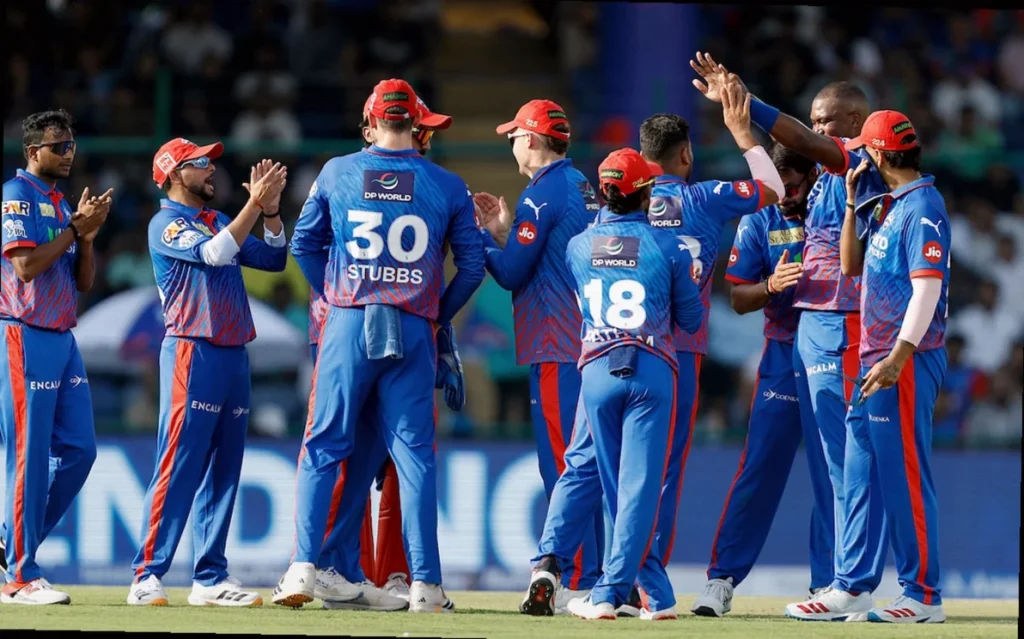
Delhi Capitals fast bowler Kyle Jamieson has joined the growing list of voices questioning the IPL’s Impact Player rule, calling it something that removes “a lot of the skill” from the contest. Speaking to media ahead of the Capitals’ match against Gujarat Titans, the New Zealand pacer argued that the regulation changes the way batters and all-rounders are used across a game.
Impact Player debate: what Jamieson said
- Kyle Jamieson believes the Impact Player rule “takes a lot of the skill out of the game”.
- He said the rule reduces pressure on teams to develop the batting skillset historically expected from lower-order batters.
- Jamieson argued that international cricket does not widely use the Impact Player concept.
- The Impact Player system was introduced in 2023 and is scheduled to stay until 2027.
Jamieson’s core point was that if a team can bat in the late overs with a substitute option available, the traditional requirement for genuine batting depth is weakened. He suggested that when lineups can support batting positions 9 or 10 without the same demand for “batsmanship” as before, the overall challenge for players becomes less demanding.
He also defended the value of classic all-round skills—players who can contribute with both bat and ball and provide balance to the XI. In his view, that balance is exactly what the rule chips away at, because it gives teams greater flexibility to reshape roles during the course of a match.
Jamieson added that the Impact Player model is not common in other major T20 competitions worldwide, and he implied that this absence is not accidental. “You don’t see too many other places around the world or international cricket that have the Impact Player rule,” he said, framing it as a system that exists for a reason.
Picked up by Delhi Capitals ahead of the 2026 season, Jamieson is yet to appear in the playing XI. He noted that squads are limited to fielding only four overseas players, a restriction that shapes how opportunities are created for international signings during the tournament.
While acknowledging the desire to play in every match, he said everyone at the franchise understands the selection math. Jamieson stressed that even without immediate match involvement, there are still meaningful ways to contribute—through training sessions, team meetings, and even work around the boundary—while staying prepared for when a chance comes.
He framed the IPL as a high-value environment for development, arguing that the benefit is not limited to days when a player is in the XI. For Jamieson, the league remains among the best settings to grow both on the field and off it.
Pitches, rhythm and a comeback timeline
On the nature of pitches this season, Jamieson said conditions have been more balanced than expected. He recalled spending January in the same environment with New Zealand, when it felt like “a bowler’s graveyard,” and he referenced the T20 World Cup where similar trends appeared at times.
However, he said the wickets have offered more even contest between bat and ball than those early impressions suggested. He pointed to the presence of a couple of high-scoring matches, but also noted that there have been games where bowlers received real assistance, calling that outcome “great” for the bowling group.
Jamieson returned from a long injury layoff during the series against South Africa. He said he now has a stretch of uninterrupted cricket—describing 15 to 16 months without a major interruption—while also admitting there was a “niggly run” of minor issues that he believes he managed by identifying underlying causes and resolving them.
From there, he sounded upbeat about the immediate future, saying it feels good to be involved and that he is looking forward to the next few months with the Capitals.
Adapting to modern T20 demands
Looking at how T20 has evolved, Jamieson said the game has moved forward substantially, particularly from a batting standpoint, with totals rising and powerplay overs often becoming the easiest period to score. In that context, he highlighted the importance of staying true to a player’s strengths rather than trying to do too much.
He warned that overreaching can hand the advantage to batters. Jamieson said successful bowling now requires blending pace, bounce and movement while structuring overs so that hitters can’t easily anticipate what’s coming next.
