
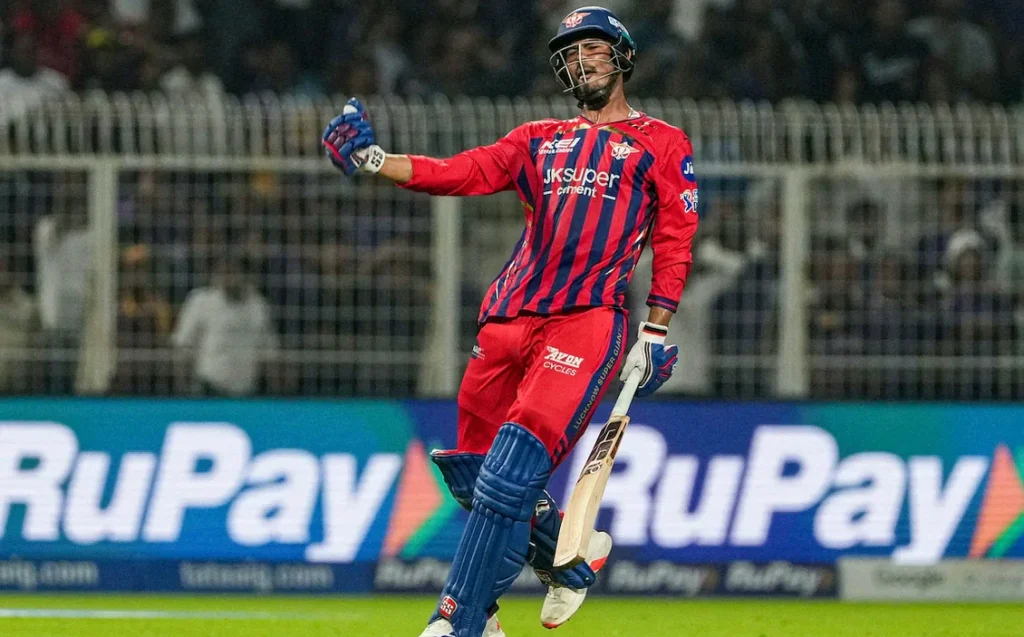
India’s cricket pipeline is so deep that it can feel comparable—even superior—to the talent factories seen in football-heavy nations like Brazil, France, or England. Each season, the Indian Premier League (IPL) becomes the stage where fresh finds make an immediate impression. Yet, while many go on to shine in franchise cricket, only a select few receive the opportunity to wear the national-team jersey. The newest example of that IPL-to-impact pathway is Lucknow Super Giants wicketkeeper-batter Mukul Choudhary, whose explosive batting against Kolkata Knight Riders (KKR) on Thursday lit up the T20 spectacle.
Choudhary’s finishing role as Lucknow hunted 182
- Mukul Choudhary struck at the top end of the chase, smashing 54 off just 27 deliveries to help Lucknow overhaul a target of 182.
- At one stage, the required runs looked extremely difficult to reach, but Choudhary ensured the innings stayed alive and moved steadily closer to the finish.
- During the final stretch, Lucknow needed 54 runs from the last four overs, with Choudhary the only batter recognized as a genuine threat at the crease.
- The 22-year-old took on the responsibility of holding one end while the rest of the chase unfolded around him, keeping the run-rate under control as the pressure rose.
- With Lucknow needing seven runs from the final two balls, Mukul cleared the ropes with a six on the penultimate delivery.
- He then sealed the chase by adding a single on the last ball, completing the successful run chase for LSG.
After the match, LSG head coach Justin Langer spoke to former South Africa captain Faf du Plessis about how the franchise managed to secure the hard-hitting wicketkeeper-batter. Langer revealed that the first glimpse of Mukul came during a training camp a few months earlier, when Lucknow started the process of identifying the talent that later became part of their setup.
Langer described how internal data and scouting conversations played a role, saying that Shrinivas, the team’s data analyst, pushed the case for bringing the young player into their plans. He then explained that Mukul’s selection ended up being a fortunate turn for the franchise, crediting the combination of talent identification and follow-through that helped them capture a player with the ability to change games late.
The coach also highlighted Mukul’s skill set and compared aspects of his game to some of the sport’s modern greats. Langer suggested Mukul’s quick movement between the wickets resembles Virat Kohli’s running intensity, while his mindset in chasing totals draws parallels to the way MS Dhoni approaches high-pressure finishes.
“What I love most about him is that he’s a real athlete,” Langer said, emphasising the quality of Mukul’s movement and his overall athleticism. He added that, in practice games, Mukul’s understanding of cricket stood out—his conversation about match situations sounded as if he had already played hundreds of matches, not just a handful.
Langer further pointed to the power and grace in Mukul’s batting, describing the combination as a particularly valuable one. He also referenced the type of careers built around finishing roles, noting that while Mukul is still at an early stage of development, he has the habits and instincts that typically define successful finishers in T20 cricket.
He stressed Mukul’s youth, calling him only 22 years old, while underlining the hunger he showed throughout his rise. Langer added that the moment would be especially significant for Mukul’s family and parents, framing the performance as a major milestone for the youngster—arriving after hard work and persistence when players often have to wait for their chance.
From a match context, the coach also reflected on what the win meant beyond the scoreboard. Langer said wins like this are especially important for the dressing room because they strengthen belief, whether the success comes through bowling dominance or through holding your nerve in a tight chase. He suggested that early-season confidence is built on exactly these kinds of outcomes, and he hinted that Lucknow still had plenty of room to grow.
In explaining Mukul’s improvement, Langer pointed to the work conducted in nets. He said the player was curious and receptive to feedback, that specific areas were identified early, and that strengths were reinforced while weaknesses were actively addressed. Langer noted that the drills and daily coaching since Mukul joined the group over the past four weeks showed clearly in the match, and he praised the effort, work ethic, and intent visible in Choudhary’s approach.
Finally, Langer returned to the people behind the scenes, giving additional credit to the scouts. He said those roles often go under the radar, but that Shrinivas has been involved for a long time and has an especially sharp cricket mind. Langer described how Shrinivas frequently sits beside him and often predicts what comes next—an attitude that, in this case, helped identify players who could make an impact quickly.
Concluding his remarks, Langer pointed to the broader depth of Indian cricket, suggesting that there are “three or four more” talents waiting for their opening. He described the overall pool as unbelievable, and argued that reaching the level required to play the IPL—and then succeeding there—signals that a player has something rare, especially in a country where so many chase the chance to play franchise cricket, let alone international cricket.
