
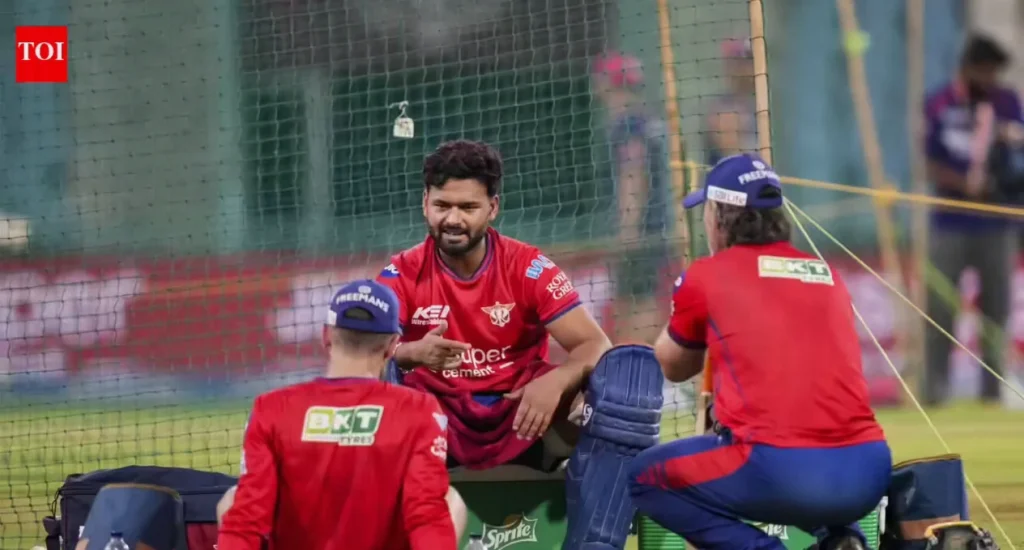
Lucknow Super Giants are finding it hard to get anything going in the IPL 2026 season. After six consecutive defeats, the franchise sits at the foot of the points table, with its qualification hopes hanging by a thread. In nine matches, LSG have managed only two wins and four points, and their most recent success came almost a month ago—when they posted back-to-back victories over Sunrisers Hyderabad and Kolkata Knight Riders in early April. Since then, results have steadily worsened, with pressure building match after match and confidence draining from the group.
Playoff chances still exist, but the margin for error is gone
Mathematically, Lucknow are not completely out of the race. With five games left, they can reach 14 points if they win all of them. That mark has often been sufficient to sneak into the top four. However, the reality is far harsher: one slip now makes the path extremely narrow.
- LSG are currently on two wins and four points after nine matches.
- Their last wins came in early April versus Sunrisers Hyderabad and Kolkata Knight Riders.
- They can theoretically climb to 14 points with five straight victories.
- Three of their remaining matches are against sides currently occupying spots in the top four.
- Those difficult fixtures include clashes against Punjab Kings and Royal Challengers Bengaluru.
With the schedule demanding and the remaining margin shrinking, another poor result would effectively end their campaign.
Rishabh Pant under scrutiny as batting returns are disappointing
At the center of LSG’s ongoing struggle is captain Rishabh Pant. The league’s most expensive player has had a difficult season with the bat, collecting 204 runs from nine innings. His average stands at 25.50, while his strike rate is 128.30. Given Pant’s reputation for aggressive batting, those figures point to a noticeable drop in impact.
- Pant has scored 204 runs in nine innings at an average of 25.50.
- His strike rate this season is 128.30.
- He has only one score of fifty-plus so far in IPL 2026.
- LSG have struggled to convert starts into match-winning finishes in key moments.
His captaincy has also come under the microscope, particularly for frequent changes to the batting order. In multiple matches, LSG have used different opening combinations, which has made it difficult to build early rhythm and consistency at the top.
After a defeat to Mumbai Indians, Pant summed up the frustration with the words: “I think we need some good luck.” The comment captured both the emotional frustration in the dressing room and the sense that answers have been hard to find.
Still, head coach Justin Langer has continued to back his skipper. He cited a recent practice game where Pant struck 95 in fewer than 40 balls, suggesting a turnaround could be close.
Langer’s message: the bat is still capable of fireworks
Langer said, “We played a practice game here two days ago, and Rishi… maybe 95 off 40 or 30 balls—you’re just looking at it and you go, ‘Oh my gosh, that’s Rishabh Pant at his very best,’” insisting that the talent is there and form can arrive quickly.
Even with that assurance, the performances in actual matches have not caught up, leaving Pant facing rising pressure as the tournament moves on.
Bowling looks solid on paper, but the late overs and big totals hurt
On paper, Lucknow’s bowling unit appears to be among the stronger groups in the league, combining experienced international players with promising domestic talent. The raw numbers are not alarming at first glance: in nine games, LSG have conceded 200-plus totals only twice, which is a respectable return in a season where high scores are common. Their overall economy rate has been hovering in the mid-8s, showing control during parts of their spells.
- LSG have allowed 200-plus totals only twice in nine matches.
- The team’s economy rate has generally been around the mid-8s.
- Prince Yadav has taken 13 wickets in nine matches at an economy of 8.06.
- Mohsin Khan has picked up 10 wickets in five matches, with an economy rate of 12.
Yet, the problems show up when it matters most. LSG conceded 254/7 to Punjab Kings—the highest total they have surrendered this season—and failed to defend 228 against Mumbai Indians. Their death bowling has lacked the required consistency, with opponents often accelerating sharply in the final overs.
Batting inconsistency and pressure moments define LSG’s slide
While several issues have contributed, the clearest explanation for Lucknow’s downfall is their batting instability. The warning signs appeared from the very first match, when they were bowled out for 141 at home. Even in their wins, the batting lineup often looked shaky, scraping through chases in the last over.
- Across nine matches, LSG have surpassed 180 runs only three times.
- They have been bowled out three times in total.
- The team’s average score has hovered in the mid-160s, below what is typically needed in a high-scoring IPL.
After their early victories, batting collapses became a repeated pattern. They made 164/5 and 146 all out—both times, those totals were chased comfortably. Against Rajasthan Royals, LSG were dismissed for 119 while chasing 160, underlining how hard it has been to handle pressure.
Even when the batting clicked, the finishing still fell short. Versus Punjab Kings, Lucknow chased a massive 254 but could not complete the job due to the sheer magnitude of the target. Against Kolkata Knight Riders, they were unable to finish and ended up tying the match. They then lost in the Super Over, managing only one run—an episode that captured how their problems intensify under pressure.
Key contributions, but the Orange Cap race hasn’t followed
Nicholas Pooran has been largely out of form, with the exception of a 21-ball 63 against Mumbai Indians on Monday. Mitchell Marsh has been LSG’s leading run-getter with 256 runs at a strike rate of 139.13, while Aiden Markram has contributed 224 runs. However, neither Marsh nor Markram currently sits inside the top 20 for the Orange Cap standings, reflecting a wider team performance that has not matched individual promise.
A season slipping away as continuity disappears
Instability has been a defining trait of Lucknow’s campaign. From changes in the batting order to frequent shifts in team combinations, LSG have struggled to settle on a steady strategy. The opening pair has changed multiple times, the middle order has been shuffled repeatedly, and even bowling roles have lacked clear continuity. With that kind of disruption, it has been difficult for players to find rhythm or build partnerships.
Ultimately, LSG’s problems point to a combination of factors: underwhelming outputs from key players, a lack of batting stability, an inability to close games, and lapses during crucial phases with the ball. There have been occasional bright spots—such as Prince Yadav’s rise—but the side has not clicked together as a unit. With six straight defeats already in the bag and the toughest stretch still ahead, the tournament is moving quickly out of reach.
Unless Rishabh Pant and Lucknow Super Giants pull off an extraordinary turnaround, IPL 2026 is on course to be remembered as a campaign where almost everything that could go wrong indeed did go wrong for the franchise.
