
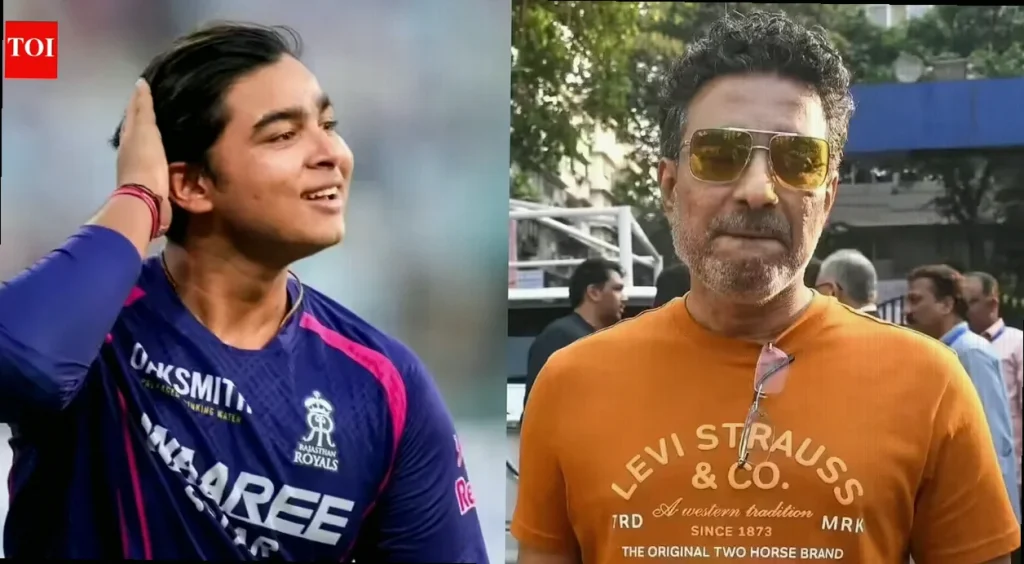
Former India batter Sanjay Manjrekar believes Vaibhav Sooryavanshi looks prepared for international cricket, but with a clear caveat: for now, the youngster’s best route is through the T20 format. He pointed to Sooryavanshi’s recent IPL showing—where the teenager has taken on elite pace, including Jasprit Bumrah—while also stressing that there are technical adjustments he’ll need if he wants to progress further.
Quick facts
- Vaibhav Sooryavanshi is 15 years old.
- He drew attention last year with a century in his debut IPL season.
- This year, he made headlines in the U-19 World Cup final with a score of 175.
- In IPL 2026, he amassed 404 runs in 10 matches at a strike rate of 237.64.
- Manjrekar said Sooryavanshi is “ready” for India’s T20 set-up but needs work for longer formats.
- He highlighted competition for opener slots, mentioning Shubman Gill and Yashasvi Jaiswal.
Sooryavanshi’s rise has been rapid. He first came to the spotlight in his initial IPL season by converting his chances into a century, and then backed it up with strong outings in domestic cricket and at under-19 level. Earlier this year, he delivered a massive 175 in the U-19 World Cup final, reinforcing the idea that his talent isn’t limited to one league.
In IPL 2026, the 15-year-old carried that momentum into the season’s most intense setting. He scored 404 runs across 10 matches, striking at 237.64—numbers that naturally brought him into the conversation for India selection. Manjrekar said the performances have been substantial enough to warrant consideration, especially when viewed as a bid to break into the Indian T20 team.
“Looking at IPL as a platform to stake a claim for the Indian T20 team, and keeping an eye on his performances in the Syed Mushtaq Ali Trophy as well—where he has a hundred [against Maharashtra]—I think he’s done enough,” Manjrekar said. “If someone is lighting up this stage like this, then he’s ready.”
However, Manjrekar also cautioned that a direct path to the national side may not be straightforward. The selection picture for openers is crowded, with multiple established and emerging options already in the frame, including Shubman Gill and Yashasvi Jaiswal. Sooryavanshi may have to wait for the right combination of form, opportunity, and team requirements.
T20 strengths, Test adjustments
He further explained that Sooryavanshi belongs to a newer group of T20 batters who create scoring lanes and then punish deliveries with innovative shot-making. But Manjrekar believes the youngster’s approach will require changes if he is to make the transition to longer formats. In his view, the habits that succeed in high-tempo T20 cricket don’t automatically translate to Test batting.
Manjrekar compared the technique used in T20 to the fundamentals needed in Tests. “Take all the consistent T20 batters in the last few years, Sooryavanshi will stay leg side and hit a ball on middle stump through point because he’s staying leg side of the ball,” he said. “In Test cricket, the advice is to get close to the ball. You will not get 20 runs in England or Australia, South Africa by staying away from the ball.”
He also framed the issue in terms of what each format demands from a young player’s development. “If you want your kid to be famous and rich, T20 batting is for you,” Manjrekar said. “If you want him to get the respect of people like us—the critics—then get him to get close to the line of the ball.”
With IPL 2026 putting Sooryavanshi under the spotlight, the next phase will revolve around whether he can keep converting big opportunities at the highest level while refining the technique needed to expand his game beyond T20. For now, Manjrekar’s message is direct: the evidence suggests international readiness in the shortest format, provided the groundwork continues for the longer ones.
