
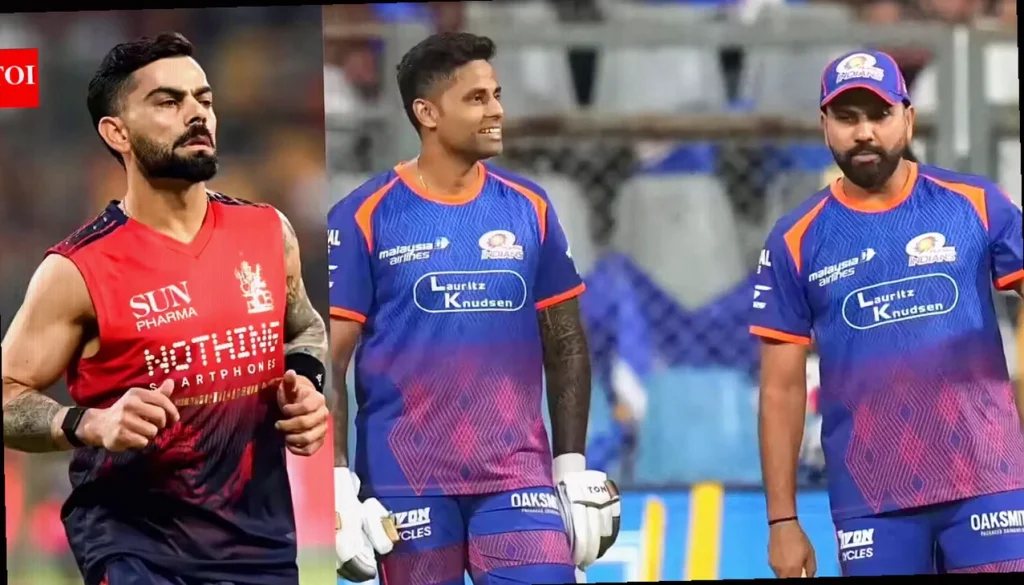
Former India batter Sanjay Manjrekar has reignited the fitness debate in modern cricket by drawing a direct contrast between Virat Kohli’s approach to conditioning and the physical demands he believes are now catching up with Rohit Sharma and Suryakumar Yadav as they move deeper into their 30s. In his view, Kohli’s ability to stay relevant across formats is not just a product of technique and temperament, but of an unusually strict commitment to keeping his body primed for the workload of top-level cricket.
Speaking on Sportstar’s Insight Edge Podcast, Manjrekar argued that Kohli’s longevity is closely tied to how seriously he treats fitness. He suggested that players such as Rohit and Suryakumar may have created extra difficulty for themselves by not matching the same elite conditioning standards, particularly as the margin for error narrows with age—an issue that becomes even more pronounced in T20 cricket, where quick bursts of athleticism and consistent timing are essential.
Manjrekar urged Rohit and Suryakumar to “take a leaf out of Virat Kohli’s book,” pointing out that Kohli is not in his early 30s and has still endured tough stretches in T20s. Yet, he said, Kohli’s recent showing underlined the payoff of his discipline. The former batter then posed a pointed question about the difference in fitness between the three hitters, framing it as the missing element that separates Kohli’s sustained output from the problems that can emerge when conditioning slips.
While Manjrekar acknowledged that Suryakumar continues to have the experience and the skill set to succeed, he insisted that fitness has become the critical gap. In his explanation, the mental side of performing is already present; what ultimately matters is whether the body can reliably support the intent—whether that means accelerating into shots, moving sharply between the wickets, or sustaining the intensity required at this level.
Manjrekar also referenced a similar pattern he believes affected Rohit Sharma. He suggested that Rohit’s decline was at least partly connected to not looking after his fitness to the extent required, arguing that it made the overall job harder rather than immediately ending his impact. He extended that logic to Suryakumar as well, implying that the same physical discipline that powers elite consistency can be the difference between maintaining rhythm and losing it.
“Extreme fitness like Virat”
Throughout the discussion, Manjrekar returned to Kohli’s fitness culture as the benchmark for modern cricketers. He encouraged players to raise their standards beyond the usual, emphasizing that Kohli is often the first to credit physical conditioning when he achieves success. For Manjrekar, that mindset is not a slogan—it is reflected in results, especially in the high-demand environment of T20 cricket.
He further stressed that T20 can become increasingly unforgiving once players cross 30. According to him, even a small drop in physical readiness can influence performance levels, particularly when batting requires repeated explosive movements, rapid adjustments, and sustained athletic sharpness over the course of a season.
Manjrekar described Suryakumar’s recent downturn as one of the more intriguing stories in T20 cricket, especially given how dominant he had been for years. He pointed out that Suryakumar and Jos Buttler had effectively set the standard for T20 batting, and then suddenly the pattern shifted. In Manjrekar’s reading, the brilliance that had been consistent was followed by a period where failures became just as regular.
He linked that change to the possibility that age and fitness concerns are affecting Suryakumar’s trademark hand-eye coordination, particularly for the unconventional strokeplay he is known for behind square. Manjrekar was blunt about his assessment of Suryakumar’s current condition, saying he is “certain” that the fitness level is not where it should be. If he were working with him directly, Manjrekar added, the plan would be straightforward: get him lighter on his feet and stronger, so that his body can better match the demands of his natural style.
