
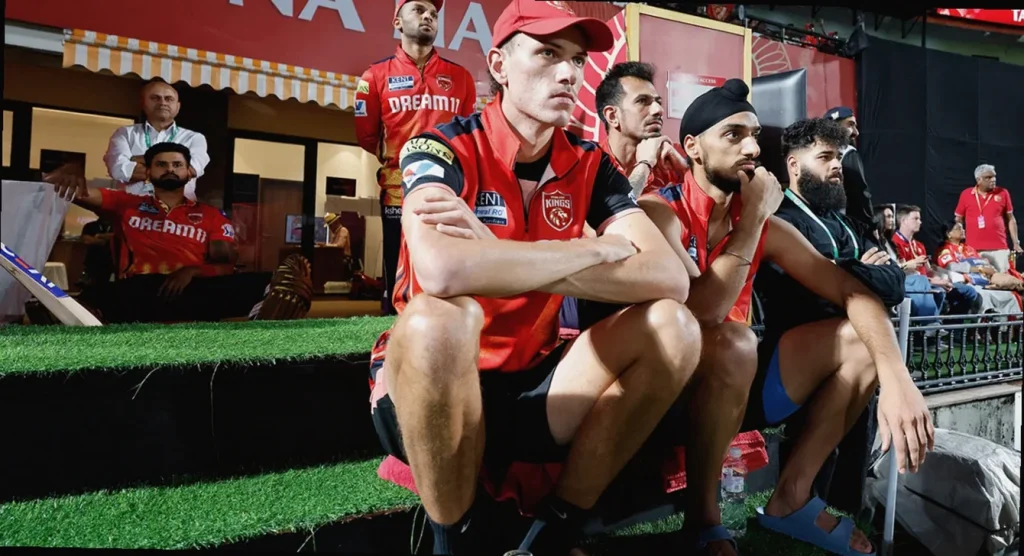
Marco Jansen says the “same question” still drives him as a bowler: how some tall pacers consistently land on a good length, keep scoring down, and regularly take wickets. In IPL 2026, the South Africa speedster is being used differently by Punjab Kings, with his overs more concentrated in the middle phase rather than repeatedly opening the powerplay—yet his overall economy has remained solid as PBKS reach the tournament’s halfway point.
Key takeaways
- Jansen was the leading wicket-taker in SA20 2025 with 19 scalps for runners-up Sunrisers Eastern Cape.
- In IPL 2025, he claimed 16 wickets for Punjab Kings as the franchise advanced to the final.
- During South Africa’s late-2025 tour of India, he took 12 wickets at 10.08 in two Tests that ended in a clean sweep.
- At the T20 World Cup in India, he finished with 11 wickets at an average of 21.54.
- In IPL 2026, Jansen has five wickets from six matches and an economy of 8.50, better than his 9.20 from the previous season.
From SA20 to IPL finals: a run of wickets across formats
Jansen’s recent momentum began in SA20 2025, where he finished as the top wicket-taker, grabbing 19 wickets while playing for runners-up Sunrisers Eastern Cape. That upward trajectory carried into IPL 2025, when he moved into Punjab Kings’ plans and returned 16 wickets during their run to the final.
His form didn’t stay limited to franchise cricket. When South Africa toured India in late 2025, he led the visitors’ attack in the Test series, taking 12 wickets across two matches at an average of 10.08 as the tourists swept the hosts. He then followed it with another productive spell in the T20 World Cup, where the Proteas played all their fixtures in India; Jansen collected 11 wickets there at 21.54.
Jansen insists that success in both longer and shorter formats doesn’t feel surprising. He compares his skill set to Josh Hazlewood’s, pointing to the ability to hit the right lengths, limit runs, and remain consistent. Speaking during a media interaction on Thursday, he said that he still asks the same underlying question about how such bowlers keep finding wickets without becoming expensive, while also relying on variations.
He added that he has variations of his own, but believes part of his development involved not trying to copy what other players were doing—especially earlier in his career. In his view, tall fast bowlers bring different “attributes” to the table, and the key is to discover an approach that makes those strengths effective. Over the last year or so, he says he has felt more comfortable in his own process, aiming to stack strong outings closely together while accepting that off days will always exist.
How PBKS use him in IPL 2026: fewer opening overs, more middle-overs work
Now in his second year with Punjab Kings, Jansen’s role in IPL 2026 looks noticeably different from last season. In IPL 2025, he bowled either the first or second over three times in his opening six innings. This time, he has done it only once in five innings so far—against Mumbai Indians—when he conceded 19 runs in two overs during the powerplay.
Last year, he received the new ball four times in his next eight innings. This season, PBKS appear content for him to operate as a first- or second-change option. The franchise has leaned on Arshdeep Singh and Xavier Bartlett for the new ball, and the two have already combined to bowl 11 of the 12 powerplay overs that fall under the first or second over category.
Jansen, by contrast, has delivered most of his overs in the middle phase—between overs 7 and 16—when the ball begins to lose some of its early shine. He says that bowling later doesn’t mean his “weapon is taken away,” although it does require a slightly different mindset as the ball gets older.
When asked whether the adjustment was difficult, Jansen rejected the idea. He explained that Arshdeep and X (Bartlett) swing the ball consistently—more consistently than he does—so the bowling unit is built around those strengths. At the same time, he believes his own skills still fit into the collective plan, and that the question isn’t whether he can do a job with the new ball. Instead, it comes down to how the side can bowl effectively as a unit, and how the pieces work together.
Halfway assessment: wickets are fewer, economy is tighter
At the halfway stage of the tournament, Jansen has five wickets from six matches. While his wicket haul is lower than he might want, his cost rate has been competitive: his economy currently stands at 8.50, compared to 9.20 during the previous IPL season.
He framed PBKS’ bowling approach as a unit-based process where each bowler understands what he does best. On a given day, he says it is about reading conditions and trying multiple options, rather than relying on a single template. As for wicket-taking, he noted that one bowler can be at the top of the tally while others may not receive the same fortune, but the goal is for bowlers to execute the plans they have trained for.
Next stops after IPL: USA and the Hundred
Beyond IPL, Jansen’s next major T20 assignment is Major League Cricket in the USA. He is set to represent Washington Freedom again, having previously played for them in 2023 and 2024. After that, he heads to England for Welsh Fire in the Hundred, where it will be his first appearance in the competition.
Having already played franchise cricket in South Africa, India, and the USA, Jansen says he is trying to “embrace the culture” wherever he goes, even as he looks to build friendships. He believes careers in cricket are short and wants to make the most of his time—ideally filling those years with both impact and companions along the way.
