
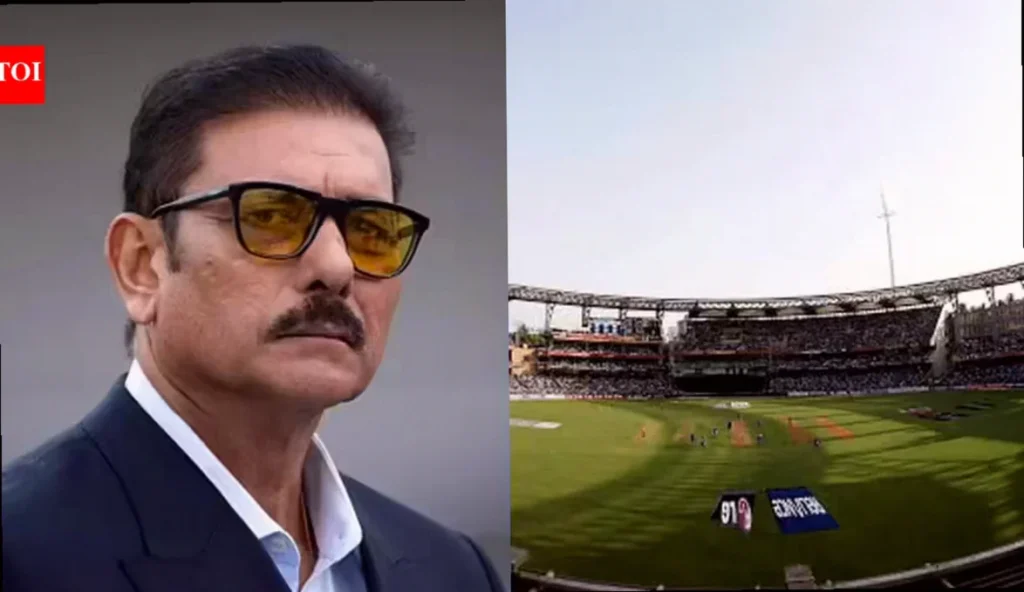
MUMBAI: The Mumbai Cricket Association (MCA) will hold a special ceremony at Wankhede Stadium on Thursday to unveil the Ravi Shastri Stand and to dedicate three entry points at the venue to cricket figures who left a lasting mark on the sport—Dilip Sardesai, Eknath Solkar and Diana Edulji. The programme is designed to honour four Mumbai and India legends whose contributions spanned playing days, leadership roles and administration, with the event expected to draw members of the MCA leadership and the wider cricket fraternity.
Maharashtra Chief Minister Devendra Fadnavis will be present at the function, while MCA president Ajinkya Naik will also attend along with Apex Council members, office bearers and other stakeholders associated with the association. The decision to recognise the four stalwarts was cleared by the MCA Apex Council earlier, following a meeting held in February.
As part of the initiative, the Level 1 Stand situated below the Press Box at Wankhede Stadium will be named after former India captain and prominent broadcaster Ravi Shastri. The move recognises his impact on both Mumbai cricket and Indian cricket—first as a player, later as a leader and coach—during a career that remained closely linked with the sport’s evolution in the country. In addition, Gate No. 3, Gate No. 5 and Gate No. 6 at the stadium will be unveiled as the Dilip Sardesai Gate, the Diana Edulji Gate and the Eknath Solkar Gate, respectively, ensuring that the legacies of these local heroes are permanently woven into the matchday experience at Wankhede.
Speaking ahead of the ceremony, Naik said it represented a proud moment for Mumbai cricket as the association comes together on 9 April to pay tribute to the iconic figures. He added that the unveiling of the Ravi Shastri Stand, alongside the dedication of the gates for Dilip Sardesai, Eknath Solkar and Diana Edulji, reflects the association’s deep respect for their invaluable contributions. Naik also said the MCA looks forward to celebrating their legacy at Wankhede while encouraging younger generations to carry forward the same values and aim for greatness.
Shastri’s record for India is among the most celebrated in modern cricket. He played 80 Tests and 150 ODIs, amassing 6,938 runs, including 15 centuries, and also took 280 wickets in international cricket. As a left-arm spinner, he was part of India’s triumph in the 1983 World Cup and later featured in the 1985 Champions of Champions success.
After hanging up his boots, Shastri moved into commentary and became a key figure for the BCCI during periods of transition involving the senior men’s national team. He was brought in by the BCCI as team director for the 2014-15 season and subsequently took charge as head coach.
Diana Edulji, meanwhile, made her name as a left-arm spinner and finished with 109 wickets across 54 international matches, including 20 Women’s Tests and 34 Women’s ODIs. The 69-year-old also served at the administrative level, becoming part of the Supreme Court-appointed Committee of Administrators (CoA) that ran the BCCI in 2018-19. During her tenure, she pushed for further growth of women’s cricket and worked to improve the facilities available to the Indian women’s team.
Eknath Solkar was particularly well known for his athletic performances in the field, especially at short leg, where his acrobatic ability made him a standout presence. Dilip Sardesai, often described as Indian cricket’s “Renaissance Man,” played a crucial role in one of India’s most memorable overseas achievements on the 1971 tour of West Indies. He contributed 642 runs in that campaign, including three centuries, with a peak score of 212.
Sardesai also shone in India’s Test successes at home and abroad. In the 1971 Oval Test win against West Indies, he made 54 and 40, helping steer the team to victory. His Test career spanned 30 matches, during which he scored 2,001 runs at an average of 39.23, with five centuries and nine fifties. He was also the first Indian batter to register a double hundred at the Brabourne Stadium, scoring 200 not out against New Zealand in the 1965-66 Test and aiding India to draw the contest after they had been made to follow on.
The MCA’s Wankhede tributes add to the stadium’s growing tradition of recognising cricketing excellence, with the ceremony set to bring together administrators, fans and cricketing personalities as Mumbai marks the legacies of its own heroes at one of India’s most iconic venues.
