
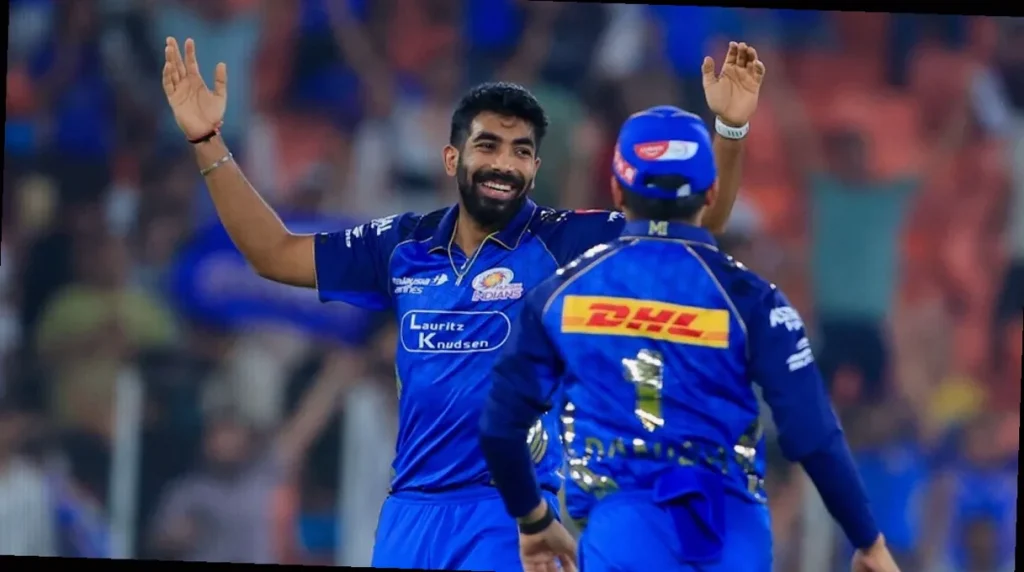
Mumbai Indians (MI) ended their Monday trip to Ahmedabad with a statement win, beating Gujarat Titans (GT) by 99 runs. The triumph also snapped a worrying trend for MI in the city: before this match, their head-to-head record against GT in Ahmedabad read 0-4, with every one of those setbacks coming while chasing.
In fact, MI’s overall record in Ahmedabad has been a tough one, with just two victories from eight IPL matches there. Their first such win arrived in 2014, when they defeated Rajasthan Royals (RR). Between that earlier success and Monday’s result, they went through a run of six consecutive losses in the Ahmedabad venue.
GT’s defeat margin of 99 runs was their largest loss by runs in IPL history. Their previous biggest loss on that measure was by 83 runs against Chennai Super Kings (CSK) in 2025.
The loss also meant GT posted their second-lowest total in IPL cricket, bettered only by the 89 all out they managed against Delhi Capitals (DC) in 2024.
Tilak Varma’s century and the numbers behind it
Tilak Varma played a defining hand for MI, reaching his hundred in 45 balls. That was the joint-fastest century by an MI batter in the IPL and matched Sanath Jayasuriya’s 45-ball ton against CSK in 2008.
There was more to it than pace. The spread between Tilak’s strike rate during his opening 20 deliveries and the rest of his innings on Monday was the highest such gap recorded for any batter in an IPL innings. He made 17 runs from his first 20 balls, before accelerating to 84 from his final 25.
The prior record for the largest strike-rate swing belonged to Will Jacks, also versus GT in 2024, when he struck a 41-ball century. In that innings, Jacks scored 27 off his first 20 balls and then 73 off his last 21.
Acceleration chart highlighted
Tilak’s finishing power was equally striking. He scored 82 runs in MI’s last six overs, the most by any batter in that stage of an IPL innings. The previous best in that segment was 80, made by Quinton de Kock against Kolkata Knight Riders (KKR) in 2022, when he ended unbeaten on 140.
Breaking it down further, Tilak hit 64 runs in MI’s last four overs. That total ranks second-highest in an IPL innings, only surpassed by Tim David’s 68 against CSK earlier this season.
There was also a notable shift in boundary timing. Tilak took 22 balls before finding his first boundary in the 15th over. He had managed just 19 runs up to that point, but his next 23 deliveries brought 82 runs and 15 boundaries.
Such a pattern had been rare in the tournament. Only one player had previously scored a T20 hundred before Tilak did without hitting a boundary in their first 20 balls—Colin Munro in 2021 against Adelaide Strikers (with ball-by-ball records available). Munro finished not out on 114 off 73, after scoring only 21 off his first 32 balls without a boundary.
Tilak’s position in the batting order also stood out. He became one of only four batters to score an IPL century while batting at No. 5 or lower, joining Yusuf Pathan (2010), David Miller (2013) and Ben Stokes (2017). Tilak batted at No. 5 on Monday.
Bumrah’s breakthrough and MI’s overall impact
On the bowling side, Jasprit Bumrah delivered a long-awaited breakthrough. He went 146 legal balls in IPL cricket without taking a wicket before dismissing B Sai Sudharsan with his first ball in this match. Bumrah’s previous IPL wicket had come against Washington Sundar in last year’s Eliminator. Ahead of Monday, he had already bowled 19 wicketless overs in IPL 2026.
Tilak also made history in a different way. He became the first MI batter to outscore the opposition in an IPL match. In broader IPL terms, he was the eighth batter to achieve an “outscore the opponent” feat in a match, and the first since KL Rahul, who scored 134* for Punjab Kings (PBKS) in 2020 while Royal Challengers Bengaluru (RCB) made 109 in their reply.
Score comparison visual
There was another milestone moment for Bumrah early in the innings. It was the first time in his 276-match T20 career that he took a wicket off the opening delivery of an innings. Previously, he had taken the new ball only 15 times in T20 cricket overall, and just six times in the IPL. Sai Sudharsan, meanwhile, also marked a personal first of sorts, recording his first duck in 46 IPL innings, and his first duck in 71 T20 innings.
Tilak’s performances finally culminated in recognition as well. It took him 60 IPL matches to earn his first Player-of-the-Match award. Only five players have waited longer than that for their maiden such honour in IPL history. Among batters, Parthiv Patel’s wait of 63 matches for his first Player-of-the-Match award remains the longer one.
Tilak’s unbeaten 101 on Monday was his first IPL century. Seven of his prior eight scores of 50 or more in the IPL had ended in defeats, making this conversion into a match-winning ton against GT in Ahmedabad all the more significant.
