
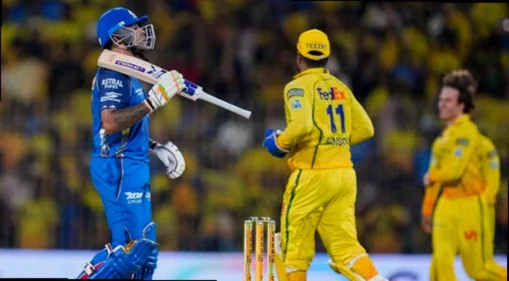
Just a year ago, Suryakumar Yadav was celebrated as the Most Valuable Player of IPL 2025. The numbers alone told a story—717 runs, a batting average of 65.18, and a strike rate of 167.91—but his standout achievement was even more striking: he became the first batter who is not an opener to cross the 700-run milestone. In a format where unpredictability is the currency, SKY managed to do what few others could.
Since then, his T20 strike rate has stayed near the 150 mark, which remains highly impressive for the shortest format. Yet the bigger concern is the drop in his average, now sitting at 29 across competitions, and even lower in this IPL campaign at 20.33. That decline has raised the key question—what has changed?
Suryakumar’s difficulties in T20 cricket over the past year have not exactly been hidden. Even before this season fully began, there were signs of worry, with India set to host the T20 World Cup about a month later. He responded with three fifties in the home series versus New Zealand, and then followed it with a crucial 84 not out against the USA in the tournament opener in Mumbai. For a moment, it looked like the momentum had returned—but it was brief.
With great players, consistency is expected, and that standard has not been met as strongly. During India’s successful World Cup run in March, he stayed under the radar despite the overall team success. But once the IPL started, the scrutiny intensified: he managed only 183 runs in nine innings for a Mumbai Indians side that struggled through a disappointing season, leaving little space for excuses.
What troubles Mumbai more than a single dip in form is the emerging trend opponents have been able to identify and exploit. Rivals have started planning more deliberately against the India T20I captain. When facing pace, teams are using two fielders in the fine-leg area, inviting him into riskier decisions such as the flick or the scoop.
Pacers have also been targeting him in a way that denies him his usual rhythm. Instead of offering him the kind of pace he can attack, bowlers have leaned on short deliveries or balls that land just short of a length. That approach has played out in dismissals, with four of his exits in this IPL season coming in that manner. One such instance arrived against Sunrisers Hyderabad, where he was caught at fine leg while attempting a pull. The pattern repeated against Chennai Super Kings at Chepauk, as he fell to a similar type of delivery and was again caught—this time at sweeper cover.
There is a comparable storyline against spin. Suryakumar has a strong preference for the sweep, and opponents have adjusted their field accordingly to cut down the scoring options. Earlier this season at Wankhede against Chennai, he was caught at deep square leg while going for that shot off Akeal Hosein. Against Royal Challengers Bengaluru, he attacked a full toss from Krunal Pandya, only to find the fielder stationed at deep backward square leg.
Despite the slump, Mumbai Indians have not lost faith in his ability to recover. MI head coach Mahela Jayawardene believes the batter simply needs a handful of successful innings to fall back into rhythm. He pointed to how SKY batted aggressively during the match in question and suggested that with a couple more overs, he could have built a much bigger score.
“I think if he gets a few scores together, he’ll find that rhythm. He batted really well for that period today and took on the bowlers. Another couple of overs and he could have been on for a really good score. Sometimes, when things aren’t going your way, it just doesn’t fall into place. It was a pretty good shot, but it went straight to the fielder,” Jayawardene said.
Jayawardene also stressed that the solution is not found by fixating on one or two moments, but by identifying what needs improvement across phases of the tournament. In his view, the season has had multiple periods where the team could have done better, and this is part of the larger picture rather than a single isolated issue.
“I’ve played enough cricket to understand that. For us, it’s about not focusing on one or two moments, but figuring out collectively what we need to do better. There have been several phases in the tournament where we could have improved. It’s not just one thing,” he added.
While acknowledging how narrow the margins are between clearing the boundary and departing early, Jayawardene maintained that Suryakumar’s mindset is still geared toward a turnaround. He noted that too often this season, SKY has been caught on the boundary while attempting his more natural shots, including the flick in the most recent game. The message was clear: the talent is there, and the results should follow with sustained work.
“I think he’s definitely up for it. He’s in a good space; it just hasn’t come off. A lot of times this season, he’s been caught on the boundary playing his natural shots — even in the last game, that flick. So it’s just a matter of time. He’s disappointed, but he just needs to keep working hard,” Jayawardene said.
Mitchell McClenaghan, Suryakumar’s former Mumbai Indians teammate, offered a different explanation. In his view, age could be influencing the way the batter is timing his shots, and a small change might be enough to restore some of the speed in his execution.
“He looks like he’s being slightly rushed this year,” McClenaghan said on ESPNcricinfo. “Cricketers are creatures of habit. The same applies to equipment.”
He suggested that as reactions slow slightly over time, the batter may be getting pushed into hurried decisions, which affects the quality of contact. McClenaghan pointed out that when he played alongside SKY, the bat weight seemed different, and he floated the idea that using a slightly lighter bat could help bring back quicker hands.
“As you get older, reactions slow slightly, and he seems to be getting rushed. His bats weren’t the lightest when I was around. Maybe switching to a slightly lighter bat could help bring back those fast hands. Right now, he just looks a fraction slower — and when I say slower, it’s only marginal,” McClenaghan said.
