
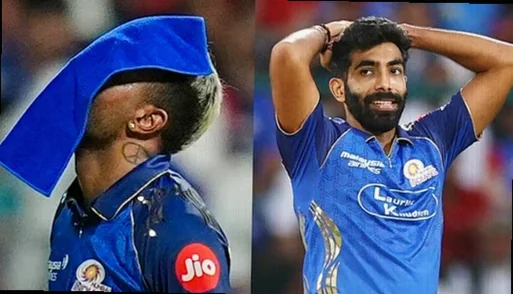
Jasprit Bumrah going wicketless in an IPL season is an event in itself, but Mumbai Indians have found themselves in exactly that situation in IPL 2026. After the first four matches of the campaign, the MI pace spearhead still has not opened his wicket tally, leaving the left-armer’s column reading a rare “0” in the wickets slot. Mumbai have suffered defeats in three of those four games, yet the storyline is more nuanced than a simple link between Bumrah’s lack of wickets and the team’s results.
Captain Hardik Pandya, speaking against the background of Mumbai’s slide that followed their opening win over Kolkata Knight Riders, pointed to a broader problem affecting the bowling unit. The most recent setback came on Sunday, when defending champions Royal Challengers Bengaluru handed the hosts a 61-run defeat at the Wankhede.
“I think we conceded way too many (runs). In the last couple of games, as a bowling unit, we’ve been catching up rather than leading the game,” Hardik said, underlining that the issue was not solely about strike rates or individual figures, but about the overall run pressure Mumbai allowed.
Bumrah isn’t MI’s real concern, at least not in isolation. Across five consecutive IPL matches and spanning 122 balls, he has managed no wickets. This season his record stands at 0/123 with an economy rate of 8.2. Among 45 bowlers who have bowled at least eight overs, Bumrah is the only one yet to take a wicket. Even so, his economy has been relatively controlled, and when you compare him with other bowlers who have worked similar workloads, only Mohammed Shami (6.25), Rashid Khan (6.87), Sunil Narine (7.45), Axar Patel (7.85) and Lungi Ngidi (8.04) have better economy rates with the same minimum of eight overs.
On Sunday, that efficiency was visible even as the wicket drought continued. While RCB piled on 240/4 at a run rate of 12 per over on a batting-friendly Wankhede pitch, Bumrah’s spell stood out for keeping things from getting even worse, finishing with an economy of 8.75—remarkably the only Mumbai bowler to stay below nine. Dale Steyn, the former South Africa quick, praised the effort, noting that Bumrah’s 0-35 against RCB still reflected his skill set, particularly his yorkers. “You’d take those figures every day of the week, in this total,” Steyn said. “He has put on a show tonight with all his skills, his yorker in particular has been fantastic. Yes, he has missed his length on occasion, but you don’t see that often from him.”
So why is Hardik calling out Mumbai’s bowlers? The wicket column may be the headline, but the bigger issue is how the attacks have performed when batters settle in at the other end and during the middle phases of an innings. Bumrah may have been economical, yet he has not consistently received the kind of support that creates wicket-taking opportunities. Trent Boult, for instance, has conceded 110 runs for just one wicket across three matches, at an economy of 12.22, while Deepak Chahar’s impact has been uneven. Shardul Thakur, though he is MI’s leading wicket-taker so far with five scalps, has been unable to keep a tight grip on runs, going for more than 13 an over.
This helps explain why Mumbai sit at the bottom of the bowling standings in IPL 2026. The team has taken only 15 wickets in four matches, and they are also the only franchise conceding over 11 runs per over. When the analysis goes deeper, the concerns only intensify: Mumbai’s bowling average is 51.6, their strike rate is 27.67, and they have allowed a boundary every 3.7 balls—metrics that rank among the worst in the tournament this season.
Ravichandran Ashwin argued that it would be “unfair” to pin the blame on Bumrah for the lack of wickets. He stressed that T20 is a team sport where wickets usually arrive through sustained pressure rather than the efforts of one bowler alone. Ashwin pointed to how other situations have looked when there is support from the other end. “It would be unfair to blame Bumrah for the lack of wickets. It’s a team game, and in T20 cricket, wickets come through sustained pressure. If you look at Krunal Pandya and Suyash Sharma, they picked up wickets because there was pressure from Bhuvneshwar Kumar at the other end,” Ashwin said. “Bumrah hasn’t had that kind of support.”
A closer look at Mumbai’s innings control reveals where the cracks have been most visible: the middle overs, from 7 to 16. Across 35 overs in that phase, MI have conceded 11.14 runs per over—the poorest rate among all teams—while maintaining an average of 55.71. In those overs, Mumbai have captured only seven wickets, with only Rajasthan Royals doing worse in the same period. Hardik echoed the need for a sharper response, saying the franchise must reflect on what is happening and find the momentum required to turn games before they slip away.
With a crucial next match against Punjab Kings on the horizon, Mumbai now face a decisive stretch where a quick improvement in their bowling plans becomes essential. If the problems continue to compound, the season could unravel much earlier than the expectations for a five-time champions’ side.
