
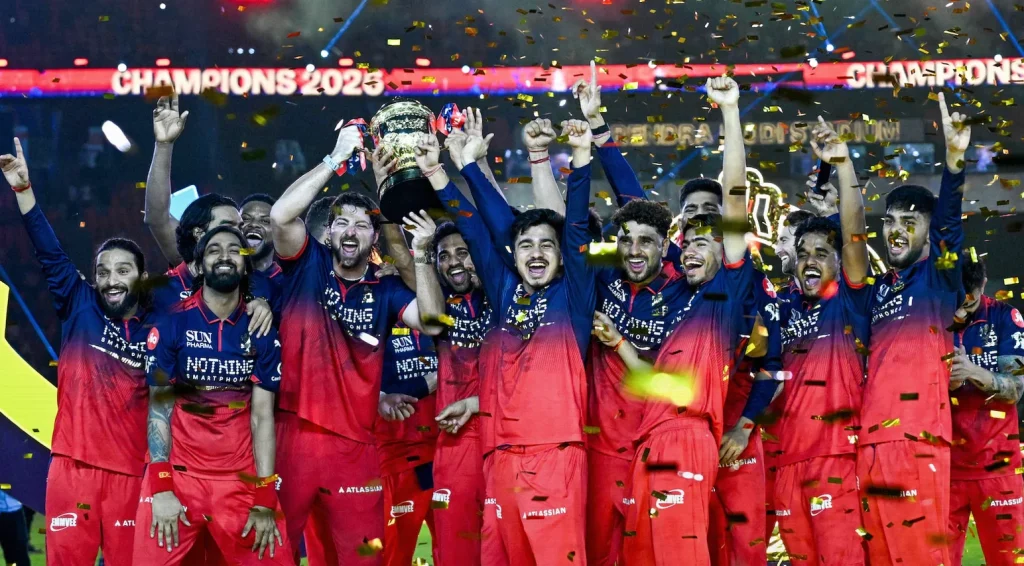
Royal Challengers Bengaluru’s cricket leadership believes an IPL trophy can’t be manufactured purely at the auction table, even if the franchise’s decision-making there can shape everything that follows. Speaking in a virtual press interaction on Monday, RCB director of cricket Mo Bobat stressed that while auctions offer opportunities to build, they can also bring regrets—insisting the team management had strong confidence in the squad they assembled at the previous IPL mega auction.
That conviction was put to the test in the most emphatic way possible. RCB backed their auction choices again in Ahmedabad on Sunday, overpowering Gujarat Titans in the IPL 2026 final to claim the title for a second straight year. The victory also extended their momentum after breaking an 18-year wait for silverware last season.
Bobat summed up his view on the auction process with a blunt but clear message: “I don’t know whether you can actually win a tournament simply through the auction. What I do feel is that you can probably lose one through it.” He added that once a franchise has moved past its initial mega auction, it becomes difficult to correct course—particularly when decisions about squad composition, team structure, and even individual personnel start to settle into place.
He further explained that subsequent seasons mostly revolve around mini auctions, which narrow the window for major change. “And then you’re only dealing with mini auctions in the later years, and it gets quite difficult in the mini-auction stages,” Bobat said.
Recalling the wider narrative around RCB’s squad at the time, the director of cricket noted that the club was viewed unfavourably when analysts and broadcasters assessed the quality of their squad emerging from the mega auction. Bobat said RCB were placed near the bottom in such rankings, with many expecting the team to finish last.
“It’s funny when we finished our mega auction,” Bobat remarked. “I think we were ranked second bottom for the quality of the squad by quite a lot of broadcasters and a lot of experts, and many people had us to finish last.” However, he insisted those external opinions did not alter the franchise’s internal thinking or mindset.
According to Bobat, RCB remained focused on the blueprint they had set for the team. “That was certainly nothing that affected our thought process or psychology,” he said. “We were clear on what we were trying to build as a squad in terms of team structure. We were also clear on the traits and characteristics we wanted in the players—a blend of skill and character.”
Bobat said the auction delivered that exact balance in the squad they wanted. “Both of those things are really important. We got pretty much everything we wanted and more at the auction,” he noted. “We left the auction very happy—like most teams do after an auction—but also fairly confident that we could carry out the plans we had set for what we wanted to achieve.”
During the tournament, Bobat’s emphasis, he said, was on driving the group to secure a top-two finish in the league stage. “I always had it in my mind that once we won that first one, we needed to not settle for that,” he explained. “Because, like any sports team, you want an almost infinite goal—something you’re constantly striving towards that keeps inspiring your fans.”
He added that the push for higher standards started immediately after the previous season ended. “From the moment we finished last season, we’ve tried to push people to be ambitious about going again,” Bobat said. “Across both seasons, I’ve personally been quite keen and fixed on trying to achieve top two. And if you can put yourself in a position to finish top two, everybody knows what that historically means for your chances.”
RCB’s captain Rajat Patidar, meanwhile, described a leadership style built around collaboration and calm execution. He said the way he captained in the 2025 season was rooted in keeping everyone involved—coaches and players included—close to the decision-making process, effectively turning his advisory setup into a shared platform for ideas.
“When I got a new role in 2025, I was pretty clear that I don’t have to change myself if I’m coming in the new role,” Patidar said. “That’s my strength, being calm and composed. I have an awareness of the game situations. If you have great management and a great set of players behind you, they always try to give ideas and inputs to me.”
Patidar said he values both instinct and consultation. “I always like to back my instincts, but I also like to go and communicate with the coaches and the experienced players, where I can get ideas,” he said. “Overall, this is my way of captaincy.”
