
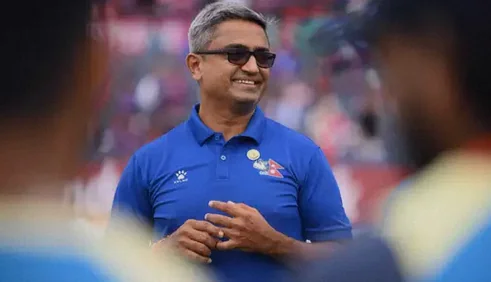
Monty Desai’s appointment as head coach of the Canada men’s team might look, on the surface, like a standard reshuffle in cricket staffing. Yet it lands in the middle of one of the most unstable stretches in Cricket Canada’s recent period, and it could become the first visible move toward a more professional approach in a setup that has faced repeated allegations of poor administration, corruption, and broader governance turmoil—most notably the arrest of former Cricket Canada chief executive Salman Khan on charges described as “theft and fraud.” With multiple director roles set for election at the critical AGM on May 9, Canadian cricket is staring at a potential turning point, where reform-minded voices may finally challenge entrenched leadership and reshape how the game is run.
Desai’s entry comes roughly a fortnight after CBC News reported on April 15 about serious governance breakdowns. The report highlighted claims of corruption, failures in oversight, and the possible influence of antisocial elements within Cricket Canada’s decision-making structure. The groundwork for a new figure like Desai was laid through a chain of administrative disruptions: a court-mandated removal of then-president Amjad Bajwa, the removal of Praim Persaud at the Special General Meeting on April 9, and the resignation of former secretary Maninder Gill, who reportedly stepped away under increasing pressure from provincial bodies.
At that same SGM, Amrinder Khosa from British Columbia was appointed as interim president. His mandate is to guide the board until the AGM on May 9, a meeting now viewed as pivotal for determining whether governance reform can move beyond announcements and into lasting structural change. In this volatile context, Desai’s appointment has taken on added significance.
Desai arrives with a coaching track record described as long and unblemished, including work in high-performance environments such as the Indian Premier League ecosystem. His selection is being framed as a contrast to the more opaque coaching decisions that followed Pubudu Dassanayake’s departure in 2024. During the subsequent months, names such as Khurram Chouhan—who has surfaced in connection with fixing-related allegations—were linked to operations inside a system many observers believed to be compromised.
However, Desai’s appointment is more than simply filling a vacancy. It is being presented as an opportunity to install stronger accountability. His independence and standing are expected to influence not just dressing-room culture, but also major choices, including captaincy—a topic that has recently been surrounded by controversy. A coach allowed to support his own leadership group could act as a safeguard against outside interference, and—importantly—help limit the spread of spot-fixing vulnerabilities within Canada’s national setup.
Even so, the path to reform is unlikely to be straightforward. While the SGM did bring in some fresh faces, it did not amount to a complete overhaul. The installation of a new secretary, Paramjit Shahi—widely believed to have played a role in bringing Desai onboard—has been received as a positive development. Yet interim president Khosa’s position is also under scrutiny in the aftermath of the April CBC investigation. The report claims Khosa maintained close links with people associated with the Bishnoi gang, alleging that they threatened a senior national player with consequences if Dilpreet Bajwa and another cricketer were dropped.
Khosa has denied any connection to the gang. For clarity, the reporting does not claim evidence that Dilpreet’s appointment as captain was made at Khosa’s direction. Still, the rapid promotion of the 22-year-old to the captaincy ahead of the T20 World Cup was met with widespread suspicion among many in Canadian cricket circles. Adding to the unease, the same report indicates that Bajwa is now under investigation by the International Cricket Council over alleged spot-fixing. Together, these assertions cast a heavy shadow and raise the possibility that leadership could change again at the AGM, with reformists pressing for a cleaner slate at the top.
The stakes go well beyond the presidency. At least five director positions are due for election, including that of Rana Imran, described as a key ally of Amjad Bajwa. Along with former chief executive Salman Khan, the trio oversaw what courts later characterised as “governance concerns” and “lack of proper financial controls.” Khan’s period in office is said to reflect the structural weaknesses that had plagued the board for years.
Khan’s progression—from director to a paid CEO role—occurred despite criminal charges tied to alleged financial misconduct connected to Calgary. That shift was enabled under Amjad Bajwa and Imran’s watch. Cricket Canada’s constitution required a director under police investigation to step down, but the process was effectively worked around, bypassing the safeguard. Even after concerns were raised by the International Cricket Council and Sport Canada, it took nine months for Khan to be removed.
Khan is now seeking an estimated payout of around USD 475,000, arguing that contractual protections would ensure compensation unless his termination is tied directly to a criminal conviction connected to his CEO responsibilities. The governance controversies have not been limited to executive appointments. In another long-running decision under the Bajwa-led administration, the leadership reportedly ousted Bombay Sports Limited—the original stakeholders behind the GT20 Canada competition—and transferred the rights to the emerging National Cricket League (NCL).
That move drew widespread concern across the broader cricketing landscape. NCL had already been suspended by the International Cricket Council after its debut season for breaching franchise league guidelines. Later reporting by WFAA also pointed to vendor payment defaults exceeding a quarter of a million dollars. Despite these red flags, GT20 rights were granted to NCL for a remarkable span of 50 years—an arrangement now viewed by many as a lasting symbol of questionable governance under the previous regime.
That agreement is expected to be closely examined at the AGM, where reformists are preparing to argue for a comprehensive reset rather than cosmetic changes. For the moment, Desai’s appointment is being treated as a rare sign of optimism, not as a complete fix on its own, but as an indication that merit-based decision-making could regain space within Canadian cricket.
Whether that signal becomes a sustained transformation depends on what happens on May 9. There is cautious belief that the AGM could mark the start of a more thorough cleanup. Still, in a system where partial reform has often been mistaken for genuine progress, the ultimate verdict will rest with time and—more importantly—the determination of stakeholders to push Cricket Canada toward a lasting new chapter.
