
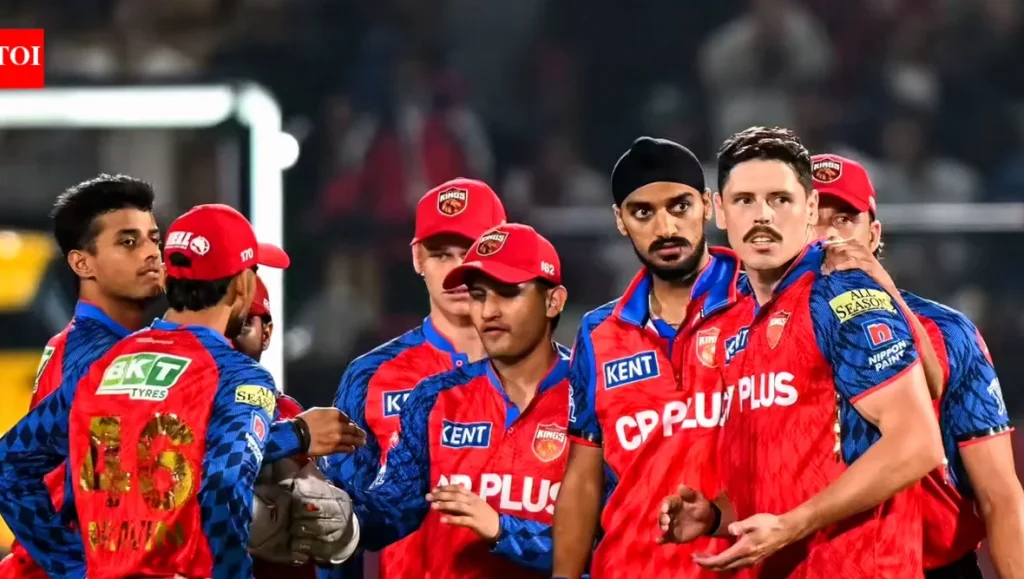
Punjab Kings went into IPL 2026 with enormous hopes after finishing runners-up in the previous season, guided by Shreyas Iyer. For much of the campaign, PBKS looked like the tournament’s most fearless and complete outfit—winning six of their first seven matches, with the lone blemish being a no-result. They spent a remarkable 22 days perched at the summit and looked on course for a top-two finish, even reminding fans of how quickly a team can turn dreams into reality.
That promise briefly became a statement of intent when Punjab produced one of the most stunning chases in T20 history, chasing 265 against Delhi Capitals. KL Rahul’s 152 went in vain as PBKS pulled off the target with belief and precision, as though the franchise had finally assembled the right blend to lift the trophy.
Then, in the most brutal fashion, the season turned. Punjab suffered one of the most dramatic collapses seen in IPL history, dropping six straight matches in the second half. Momentum—so carefully built in the early weeks—evaporated at exactly the wrong time. Even after winning their last league fixture, PBKS still finished fifth, missing the playoffs by a single point.
Going into the final league day, Punjab’s pathway remained open. They needed Rajasthan Royals to lose to Mumbai Indians so they could slip into the top four. But RR held their nerve, completed qualification, and confirmed the end of PBKS’s campaign.
Main reasons Punjab Kings missed the IPL 2026 playoffs
-
Bowling collapse derailed the season
PBKS’s biggest problem in IPL 2026 was their bowling unit, which repeatedly failed to convert competitive totals into wins. While the batting side often delivered enough runs, the bowlers struggled to defend them, leaving the team unable to close out matches from winning positions.
Statistically, Punjab’s bowling ranked among the weakest in the competition: they were ninth out of 10 teams for wickets taken with just 64, carried the tournament’s worst bowling average at 42.54, posted the poorest economy rate at 10.40, and also had the lowest dot-ball percentage at 29.2%. The numbers pointed to a group that neither created sustained pressure nor took wickets regularly.
Punjab crossed 200 runs 10 times during the league phase, yet still lost several games even after reaching huge totals. Their inability to defend 200-plus scores exposed trouble in the final stages of matches and a recurring failure to execute when the pressure rose.
Death bowling became particularly costly. PBKS lost three matches in the final over itself, including games against Gujarat Titans and Rajasthan Royals where they had looked firmly in control. Those narrow defeats ultimately proved decisive in the race for qualification.
-
Overreliance on pace and underuse of spin
Punjab’s bowling plan throughout the tournament also looked unbalanced. The side leaned heavily on seamers and did not trust its spin attack enough—even on surfaces where turning the ball would normally dictate play.
In a telling sign, PBKS spinners bowled only 59 overs across the entire season, the fewest by any team in IPL 2026. That approach hurt them in the middle overs, when opposing batters often seized control without the scoreboard pressure that regular spin can bring.
Much of the responsibility fell on Yuzvendra Chahal, but even for the veteran leg-spinner, the season was frustrating. He managed 12 wickets in 14 matches at an economy of 9.39, yet the impact did not match the output. In multiple fixtures, Iyer surprisingly did not allow Chahal to bowl his full quota of four overs, signalling doubts in the captaincy about using their lead spinner during high-pressure phases.
Chahal also suffered because of dropped chances in the field. Eight catches were missed off his bowling during the season—an issue that can affect both confidence and wicket momentum. Punjab’s unwillingness to consistently support spin was one of the tactical mistakes that surfaced repeatedly.
Ironically, Harpreet Brar—Punjab’s most economical spinner—appeared in only two games, despite maintaining an economy rate of 7.50.
-
Arshdeep and the pace attack couldn’t dominate
Arshdeep Singh finished as PBKS’s leading wicket-taker with 14 wickets in 14 matches, but his numbers reflected the broader issues. He conceded at an economy of 10.20 and did not consistently deliver breakthroughs in the powerplay, leaving the team without early control.
For long stretches, Arshdeep appeared far from the level of the bowler who has emerged as one of India’s premier T20 pacers.
Marco Jansen also failed to meet expectations. The South African all-rounder picked up only nine wickets in 13 games while conceding at 10.20 per over. His batting contribution was equally limited, with just 51 runs at an average of 12.75 and a strike rate of 113.33.
Vijayakumar Vyshak struggled to find steady rhythm, while Lockie Ferguson lost the confidence of the management after repeatedly expensive spells.
With no dependable wicket-taking option and no reliable death specialist, Punjab were exposed as the tournament moved into its business end, when execution matters most.
-
Fielding errors shattered momentum
If bowling was Punjab’s biggest technical weakness, fielding turned into their most significant psychological problem. PBKS dropped 16 catches from 56 opportunities, one of the worst records in the league. Several of those lapses directly swung matches away from them.
Coach Ricky Ponting acknowledged that poor catching spread through the dressing room “like a virus,” while Iyer called it the “biggest setback of the season.”
Those mistakes kept resurfacing across venues and conditions, creating a tense atmosphere inside the squad during crucial phases. When a team is already fighting for control, repeated fielding failures only magnify pressure.
-
Middle-order inconsistency hurt them
Punjab’s top order often showed strength, but the middle and lower order struggled to deliver consistently under pressure. Beyond Iyer, no other middle-order batter regularly stepped up during difficult situations.
Once early wickets fell, PBKS frequently looked vulnerable. The team expected Marcus Stoinis and others to provide finishing stability, but those contributions arrived only in bursts rather than dependable spells.
In the second half of the season, Punjab repeatedly lost momentum in the middle overs after strong starts from the top. That is the area PBKS are expected to tackle aggressively in the next auction—most likely by bringing in an experienced batter who can bat between No. 5 and No. 7 and calmly close games when the match tightens.
-
Home-venue disruption affected rhythm
Another factor behind Punjab’s collapse was the decision to split home matches between Mullanpur and Dharamsala during the season. PBKS looked settled and dominant at Mullanpur, where their aggressive batting style fit the conditions.
But once the tournament entered its final stretch and the team shifted to Dharamsala, momentum vanished. Punjab lost all three matches at the venue, a run that effectively ended their playoff hopes.
Ravichandran Ashwin criticised the management for changing home venues mid-season, calling it one of the major reasons behind the late collapse. He argued that successful IPL sides build consistency around one venue and one set of conditions—something PBKS failed to do.
The venue shift also exposed their bowling weaknesses further. Although Dharamsala presented different conditions, Punjab persisted with the same combinations and tactics even while their bowling was already struggling.
At a stage where familiarity and momentum become vital, the change only added instability to a campaign that was already beginning to unravel.
IPL 2026: PBKS report card
-
Batting: 8/10
PBKS’s batting stayed among the strongest areas of their season and was the main reason they remained in playoff contention for so long. Prabhsimran Singh topped their run-scoring with 510 runs in 14 matches, striking at 168.87 and averaging 42.50. His aggressive starts repeatedly put pressure back on the opposition.
Iyer had a standout year at No. 4, scoring 498 runs at an average of 55.33 and a strike rate of 168.81, all while managing captaincy responsibilities effectively.
Connolly enjoyed a breakthrough debut campaign, contributing 491 runs with an average of 44.64 and a strike rate of 163.12, establishing himself as one of Punjab’s more dependable options.
Priyansh Arya flashed brilliance and ended with 364 runs at a striking 211 strike rate, though his inconsistency became apparent in the second half as his returns dipped.
Overall, Punjab’s batting was strong enough to challenge for the playoffs; the problem was that their bowling unit repeatedly let them down.
-
Bowling: 3.5/10
Punjab arguably fielded the weakest bowling attack in IPL 2026. The inability to take wickets, poor economy rates, lack of control in the middle overs, and a consistent failure to execute plans at the death combined to derail their campaign.
-
Fielding: 3/10
Fielding mistakes cost PBKS crucial moments and eventually valuable points. Dropped catches, missed opportunities, and nervous body language became a recurring theme during their run of defeats. For a team chasing title glory, their standards in the field fell short.
-
Captaincy and coaching: 7.5/10
Iyer and Ponting earned credit for transforming PBKS into an aggressive, entertaining side. The fearless batting approach and the confidence within the group during the first half were major positives.
However, issues related to bowling combinations, spin utilisation, and game management under pressure ultimately proved too costly.
What next for Punjab Kings?
Even with the disappointment of a late-season collapse, Punjab still have a solid base to build on. Their top order appears stable, Iyer has provided leadership continuity, and youngsters such as Prabhsimran, Priyansh Arya, and Connolly have shown that PBKS’s batting core looks exciting for the future.
Still, if Punjab want to challenge for IPL title honours in 2027, they must rebuild the bowling attack almost from the ground up. The most likely targets include a proven death-over specialist, an experienced middle-order batter capable of handling pressure between No. 5 and No. 7, and a dependable second spinner to support Chahal. They will also be looking for bowlers who can control the powerplay and middle overs—rather than simply deliver overs, but actually shape matches.
Keep an eye on upcoming IPL action, including the RCB vs GT matchup, and follow the latest IPL news, as well as the race for the Orange Cap and Purple Cap.
