
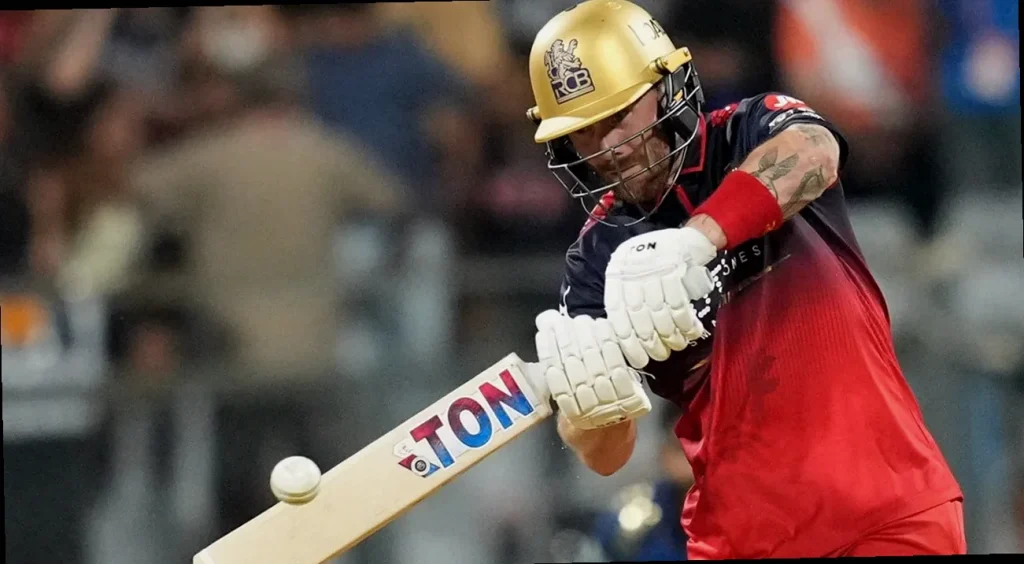
Phil Salt showed exactly why elite T20 openers can flip a chase in a matter of overs, especially when the pitch starts offering easy rhythm. Against Mumbai Indians (MI) at Wankhede on Sunday night, Salt produced a 36-ball assault that set the tone for Royal Challengers Bengaluru (RCB) and forced the opposition to rethink their bowling plan almost immediately.
Key takeaways
- Salt’s strike-rate numbers have been fairly close against spin (179.09) and pace (175.50) since the start of IPL 2024.
- In the powerplay before this match, he was attacking spin at nearly 259 compared to about 169 versus pace.
- After Mitchell Santner was brought on for the fifth over, Salt struck three consecutive sixes in a row from the short length.
- By the time the innings reached the 65/0 stage with one powerplay remaining, Salt had already faced 24 balls and looked fully set.
- Hardik Pandya responded to the damage by bringing Jasprit Bumrah into the powerplay again, conceding only six in that spell.
- Salt was named Player of the Match and stressed the need to keep attacking and rely on your strengths even when conditions aren’t bowler-friendly.
Salt’s planning meets a fast start
Salt is known for being methodical well before the ball is bowled. Ahead of games, he maps out patterns, studies pitch behaviour, and steps into the crease with a clear batting framework. On Sunday night versus MI, though, his preparation would not have predicted the specific spell he received.
Since IPL 2024 began, his strike rate against spin has sat at 179.09, while his numbers versus pace have been 175.50—close enough to suggest he’s not simply a one-dimensional hitter. However, when the view is narrowed to the powerplay, a sharper contrast appears: Salt went after spin at nearly 259 before this contest, while his powerplay strike rate against pace stood around 169. The early overs, therefore, were the part where he looked most dangerous against spin, and he didn’t have to wait long to prove it.
Once RCB were sent in to bat, Salt began accelerating from the outset. He dispatched deliveries that were even slightly short from the MI fast bowlers, reaching 22 runs off 13 balls before MI introduced spin in the fifth over. That role fell to Mitchell Santner, and with RCB racing to 41 without loss and two right-hand batters already established at the crease, bringing on a left-arm spinner—especially one of Santner’s calibre—was a move that many would have expected.
Three sixes off Santner and the innings takes off
The first ball from Santner arrived short and came with pace, and Salt read it instantly, pulling it for six with quick, committed hands. Virat Kohli, visibly impressed, applauded as Salt tapped his bat in acknowledgement.
On the next delivery, Santner aimed fuller, and Salt punished the change of length with ferocity. The hit flew over long-on and cleared into the second tier of the ground. Kohli celebrated again, stepping across and punching Salt’s glove.
Salt then repeated the pattern with another short ball, sending it into the stands once more. That meant three sixes in a row, and at that point MI’s fielding unit’s energy clearly shifted—shoulders dropping, eyebrows rising. Captain Hardik Pandya could be seen looking on from a distance, but Salt was still building.
The fourth ball he received was lifted in the air too, pitched outside off, and Salt responded with a slog sweep that went for four. Even though nothing came off the last two deliveries of the over, the damage was already done: it became a 22-run over for Salt.
That burst also created a tactical knock-on effect. Jasprit Bumrah had bowled the third over for only ten runs, yet because the innings had surged, Bumrah was required to bowl again in the sixth over as well.
Fan noise, powerplay tactics, and a growing advantage
Salt may have been carrying RCB’s chase almost single-handedly, but the Wankhede crowd still found rhythm in chants—calling out “Aarceebee, Aarceebee” and “Koh-lee, Koh-lee”—even while the star batter looked far from his sharpest. The lack of specific recognition for Salt’s big hitting didn’t appear to affect him in the slightest.
RCB finished that stage at 65 for 0, with one more powerplay over left to complete. MI were under so much pressure that Hardik decided to give Bumrah a second powerplay over. In that spell, Bumrah conceded just six, and Santner managed to pull things back with four runs in the seventh. After that, Hardik moved to legspin, turning to Mayank Markande ahead of Shardul Thakur.
By then, Salt had faced 24 balls, and his grip on the chase looked firm and ominous for MI. If his first contact during Santner’s over had been pure muscle and flashy swings, his approach versus Markande was more about timing and finding gaps. The momentum continued as he completed a streak of 4, 4, 4, then finished the burst with a disdainful leg-side six off another short delivery.
At the other end, Kohli remained scratchy, scoring at just over 130. On a flat Wankhede surface—where runs were expected to keep coming and dew was anticipated once RCB started to bowl—Salt’s contribution became even more critical.
Salt’s message after the Player of the Match award
After being named Player of the Match on the broadcast, Salt explained the mindset behind his acceleration: “Some of these grounds aren’t the most bowler-friendly, so you have to keep the mentality that you will keep going at the opposition. And not forget your assets as a player, it’s about being a match-winner, isn’t it? I know I can’t get runs every game, nobody can.”
RCB’s wider IPL 2026 batting picture
RCB’s batting setup had already been tested early in IPL 2026. Devdutt Padikkal and Rajat Patidar had led RCB’s chase of Sunrisers Hyderabad’s 201 in their first match. In the second game, Tim David powered the side to a massive 250 against Chennai Super Kings.
After a brief setback in Guwahati—where the 201 wasn’t a batting disaster even though RCB lost comfortably—Salt’s form in Mumbai, combined with Kohli and Patidar’s steadier run-making, rounded out RCB’s batting unit for IPL 2026. With this momentum, RCB now prepare to travel to Bengaluru for a stretch of three home matches.
