
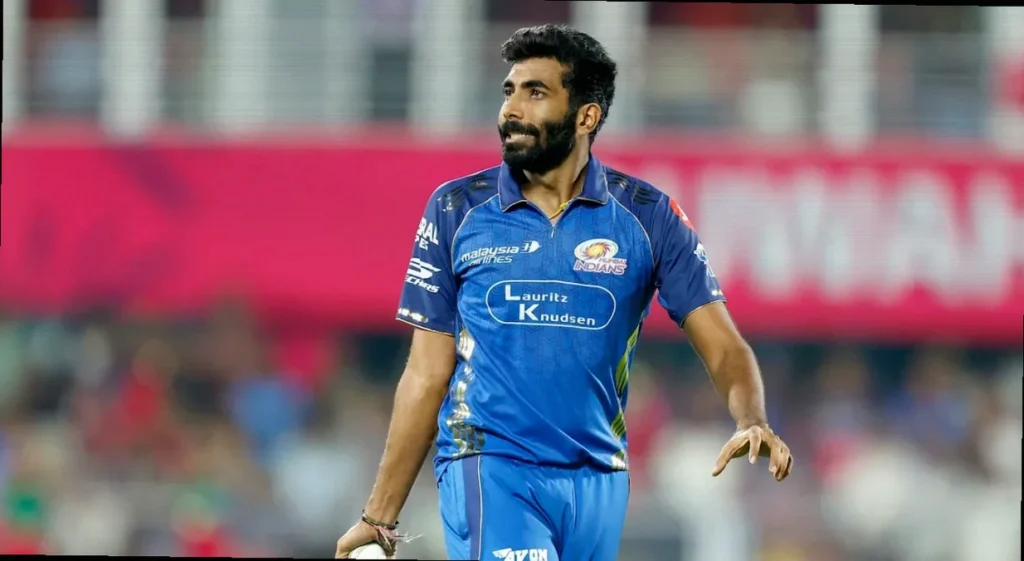
Jasprit Bumrah is yet to register a wicket, and Trent Boult has also gone wicketless so far. Through the early phase of the season, five Mumbai Indians (MI) bowlers are operating at an economy rate of 12 runs an over or higher, a trend the franchise will want to arrest quickly.
Even with T20 cricket continuing to produce bigger totals year after year, this is the kind of “tighten the screws” situation MI prefer to address early. The concern is heightened by the fact that they have dropped their previous two matches, sliding to eighth place in the points table. While MI return to the comfort of home conditions for their next two outings, they know that Wankhede Stadium—where they face Royal Challengers Bengaluru (RCB) on Sunday night—does not offer any automatic protection for bowlers.
Speaking after MI’s most recent defeat, to Rajasthan Royals, head coach Mahela Jayawardene pointed to a failure to carry out the side’s plans with the new ball. Boult, who has been IPL’s leading wicket-taker in the first over, has struggled not only in the two matches he has played so far, but across all T20 cricket this year. In nine appearances across the SA20 and IPL in 2026, Boult has taken just two powerplay wickets from 16 overs, conceding runs at 9.62 per over.
Deepak Chahar and Shardul Thakur—usually among MI’s more dependable wicket sources—have also not been able to provide the backing Bumrah would like. Chahar, though, produced an economical spell against Delhi Capitals, but Rajasthan Royals’ openers dismantled him in a shortened contest in Guwahati. Thakur, meanwhile, has continued to play the role of a double-edged option: he is MI’s leading wicket-taker at this stage with four wickets, yet he has also been the team’s most expensive bowler, with an economy rate of 12.88.
With AM Ghazanfar similarly going for around 12 an over while collecting only two wickets, it is possible that opponents MI have encountered so far have tried to keep things simple—minimising damage against Bumrah while targeting the remaining bowlers instead.
MI batting coach Kieron Pollard addressed Bumrah’s wicket drought on Saturday, suggesting that the modern T20 landscape makes wicket-haunting less predictable than it used to be. “When you look at T20 cricket now, the way it’s going, you can’t really think too much about wickets,” Pollard said. “Even the game that’s going on [Punjab Kings vs Sunrisers Hyderabad]—the powerplay went for more than 100 runs. So again, sometimes the best form of attack is also defence.
“And we’re not overthinking Jasprit Bumrah not taking wickets. He’s a world-class bowler. He’s done it time and time again for India and also for Mumbai Indians. When the moment comes to take wickets, he’ll get them. If he doesn’t and he’s economical, then we’ll accept that as well.
“It’s all good on our side. We don’t treat cricket like that. And personally, I never look at cricket like that. Cricket is a team sport. So for us, it’s about coming together as one and trying to get the desired result at the end of the day. Then I can look into the different things and create things that aren’t there. For us, he’s fine—he’s fit, he’s firing. And for your sake, I hope he gets five wickets tomorrow. And the economy is about five as well,” Pollard added with a laugh.
For MI, one encouraging element is that Bumrah has kept the run flow under control, conceding at just eight an over so far. However, his pace has been noticeably lower than expected. In his first delivery against Rajasthan Royals—when Vaibhav Sooryavanshi cleared the ropes for six—the speed registered just over 130 kph. After that, he didn’t really find any extra gears, rarely troubling the 140 kph mark.
Pollard also touched on the pace aspect, explaining why MI’s approach cannot be about matching fire with fire. “As it comes to the pace and the lack of it—if the ball is going at 100 knots out of the ground, you don’t want to fight fire with fire, right?” he said. “You have to try something different. But, again, as I said, we’re not concerned about Jasprit Bumrah. There’s no issue.”
Even so, Bumrah may draw confidence from the way he has found wickets consistently against RCB. His tally of 29 wickets is the second-best by any bowler versus Bengaluru. Still, MI will need to be sharp against an RCB batting unit that is packed with attacking options. On Friday, RCB slipped to 94 for 6 versus Rajasthan Royals, yet they made it clear they would not soften their intent, eventually posting a total of 200-plus.
Until 2025, MI held a remarkable 10-year unbeaten run against RCB at the Wankhede. That streak ended last year, when RCB piled up 221 for 5 at the venue.
How MI’s bowlers are thinking in a high-scoring T20 era
With T20 scoring at inflated levels and batters increasingly fearless, MI’s staff have been discussing how best to adjust without losing their core identity. Pollard explained how experience shapes those conversations with the group. “The experience you’ve gathered over time, you tend to participate in all discussions and conversations,” he said. “It’s difficult for the guys. We just try to keep encouraging them. We work as hard as possible on execution and on understanding how we can, when the batters come in, get them out first—if not, then try to restrict them.
“When you’re out in the field, everything comes down to mindset and execution. So the most we can do is practise and have those conversations. Practice is skill, but on match day it becomes bat versus ball, and you see who cracks first.
“So for us, we’re going to hold strong as a bowling unit. On any given day, a couple of guys are going to go [for runs] in T20 cricket, but hopefully at the end we can average it out and stay within that sort of par total—which has crept up a bit over the last couple of seasons. Good conversations are being had, and hopefully the results will show up on the cricket field itself.”
