
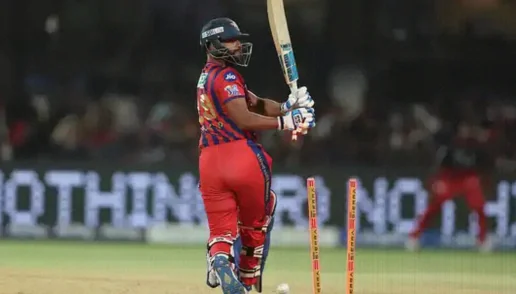
For a brief stretch that felt almost unfair to opposition bowlers, Nicholas Pooran looked like the most punishing T20 batter in the world. His 2024 campaign delivered huge totals and a barrage of sixes, and he carried that momentum into 2025 for a while. But the trend has clearly reversed since IPL 2025, and the decline becomes even more pronounced when limited to 2026 matches—turning what was once a feast into something closer to a famine.
Key takeaways
- Pooran’s 2024 output—2,331 runs and 170 sixes—set a men’s T20 calendar-year record.
- In 2025, the next-highest benchmarks on those categories were 2,036 runs and 135 sixes, with Pooran’s figures of 1,918 runs and 121 sixes ranking fifth on both.
- After IPL 2025, Pooran’s returns dropped further, including a notable 25% fall in strike rate versus spin.
- In IPL 2025, Pooran managed 119 runs at 163.01 against short-pitched deliveries; in IPL 2026, he scored 10 off 17 balls in that same length matchup.
- LSG sit as the weakest batting side among the 10 teams in IPL 2026 so far, with an average of 18.77 and a strike rate of 126.85.
- With Rishabh Pant nursing an elbow injury, LSG may consider moving Pooran into the No. 3 spot in their next game.
Pooran’s T20 dip: from peak to sharp drop
There’s no question Pooran’s 2024 was the defining season: his tally of 2,331 runs and 170 maximums remains the standout record for a men’s T20 calendar year. The closest totals—2,036 runs and 135 sixes—belong to the next best performers in their respective categories. Pooran’s 2025 numbers, 1,918 runs and 121 sixes, still placed him fifth on both measures, reinforcing the idea that his peak seasons were extremely rare rather than merely good.
Still, much of Pooran’s success in 2025 did not come solely from the IPL. His runs and impact also flowed through ILT20 and the IPL, the two leagues he played during that phase. That momentum didn’t last through 2025’s close: he made a surprise retirement announcement within a week after IPL 2025 ended, and his last T20 International appearance dates back to December 2024.
The post-peak decline is visible in how his skills have been translating ball by ball. One of the clearest indicators is a steep reduction in strike rate against spin, down by 25% from the earlier period when his numbers against turning deliveries were far more intimidating. Against pace, the drop is equally stark in the specific short-pitched matchup: in IPL 2025, Pooran struck 163.01 while scoring 119 runs off that length, with three dismissals. In IPL 2026, his short-ball return has fallen to just 10 runs from 17 balls, again with three dismissals.
In the most recent stretch of innings, the pattern has largely been the same. The ball has beaten him either through the extra bounce or through a lack of it, and the angle from over the wicket has also mattered—particularly against tall right-arm quicks such as Cameron Green, Prasidh Krishna, and Josh Hazlewood. Through 23 matches in IPL 2026 so far, Pooran has contributed 42 runs across five innings, striking at 76.36. His dot-ball rate stands at 60% (33 dots out of 55 deliveries), underlining a higher frequency of missed scoring opportunities.
What makes the situation tougher for his franchise is that the rest of the batting has not been consistently picking up the slack compared to 2025. In 2025, LSG were the top side for overseas batting contribution, and they also posted the best overall unit against spin among all 10 teams—based on average and strike rate. This time around, that support has not arrived in the same way, and Pooran’s downturn has been compounded by a broader batting collapse. Aiden Markram and Mitchell Marsh have also experienced sharp declines, while Rishabh Pant has struggled versus spin, with a strike rate of 111.95 across IPL 2025 and IPL 2026 combined.
LSG’s wider batting problem—and the Pooran No. 3 idea
With 23 matches played, LSG have already become the poorest batting unit in IPL 2026 when measured by both average and strike rate. Their average sits at 18.77, and their strike rate is 126.85—far below the overall tournament aggregates of 28.43 and 155.41 respectively. Against that background, it may not be a bad plan for LSG to promote Pooran to No. 3, especially if Pant is unavailable for their next outing.
Pant is currently dealing with an elbow injury, and if he misses the game, it would force LSG to rethink their top-order structure. Pooran has shown he can deliver heavily from one-down in better conditions: last season he scored 466 runs at a strike rate of 201.73 from one drop, forming a demanding top-order segment.
One reason LSG’s 2025 story still matters is that they found ways to win even when the big names had to come under pressure. Two of their victories last season were powered by standout performances from uncapped batters—Ayush Badoni and Mukul Choudhary. Without the resistance from that duo, LSG might have finished two spots lower in the points table.
This season, with Badoni and Choudhary offering some fight again, LSG can draw confidence from the depth that exists below the top. If they choose to reunite their most destructive batters at the top—Pooran at No. 3 and the core around him—then the hope is that the early overs become more productive, and the innings stops depending so heavily on late recovery.
