
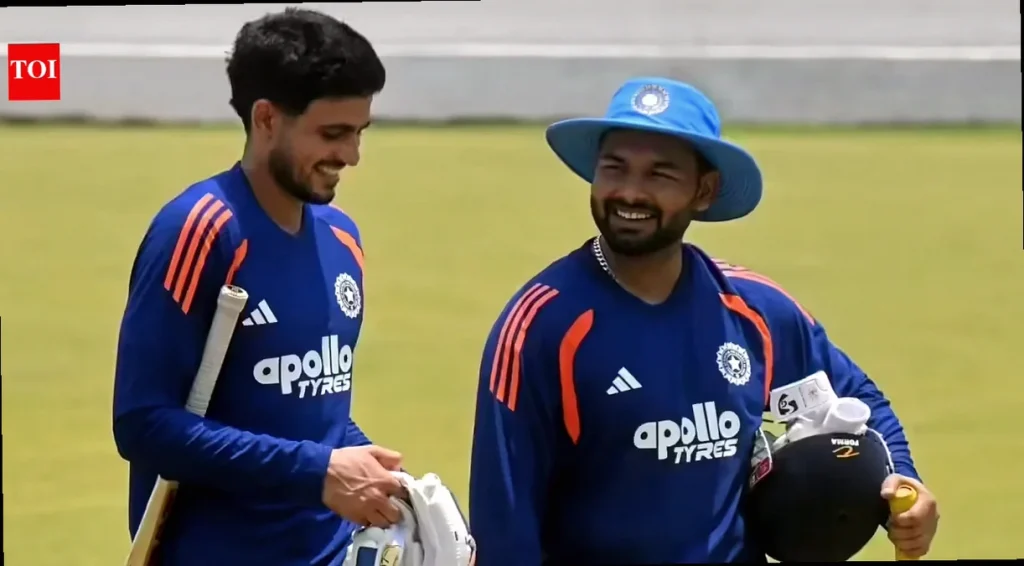
Three days after the IPL final, Team India find themselves trying to shake off 75 days of ingrained habits. What used to be the norm in the T20 tournament—late nights, even later starts, and split-second instincts—is giving way to earlier breakfasts, longer practice sessions, and the physical and mental demands of red-ball cricket. Before the side turns its attention to the one-off Test against Afghanistan, the immediate priority is to deal with the after-effects of the IPL grind.
Eight players from India’s 15-man squad for the standalone Test were directly involved in the IPL 2026 showpieces, with the finalists being Royal Challengers Bengaluru and Gujarat Titans. Seven of those cricketers featured for Gujarat Titans in the final, including captain Shubman Gill, fast bowlers Mohammed Siraj and Prasidh Krishna, opener Sai Sudharshan, and all-rounder Washington Sundar. Devdutt Padikkal, meanwhile, represented Royal Challengers Bengaluru. After the IPL ended, the Test group has now assembled in Chandigarh, and preparations for the red-ball assignment have already begun.
The transition timetable has been harsh, and it is only set to intensify. Later this year, India are scheduled to tour New Zealand across three formats, running from October 22 to December 1. The gap between India’s fifth ODI and the opening Test against the Kiwis is just three days, with the fifth ODI slated for November 15. The first Test of the two-match series is set to start on November 19.
Speaking on Thursday, India’s assistant coach Ryan ten Doeschate said the scheduling challenge has been addressed, with the Strength and Conditioning staff, led by Adrian Le Roux, mapping out a plan to help players move past their IPL routines. “It is a great point. Like you say, the IPL time cycle is so different to what Test matches require. The guys have had three days to do it,” he told reporters. He added that the team has been adjusting day-to-day routines to match the demands of an early start, noting that Wednesday featured an early practice session, Thursday’s work would come later in the afternoon, and Friday would be morning-based again, with the option to manage time accordingly. “Tomorrow will be optional,” ten Doeschate said, adding that he has already seen players up in and around the breakfast area over the last couple of days.
Ten Doeschate also explained that Le Roux deliberately scheduled gym sessions early in the morning to push players to reset their clocks. The message, he said, was simple: these are professionals who understand what readiness looks like, and they are adjusting so they can be fresh for the Test preparation that will begin on Saturday morning with an early routine. “Adrian scheduled some gym stuff early morning just to force guys to get up and adjust their time slot,” he said. “These guys are good professionals. They know what is required and they will be adjusting accordingly to make sure that they are ready come Saturday morning for the Test match and an early start.”
Managing sleep patterns has emerged as another major hurdle in the shift from franchise cricket to the longer format. Ten Doeschate described it as one of the most important parts of the job for the support staff right now. “Our job is just to prepare the players for what is ahead of them. Sleep cycle is probably top of that list, and that is being addressed,” he said.
However, changing sleep habits is only one piece of the overall adjustment. The broader task, according to the former Netherlands all-rounder, is to help players shed the reflexes and decision-making that come with T20 cricket, and to rebuild the patience and discipline that Test matches require. He framed the early days after the IPL as a kind of “detox” from the white-ball rhythm. “But I guess from a white to red ball perspective or IPL to Test match cricket is really detoxing them, and that is what these three days have been,” he said.
That detox process, ten Doeschate suggested, is not just about tempo, but also about the way batters and bowlers think. Players need to base their choices on where the ball is being pitched, and the team is looking to make technical refinements—particularly around how batters set up and manage their bat position. “You want to make sure guys are making decisions based on where the ball is pitched. You want to make a few technical tweaks on how you set up maybe and how you keep your bat shape and all those sort of things,” he explained.
India’s training in recent days has reflected that approach. Longer batting sessions have been used to build endurance and concentration, slip-catching drills have been included to sharpen fielding skills that matter in the Test format, and bowlers have worked through extended spells rather than the high-intensity bursts associated with T20 cricket. “The last two days and obviously today and tomorrow have been all about that,” ten Doeschate said. “Just detoxing guys, making sure that those habits that are required to be successful in white-ball cricket are put to bed and they focus on playing proper Test cricket.”
Ten Doeschate also acknowledged the distinct difficulty of moving straight from the IPL into a one-off Test played under extreme summer conditions. While he did not label it ideal preparation, he made it clear that the players are expected to adapt. “I don’t think good or bad is worth reflecting on. It is certainly a challenge,” he said.
He further pointed out that India’s players have rarely avoided tough assignments, whether those challenges are technical, tactical, or mental. “You are playing an IPL final five days ago at night time, and now you have got to come and start a Test match early in the morning at 34-35 degrees. Just another challenge on the road and the guys will take it on like they always do,” ten Doeschate added.
