
Punjab Kings began IPL 2026 as the reigning finalists and eventually bowed out of the league phase in fifth place with 15 points—just short of the postseason threshold. While the on-field narrative has already been explored in terms of momentum swings, the deeper and more uncomfortable explanation sits in the numbers: how the franchise’s spending translated into measurable on-field value across the entire campaign. Using the WPA Impact Index framework, the season’s financial picture for PBKS looks less like a near-miss and more like a structural contradiction that no six-match winning streak could fully mask.
The headline profit—and the cost beneath it
PBKS recorded a season profit of ₹27.29 crore, which placed them sixth in a ten-team monetary ranking. Over the course of the competition, the total value generated by the squad was ₹135.21 crore, against a combined cost base of ₹107.92 crore. On the surface, that is a franchise finishing in the black with a seemingly reasonable margin.
However, the apparent comfort is misleading because the spending profile was unusually heavy. PBKS carried the third-highest cost base in the league, trailing only the Mumbai Indians (₹112.59 crore) and the Delhi Capitals (₹108.57 crore). The teams that finished first through fifth in the monetary table spent far less—between ₹85.80 crore and ₹97.48 crore—leaving PBKS as the outlier with the largest investment.
Sunrisers Hyderabad, the best commercial performer in the league phase, illustrate the difference. They produced a profit of ₹69.46 crore while operating on a cost of ₹87.41 crore. PBKS, by comparison, generated ₹27.29 crore on an investment of ₹107.92 crore, a gap that becomes clearer once the internal mechanics of the valuation are examined.
When the “base impact” profit-and-loss is isolated, the real story sharpens. After stripping out rating adjustments and captaincy-linked credits, PBKS’s raw cricket value versus cost produces a deficit of ₹36.45 crore. The reported ₹27.29 crore profit exists because ₹11.72 crore in captaincy premium and positive rating adjustments ride on top of a base that is, in plain terms, deeply underwater. In other words, PBKS appear profitable on the ledger not because auction spending created returns on the field at the expected rate, but because subjective quality recognition and role-based credits propped up the headline outcome.
Where the value was created—and where it collapsed
PBKS’s commercial engine was heavily concentrated at the top of the batting order, particularly among three relatively inexpensive contributors who accounted for a significant share of the surplus. Prabhsimran Singh, signed for ₹4 crore, generated ₹19.90 crore in value across 14 appearances, translating into a profit of ₹15.90 crore. Cooper Connolly, bought for ₹3 crore, returned ₹17.39 crore in value with a profit of ₹14.39 crore across 14. Priyansh Arya, at ₹3.80 crore, produced ₹14.06 crore in value and ₹10.26 crore in profit. Taken together, these three players cost ₹10.80 crore and generated ₹51.35 crore in worth, leaving a combined surplus of ₹40.55 crore.
The clearest value ratio in the squad belonged to Suryansh Shedge. He was purchased for ₹30 lakh, produced ₹5.91 crore in value over seven appearances, and posted a surplus of ₹5.61 crore on an investment described as negligible. His recovery percentage is highlighted as the type of metric that causes data-driven auction teams to revisit their assumptions.
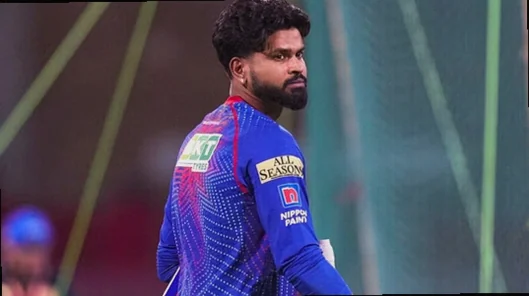
Shreyas Iyer, the captain, is the one figure the raw ledger cannot fully describe on its own. At ₹26.75 crore, he is the most expensive player in PBKS’s squad, and his apparent P&L of ₹2.65 crore might look modest at first glance. But the WPA Impact Index assigns ₹11.72 crore in captaincy value across the season. The significance of that number is not captured by a typical batting scorecard; it reflects the structural job he did in keeping a young, inexperienced top order connected through a grueling 14-match run. With captaincy premium included, his total P&L becomes more aligned with the cost. His match-winning hundred against LSG in the final league game is cited as another reason the season reads less like a costly underperformance and more like paying for an anchor when the surrounding batting and bowling balance was coming apart.
Yet the same ledger also shows that the base-level deficit was concentrated almost entirely in two lines of the player account. Yuzvendra Chahal, purchased at ₹18 crore, generated ₹3.73 crore in value across 13 appearances, ending with a profit-and-loss of minus ₹14.27 crore. Arshdeep Singh, also at ₹18 crore, generated ₹5.07 crore in value across 14 appearances, with a profit-and-loss of minus ₹12.93 crore. Combined, Chahal and Arshdeep cost ₹36 crore, produced ₹8.80 crore, and destroyed ₹27.20 crore of value. That figure is described as accounting for two-thirds of the entire top-order batting surplus.
Other bowling and bowling-support investments deepened the drain. Marco Jansen posted minus ₹3.79 crore on a ₹7 crore cost, Marcus Stoinis finished at minus ₹2.51 crore on ₹11 crore, and Lockie Ferguson ended at minus ₹2.07 crore on ₹2 crore, with a negative raw bowling impact. Ferguson is specifically noted as the only PBKS player with a negative raw impact figure, meaning his bowling cost the team more in match-probability terms than it contributed through wicket-taking or pressure creation. By monetary measure, the entire bowling group reads as an anchor that pulled the franchise down rather than one that steadied the campaign.
The verdict in the WPA Impact Index framing is blunt. PBKS built a standout batting top order on comparatively modest deals, then committed around ₹47 crore to four overseas and senior bowling investments—Chahal, Arshdeep, Jansen, and Stoinis—that failed to recover their cost on the model’s impact basis. The batting created enough surplus to keep PBKS profitable on paper, but it was not enough to offset the bowling drain across a full 14-match season. It was also not enough to sustain a playoff push once opponents gathered sufficient information to neutralise a top order that was doing nearly all of the work.
The lesson from the ledger is presented as not subtle: paying premium-level rates for bowling and receiving only low-to-mid output in impact terms is what ended the season. The gap between cost and return—more than any question of nerve, momentum, or match-day execution—is identified as the key reason PBKS fell short.
Methodology note: The monetary valuations referenced here are outputs produced through the WPA Impact Index, a player valuation model built to convert match impact into rupee-equivalent estimates. The approach assigns a monetary worth to each player appearance by translating impact scores—derived from win probability added calculations on a ball-by-ball basis—into rupee values using each player’s auction price as the cost denominator. Rating adjustments are then applied on top of the base impact to reflect subjective performance quality, while captaincy value is scored and monetised separately.
All figures are denominated in Indian rupees (crore). The worth and profit-and-loss figures represent modelled valuations and are not official franchise accounting data. They are intended as analytical estimates reflecting cricket impact within the WPA framework, and should be treated as such rather than contractual or financial disclosures.
