
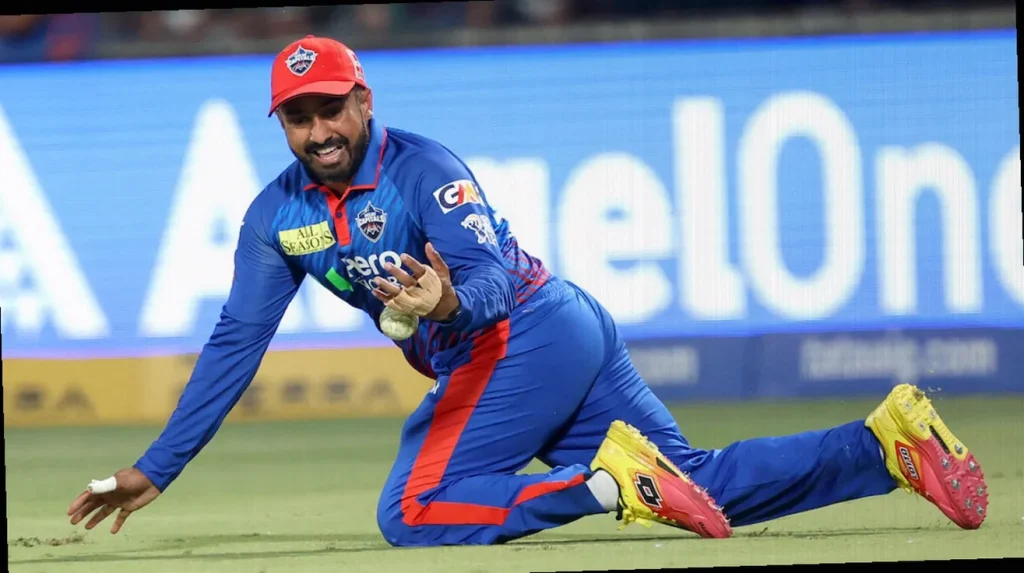
Delhi Capitals fell short of defending 264 in Delhi on Saturday evening, as Punjab Kings chased the total down with seven balls left—marking the highest successful run chase in T20 history.
Key takeaways
- Punjab Kings completed the 264 chase with seven balls remaining, the top successful chase ever in T20 cricket.
- Prabhsimran Singh and Priyansh Arya delivered a huge powerplay stand of 116 runs, throttling the chase requirement early.
- DC’s bowling struggled in the first phase: Axar Patel’s early overs and the overall powerplay figures left PBKS in a strong position.
- Carlos Brathwaite argued DC lacked early intent, while also suggesting Kuldeep Yadav should have been introduced sooner.
- Shreyas Iyer then took charge once he arrived at No. 4, finishing unbeaten on 71 from 36 balls.
- Deep Dasgupta praised the opening pair’s approach, saying their shots looked like “normal cricket” rather than forced hitting.
Powerplay fireworks swing the chase
PBKS’ pursuit was powered by 116 runs added by Prabhsimran Singh and Priyansh Arya during the powerplay, a blitz that ranked as the second-highest powerplay total in IPL history. The momentum they created pulled the required run-rate down sharply—starting at 13.25 and settling to 10.50 after six overs.
What went wrong for DC in the bowling phase
On the Time:Out show, Carlos Brathwaite felt DC didn’t apply enough pressure early to keep PBKS within reach. He pointed specifically to a lack of proactive decision-making in the bowling plan.
DC captain Axar Patel handed out four of the first five overs to Auqib Nabi and Mukesh Kumar. That early spell cost 87 runs, with their combined economy reading 21.75. Axar’s own over, which came as the third of the innings, also went for 20. T Natarajan was the only bowler who managed to keep things comparatively under control during the powerplay, conceding nine runs in his opening-overs stint. Kuldeep Yadav was not brought into action until the eighth over, by which time the established batters had already pushed PBKS to 127.
Brathwaite said that when a team posts a high score—something in the 200-plus range—it doesn’t have to be overly defensive, but the bowling mindset must be built around the idea that the target can be defended. He also noted that Natarajan bowled only once in the powerplay and argued DC could have been more aggressive with their selections.
He added that Kuldeep should be introduced earlier. Even if Kuldeep didn’t take wickets, Brathwaite suggested the bowler could slow the scoring and stem the flow for an over. In the same breath, he referenced how Natarajan’s delivery in the early phase effectively “took the pitch out of play.” Brathwaite’s point was that if Natarajan and Kuldeep had both bowled three of the first six overs and PBKS had still managed 65 in the powerplay, the chase would have looked far more difficult for the chasing side.
Iyer’s control after the openers fell
Brathwaite also credited the fast start for helping Shreyas Iyer settle quickly. Once the openers departed in the seventh and eighth overs, Iyer came in at No. 4 and began running the chase, finishing unbeaten on 71 off 36 balls.
He explained that because the powerplay had already been so productive, Iyer didn’t have to deal with constant pressure on scoring rate from ball to ball. Brathwaite suggested that this kind of platform would not be possible if the team required 19 or 20 runs per over from the outset, forcing batters to take risks and constantly rotate their roles.
Brathwaite concluded by saying DC might have structured their game differently when defending 264. With such a total, he argued the bowling side needs to come out from the first ball with the intention of staying ahead in the powerplay—either by taking wickets during those six overs or by using their best bowlers in that phase, so that the required rate climbs into the 20–21–22 range and becomes harder to manage.
Deep Dasgupta lauds the opening partnership
Deep Dasgupta reserved special praise for the opening combination. He highlighted that Prabhsimran struck 76 off 26 balls, while Priyansh Arya contributed 43 off 17. Dasgupta’s view was that the pair offered more than just raw hitting.
On Time:Out, Dasgupta said it was not “hitting” in the sense of flashy, overambitious strokeplay. Instead, he described their batting as composed, with the shots resembling standard cricketing strokes. He said that the standout quality of the opening pair was how effortless their play looked, even while they were compiling runs at pace.
Brathwaite breaks down Prabhsimran’s batting plan
Brathwaite added further detail on Prabhsimran’s approach. He said that as soon as Prabhsimran connected well, he would be ahead of the ball, anticipating what was coming next—specifically a slower delivery. Brathwaite noted that in those situations Prabhsimran would respond decisively, using movement and timing to attack over the line or charge down the track.
He also explained the versatility in the batter’s options: the ability to play from the crease, to charge, to shift across and use pace, or to send the ball back over the top. Brathwaite’s final point was that once a bowler enters a mindset of avoiding certain deliveries, the batter is already prepared—and that was the pressure the opening partnership placed on the bowling attack.
