
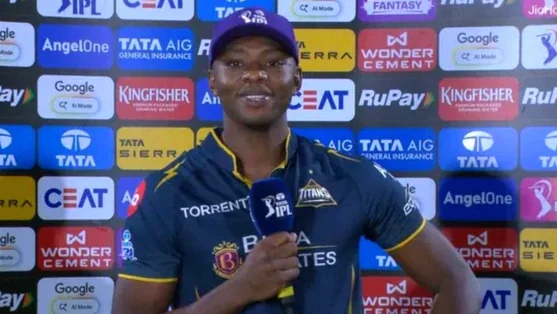
Kagiso Rabada brushed aside the hype around his clash with teenage newcomer Vaibhav Sooryavanshi, insisting he won’t be changing his bowling approach despite facing the Gujarat Titans–Rajasthan Royals rivalry under the spotlight on Saturday night. The matchup had plenty of electricity, with Sooryavanshi striking early and sending the ball sailing for a couple of tidy sixes to claim the personal battle in the moment. Even so, Rajasthan’s chase never gained the necessary momentum.
Rabada’s response and the match’s turning points
- Vaibhav Sooryavanshi hit early sixes and set the tone for a brief duel advantage.
- Rabada finished with figures of 2 for 33 in the contest.
- He removed Yashasvi Jaiswal and Shimron Hetmyer at key stages of Rajasthan’s innings.
- Gujarat Titans posted 230 and won by 77 runs.
- Rabada said he would stick to his tried-and-tested plans even against fearless youngsters.
For all the early noise from the teenager, Rabada delivered the final say in the wider contest. His spell came at crucial junctures, and the wickets of Yashasvi Jaiswal and Shimron Hetmyer helped dismantle Rajasthan’s middle order and halt any realistic acceleration. That control mattered, because Gujarat had already put together a substantial total of 230.
After the Titans’ batting set the platform, Rabada’s discipline helped keep the chase under wraps. He absorbed pressure early in his over, but stuck to his lengths and the same fundamentals that have defined his spells over time. In the end, the pressure translated into wickets at the right moments, and the Royals fell well short.
How Rabada framed the duel with Sooryavanshi
With the Purple Cap conversation now moving in his favour, Rabada was asked directly about bowling to the 15-year-old and how he approaches such matchups. He laughed off the idea that a teenager’s fearless batting should force a rethink. Instead, he stressed that the core method remains the same, even when the opponent looks to play with freedom.
Rabada pointed to the preparation that sits behind execution—work on weaknesses, analysis of how batters try to score, and the planning that shapes where balls are meant to land. His message was that the on-field process is built on a long routine, with fine-tuning that comes from studying opponents rather than abandoning what has worked for years.
“What’s worked for 11 years will continue to work, right? So I guess it’s just hedging your bets and hoping that it comes off. But there’s a whole lot of hard work that’s done behind the scenes and then, you know, a bit of analysis to look at batsman’s weaknesses. So there is that type of nuance in the game, but otherwise it’s just the same old, same old,” Rabada said to broadcasters.
Sooryavanshi’s start and dismissal
Sooryavanshi’s impact was clear, too. He struck 36 runs off 16 balls and looked to push the chase forward, but his stay at the crease was cut short when Mohammed Siraj removed him in the third over of Rajasthan’s run chase. That early wicket tightened the game further after his initial burst.
Rabada also spoke about his own rhythm at the business end of the season, focusing on how he manages the physical and mental grind. He acknowledged that the body may feel fine at certain points, but that fatigue tends to build—especially when the tournament moves into its most demanding stretch.
“Yeah, body feels good. But this is where the fatigue starts to set in. The mental fatigue too. So it’s just about trying to stay on top of that. Make sure that you’re as fresh as possible. So that’s where the professional side of the game is needed, a lot more, especially in the back end. But my body feels good and hopefully I can just continue what I’ve been doing,” he added.
GT climb up the table
With the dominant performance, Gujarat Titans moved up to second place on the points table. The 2022 champions were clinical on Saturday, controlling the game with both bat and ball, finishing the night with 14 points. The comprehensive 77-run success further strengthened their push for a playoff spot.
