
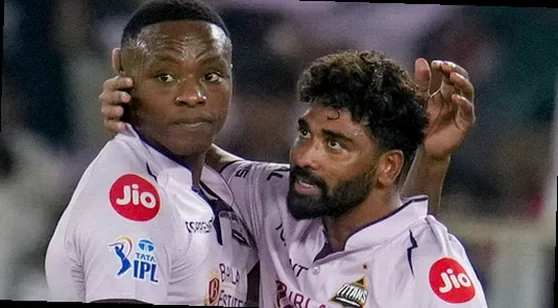
Batting fireworks have dominated this IPL season, but Tuesday’s clash in Ahmedabad flipped the script—two sides engineered dramatic defensive recoveries by leaning on their bowlers. Sunrisers Hyderabad arrived after winning six of their last seven games, while Gujarat Titans entered the match on a four-game winning run. With top-place implications and a near-guaranteed playoff route hanging in the balance at the Narendra Modi Stadium, it was the franchise with the sharper bowling resurgence that produced the decisive statement. SRH were thoroughly dismantled as Gujarat stormed to a dominant win after restricting their opponents to 86 all out in 14.5 overs.
How the match swung in Ahmedabad
- Gujarat posted 168 after Sai Sudharsan’s innings-saving fifty propelled them to a competitive total.
- During the innings break, Sudharsan admitted he was unsure whether 168 would be truly par on the surface, reflecting doubts about the pitch’s true value.
- Sunil Gavaskar, discussing the wicket earlier, had described it as a “belter,” and later suggested Gujarat were still roughly 10 to 15 runs short of what the conditions might demand.
- Those concerns quickly became irrelevant as SRH’s chase collapsed midway through the innings, with Gujarat’s bowlers dismantling their batting unit.
- Gujarat completed the rout by bowling SRH out for 86 in 14.5 overs, handing Hyderabad a heavy defeat.
With the victory, Gujarat climbed to the top of the IPL 2026 standings for the first time and moved to within touching distance of qualification. The wider story is that their turnaround has been driven almost entirely by a significant change in how they’ve been bowling—particularly in the opening phase.
Earlier in the season, their bowling returns were far from stable. In their first seven matches, Gujarat managed an economy rate of 9.66—ranked fifth-worst among all sides—during a stretch that included four losses. From April 26 onwards, however, they transformed their figures, tightening to an economy rate of 8.0, the best in the league during that window. That surge coincided with five straight wins, but the most important detail lies in a more specific adjustment to their powerplay plan.
The “Bentley-Rolls Royce” powerplay transformation
In their opening seven games, Gujarat used a wide rotation of six different bowling options during the powerplay. Even with that variety, they still picked up 10 wickets at 9.24 runs per over—numbers that were respectable in a season where powerplay scoring has reached record levels, hovering around 10 runs per over. Yet the figures masked a lack of clean execution and a routine that didn’t consistently apply pressure in the early overs.
After back-to-back defeats to Mumbai Indians and Royal Challengers Bengaluru last month, Gujarat simplified their approach. They placed Kagiso Rabada and Mohammed Siraj at the centre of their new-ball strategy. Notably, those two pacers were already responsible for all 10 of Gujarat’s powerplay wickets across the first seven matches, underlining how effective the duo had been when given the keys to the opening overs.
What each bowler changed
- Siraj took on the controlling responsibilities, conceding only 7.17 runs per over while collecting three wickets.
- Rabada, operating from the other end, converted pressure into wickets, taking seven powerplay wickets at a strike rate of nearly one wicket every two overs.
For the next five matches—each of them Gujarat wins—Rabada and Siraj each bowled three overs inside the powerplay. This pattern had not previously been seen in the IPL’s 19-season history. The immediate effect was stark: Gujarat’s powerplay economy slipped further to 7.8, the best mark in the league for that phase, and they secured 15 wickets in those opening spells. The only team to reach double-digit wickets in the same powerplay window was RCB, with 11.
Gujarat’s strike rate in the opening overs also improved sharply, dropping from 25.2 to 12. Rabada accounted for nine of those wickets at an economy rate of 7.8, striking roughly once every 10 balls, while Siraj contributed six wickets at an even better economy rate of 7.6. That dominance reappeared on Tuesday night in Ahmedabad, with the duo delivering the kind of early blows that take away any momentum before batters can settle.
Siraj struck first by removing Travis Head for a duck in the opening over. Rabada then used variations in line and length to devastating effect, dismissing Abhishek Sharma, Ishan Kishan, and Smaran Ravichandran in consecutive overs. By the end of the sixth over, the debate about whether 168 was chaseable had effectively ended, with SRH’s top-order collapse sealing the contest.
Gavaskar neatly captured the contrast in Gujarat’s new-ball rhythm, saying: “Bentley from one end, Rolls Royce from the other.”
Why the Rabada-Siraj plan worked
Former India batting coach Sanjay Bangar highlighted the confidence behind Gujarat’s strategy, pointing to the quality of their remaining bowling options—Jason Holder, Rashid Khan, and Prasidh Krishna. That depth, Bangar suggested, gave Gujarat the freedom to commit strongly to Rabada and Siraj upfront, a luxury that teams like SRH and RCB cannot always replicate consistently.
Bangar also linked the approach to the Impact Player rule, arguing that modern T20 cricket leaves fewer “comfortable” overs. In his view, teams can no longer rely on certain overs being easier than others—whether that means the first over or later phases. With every over carrying consequence, deploying top resources right at the start becomes a major advantage, which is exactly what Gujarat have leaned on.
He contrasted Gujarat’s situation with SRH’s, stating that SRH’s comparable powerplay role is limited to Pat Cummins, who has not been available across the season. Bangar added that Eshan Malinga fits better in middle and death overs rather than the powerplay. He then examined RCB’s structure, noting that while Bhuvneshwar Kumar and Josh Hazlewood are an immediate thought, the crucial question is whether their later bowling options can fully control games if opponents survive the first six overs—an area where, in his assessment, Gujarat are different.
Bangar concluded that even if Rabada and Siraj bowl four overs each inside the first eight overs, Gujarat still have enough bowling quality to manage the remaining stages without losing control.
Ambati Rayudu, a former India batter and part of the same discussion panel, attributed the duo’s effectiveness to an old-fashioned Test-match mindset: relentless discipline. He argued that the pair consistently delivers high-quality balls, repeatedly targeting lengths that are just short of a good length to provoke edges or drive batters towards the top of off stump. Rayudu emphasised that they are not constantly changing deliveries out of fear of predictability or pressure from the batter.
Instead, he said, the method relies on consistency and forcing batters to take risks against good bowling, rather than trying to outthink hitters every over. “Instead of bowling six different balls,” Rayudu added, “the idea is to bowl six good balls.”
