
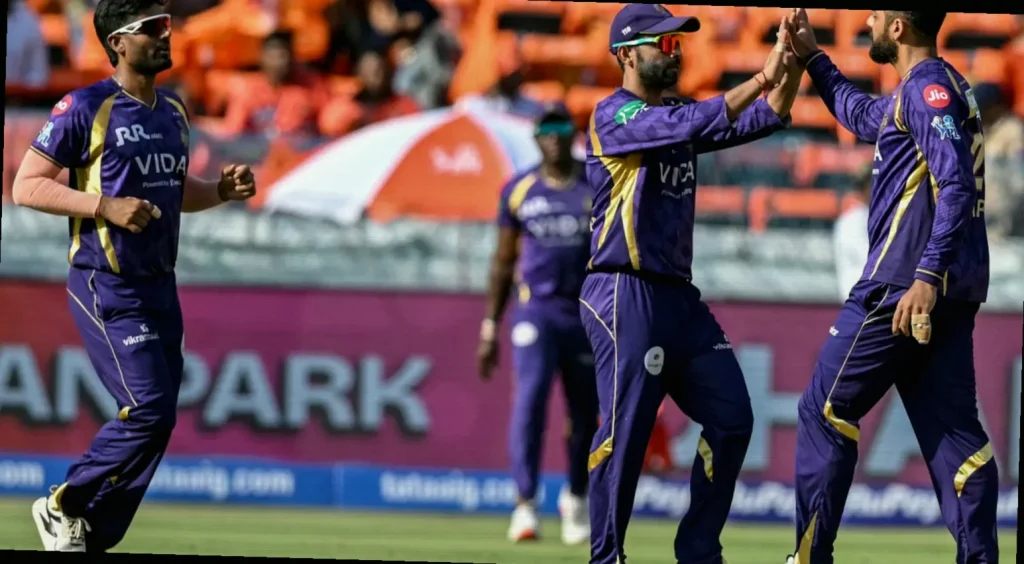
Kolkata Knight Riders captain Ajinkya Rahane has explained that the call to keep mystery spinner Varun Chakravarthy in the XI, even with a fractured left toe, was made only after the medical team had given the final clearance. Chakravarthy picked up the hairline injury earlier this month during KKR’s match against Sunrisers Hyderabad, when a straight drive from Ishan Kishan struck his shoe. It was not a first for the spinner in the tournament: this marked his third fracture of the season, after he had already played through two separate finger injuries on his left hand—the hand he does not use for bowling.
Rahane said the medical decision-making process involved discussion across multiple units rather than being driven by leadership or captaincy call alone. “Our team’s physios and the physios of the BCCI and the Indian team discussed it,” Rahane told reporters after KKR’s last league match on Sunday. He added that captaincy does not extend into medical deliberations, describing his own role as focusing on the player’s mindset—whether he wants to go out there, and how significant the risk is. “See, our team’s physios and the physios of BCCI and the Indian team, there was a discussion among them. I don’t get involved in that at all. That’s their department. My department is how’s the player’s mindset, does the player want to play or not, how big is the risk?” he said.
Speaking further on the thought process behind the decision, Rahane stressed that fitness and health always remain central, but the team’s medical staff believed the injury would not worsen. “Yes, it’s important to consider the health factor, to stay fit. Your injuries shouldn’t increase. Yes, we think about that. But the physios felt that his injuries won’t increase,” he said. Despite the fracture, Chakravarthy continued to play for KKR, demonstrating the balance between recovery management and competitive readiness that franchises typically aim for during a long season.
Because Chakravarthy is a centrally contracted India player, Rahane noted that his injury management required tight coordination between the KKR medical staff, the BCCI’s Centre of Excellence, and the physiotherapists attached to the Indian setup. He also pointed to a defined protocol that keeps the board informed about centrally contracted players’ fitness, particularly when there is a possibility that an existing issue could be aggravated. In that framework, decisions on whether a player can continue are made with input from the relevant medical stakeholders, ensuring there is no gap between franchise needs and national responsibility.
Rahane further linked the medical clearance to Chakravarthy’s own mindset and willingness to play. He suggested that the spinner’s eagerness to be involved in matches helped reinforce confidence in the plan being followed. “Rahane said Chakravarthy’s willingness to continue despite the pain reflected his commitment to the team. ‘Varun was eager to play. And he gets all the credit because in that injury, you show how important the team is for you. Varun was completely ready. Yes, we had to give him a break in one match because he was in a lot of pain. But he thought he could play. That communication came from him,’” Rahane said.
Rahane added that when a player communicates that he is willing and able to play, it creates a positive signal for both the physios and the team about intent and readiness, while still leaving the final risk assessment to the medical staff. “When a player says he can play, it sends a positive message to the physios and the team that he wants to play. He showed his eagerness to play. And the injury risk management was done by the physios. They thought the injury wouldn’t increase,” he concluded.
