
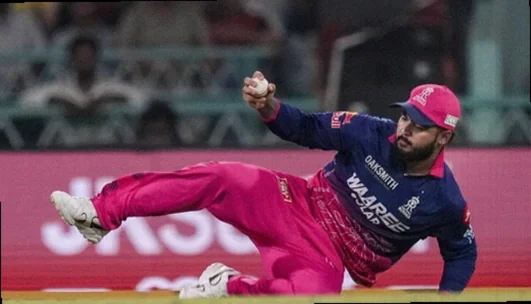
Let’s begin with the bright side of things for Rajasthan Royals. Even before stepping onto the field at the Sawai Mansingh Stadium in Jaipur, the franchise has already built a strong position: five victories, 10 points across seven matches, and second place in the standings. With Riyan Parag operating as captain in a rookie-style leadership role, the Royals have looked young, energetic, and convincing—suggesting they are heading toward playoff contention. Their combination of clean, high-impact batting and a bowling unit that can win phases of the game makes them a genuine threat in the tournament.
Parag’s captaincy also deserves credit for how he has managed his bowling options and used his overseas stars boldly. Jofra Archer and Nandre Burger have been trusted in important moments, and the way Parag has prepared for some of the league’s most dangerous hitters has shown intent. That said, the personal side of his captaincy story is not as smooth, and there is still a noticeable gap between responsibility and output.
For Parag personally, the burden of the “captain” label appears to be weighing heavily. In the IPL, many have struggled to separate the demands of leadership from their own role on the field, and Parag is among those trying to find the balance. His leadership may be ticking boxes in terms of planning and usage of resources, but his batting has not provided the kind of consistent impact his team expects.
There have been a few tactical moments that raise questions. One example is Parag giving himself an over against Rinku Singh and Anukul Roy, despite Ravindra Jadeja still having overs available. Another is the way an injured Kolkata Knight Riders setup was given a route to pull off the win against RR. Yet the larger concern is simpler—and more damaging for a team that needs stability in the middle: Parag has not shown up with the bat. He has scored 81 runs in seven matches while batting in the heart of the order, leaving a blank that risks turning all the surrounding good work into something far less effective.
Rajasthan’s batting environment does include plenty of Indian talent that has kept the unit competitive. Vaibhav Sooryavanshi’s ceiling remains largely untapped, Yashasvi Jaiswal’s leadership influence continues to grow match by match, and Dhruv Jurel’s role has become increasingly important. With that foundation in place, expectations were that the Riyan Parag of earlier form—someone who slammed 950-plus runs across the previous two IPL seasons—would keep producing. The focus was on bat speed, the ability to find gaps, and converting promising starts into larger totals that tilt matches decisively in RR’s favour.
What should have been delivered from the No. 4 position has, instead, resembled the kind of leadership-batting impact that other captains in the league have been providing. Shreyas Iyer for Punjab Kings and Rajat Patidar for Royal Challengers Bengaluru are both thriving in their respective roles, with their batting in the middle overs turning into a weapon for teams chasing title-level success. Their performances underline what can happen when captaincy and batting form a productive partnership.
What’s the solution for Parag?
Despite the additional responsibilities, Parag appears to be caught in a pattern seen with several players in the IPL—those who are handed the captaincy for their value to the group, only to find that the pressure becomes difficult to manage once matches begin. Rishabh Pant is one example of a captain who has continued to look uncomfortable in parts of his spell, while Ruturaj Gaikwad has also appeared to be operating below the level he showed before taking over from MS Dhoni.
Captaincy in T20 cricket is its own skill set, and at least Parag has shown signs of success in that department. Still, the reality is that you cannot simply select “the best” captain in the format anymore, especially in an era where teams have additional resources such as impact-player rules. In many cases, captains are appointed because of their influence on team spirit and on-field performance. If they lose their own contribution—particularly with the bat—the consequences can quickly become severe.
Pinpointing exactly what is going wrong for Parag is not straightforward. He has returned from a rehabilitation cycle following injury, and that could be affecting rhythm or timing. Kumar Sangakkara, meanwhile, believes Parag is striking the ball well and is not far from delivering a knock that could change games. Parag’s own view is similar: for him, it is a matter of turning preparation into results.
Is keeping batting separate from captaincy the right advice?
The answer is not identical for every player. In Iyer’s case, captaincy seems to have sharpened his batting maturity, allowing him to handle pressure with more control. Patidar, on the other hand, bats with the mindset that he wants the team to attack relentlessly—almost as if the role energises the way he plays, rather than slowing him down. There is no universal formula that guarantees success for Parag, but the message in RR’s current situation is clear: sooner rather than later, he needs to discover what unlocks his best batting while carrying the captain’s load.
