
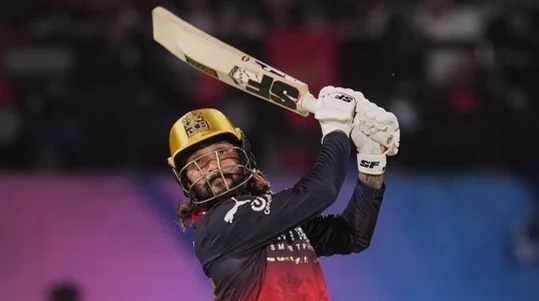
Rajat Patidar turned Qualifier 1 into a defining statement, delivering a match-winning display that swung the contest with brutal authority. He started with caution, striking 14 runs from his first 10 balls, before settling in and then accelerating at pace. From there, the innings transformed into a sensational surge of 93 off 33 deliveries, with the final 79 runs coming in just 23 balls—an explosion that dismantled Gujarat Titans’ plans and helped Royal Challengers Bengaluru reach the IPL final for the second consecutive year.
Qualifier 1: the innings that flipped the script
Patidar’s knock didn’t just add runs—it changed the rhythm of the chase and left Gujarat Titans scrambling for answers. After a measured opening spell, he found a rhythm that allowed him to pile pressure quickly once he was set. The result was a finish that felt inevitable in the final overs as he ensured RCB carried momentum into the title-deciding game.
- Early phase: 14 runs from 10 balls, played with restraint
- Acceleration phase: 93 runs off 33 balls in total
- Late surge: 79 runs scored in the final 23 balls of the innings
- Impact: Ripped control away from Gujarat Titans and propelled RCB into the final for the second straight season
From rise to spotlight: what Patidar’s journey signals
Patidar’s ascent has been one of the most eye-catching stories of the league cycle. His growth has been described as rapid, moving from an injury replacement opportunity to becoming the kind of figure an IPL side can build around—an arc that has only gathered momentum since.
International attention is now naturally increasing as well, particularly in the shortest format. His performances have highlighted composure and reliability under pressure, strengthening the argument that he can handle the mental and tactical demands of T20 cricket at the highest level.
Still, his path to India’s T20 setup is far from straightforward. He has already appeared in Test cricket, making his debut, but he could not secure a firm place after a difficult stretch against England. Since then, his development has been steady and visible—especially in leadership and batting roles where he has shown better control, sharper intent, and the ability to change games rather than simply support them.
While his recent form has kept him on the selectors’ radar, the reality is that breaking into the T20I group is becoming increasingly difficult due to the intense competition for spots—meaning innings like this only raise expectations further, but also make the selection battle more complicated.
Why RCB’s season plan fits Patidar’s strengths
Patidar has emerged as one of the standout names of the season, frequently influencing games from the middle overs. Last year, much of the narrative around Royal Challengers Bengaluru was tied to ending a long wait for a maiden title. This time, Patidar has stepped up as a key driver behind a more aggressive approach, operating away from the traditional top-order role while still keeping run-flow efficient.
- Middle-order influence has been central to RCB’s push
- Strike-rate recorded: 196.76
- Runs scored in the season: 486
- Role profile: able to swing momentum quickly even without batting at the very top
He began the campaign with fearless intent, targeting bowlers with confidence and helping RCB reach strong finishes from the middle order. After a short period where form dipped, he responded when the pressure rose—delivering timely contributions that again pulled him into the spotlight. His output has also restarted discussion about whether he could be back in contention for India’s T20I mix.
And if he were to lead RCB to titles in consecutive seasons, his case for broader recognition would naturally strengthen, making it harder for selectors to ignore him over the long run.
The selection puzzle: Suryakumar, Shreyas, and the finisher question
Even so, the biggest obstacle in Patidar’s way is the middle-order spot currently occupied by Suryakumar Yadav. Suryakumar recently captained India to a T20 World Cup triumph, and despite signs that his recent form has not been at its best, it would still be difficult to imagine selectors moving on immediately after a trophy-winning campaign. That makes competition for that particular role even fiercer.
There is also a possibility of shifts elsewhere. If selectors look at alternatives, Shreyas Iyer is viewed as being slightly ahead in the pecking order. Iyer has been a reliable performer across recent IPL seasons, and his leadership experience adds weight to his profile. Reports have also indicated that he remains in the conversation for a more prominent leadership role in T20Is—particularly if the selectors decide to move beyond SKY’s future contributions.
Over the past two IPL seasons, Shreyas has sustained strong middle-order form. In 2025, he scored 604 runs across 17 matches at an average of 50.33, striking at 175.07. That included six fifties, with his highest score being 97 not out. The momentum continued into 2026, where he made 498 runs in 14 games, averaging 55.33 with a strike rate of 168.81. His 2026 return featured a century and five half-centuries.
- Suryakumar Yadav: currently holds the key middle-order position after captaining India to T20 World Cup success
- Shreyas Iyer: viewed as slightly ahead if changes are considered, supported by steady IPL form and leadership experience
- 2025 output for Iyer: 604 runs (17 matches), avg 50.33, SR 175.07; six fifties; highest 97*
- 2026 output for Iyer: 498 runs (14 matches), avg 55.33, SR 168.81; one century and five fifties
Finisher-fit: where Patidar’s role may clash with team needs
For Patidar, the challenge becomes even sharper if India are choosing purely on the basis of “finisher” functions—especially in place of Shivam Dube. Patidar’s approach is built around spending a few deliveries at the crease before accelerating, which doesn’t always match the demands of a pure finisher role where impact is expected from the first ball of the final phase. That mismatch could count against him at this stage, particularly since Dube’s assignment has been to strike big shots immediately.
A potential doorway: squad rotation on tours
One realistic route for Patidar could come through a more aggressive rotation strategy by India, particularly on tours such as Zimbabwe and Ireland. If the team structure is adjusted in that way, he could receive opportunities in a second-string setup. Strong performances there would then create a pathway back into the main T20I group.
