
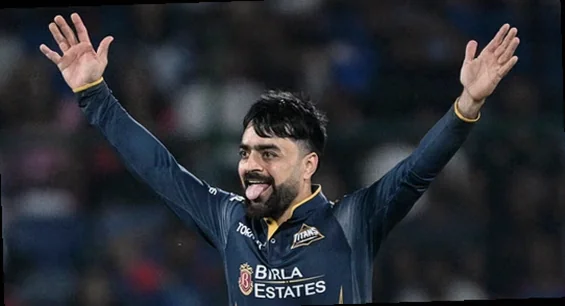
Rashid Khan’s long-standing attachment to Afghanistan has always been central to how his fans and followers understand him. Now, a fresh account in his autobiography adds a sharper edge to that loyalty, revealing that he was approached with offers that went beyond sport—offers tied to citizenship and the chance to represent other cricketing nations. In the book, Rashid says he declined those opportunities because he did not want to play for any team other than Afghanistan.
Offers from India and Australia, but Afghanistan stayed the line
The disclosure appears in Rashid Khan: From Streets to Stardom, a new book charting his journey from Nangarhar to cricket stardom. Rashid is widely recognised as one of the most in-demand T20 players in the world, but this episode is framed less around franchise success or financial upside and more around identity—how he sees himself and where he draws a personal boundary.
In the account, Rashid describes receiving overtures from both Australia and India that included pathways involving citizenship and the opportunity to represent those countries internationally. He says the response he gave was immediate. “I received such offers from both Australia and India. But I told them, ‘If I don’t play for my country, I won’t play for any other country either,’” Rashid is quoted as saying in the book.
That statement becomes the core of the story: it is portrayed as a direct, personal decision rather than a hypothetical situation. The choice, as Rashid recounts it, shows that even when major opportunities presented themselves elsewhere, they were not enough to move him away from Afghanistan.
The India approach during the 2023 IPL
Rashid also offers more detail about the India episode. He says the approach came during the 2023 IPL, a season when he was already among the tournament’s biggest names and a key figure for Gujarat Titans. In his telling, a team official informed him that a senior figure from India’s cricket establishment wanted to meet him.
Rashid then narrates how the meeting unfolded. He says he went in, greeted the official, and soon began a conversation in which the official highlighted the conditions in Rashid’s country. “The situation in your country is very bad. Come stay in India. We will give you Indian documents, live here, play cricket here,” Rashid recalls being told. He adds that he was taken aback and unsure how to respond.
In the book, Rashid explains that he handled the moment with politeness while still holding firm. He says he smiled and replied, “Thank you very much. I am playing for my country, Afghanistan.”
Revisiting the older debate about Rashid and Indian citizenship
Rashid’s remarks bring back memories of an earlier public debate. In 2018, after one of his standout IPL displays for Sunrisers Hyderabad, Indian fans flooded social media with calls for him to be granted Indian citizenship. At the time, Sushma Swaraj—then India’s external affairs minister—responded that citizenship issues fall under the Ministry of Home Affairs. Former Afghan president Ashraf Ghani also weighed in, saying Rashid was a source of pride for Afghanistan.
This time, however, the story carries additional weight because it is Rashid’s own recollection, presented from his perspective. It transforms what might have looked like a one-off political or public conversation into something more personal—an insight into how he views his own loyalty even as the IPL and global T20 culture expand the reach of players everywhere.
For a cricketer whose rise began under difficult circumstances and ultimately led him to the highest levels of world cricket, the episode stands out as one of the strongest declarations of allegiance linked to his name—reinforcing that, despite the leagues, the recognition, and the international spotlight, Afghanistan remained non-negotiable for Rashid Khan.
