
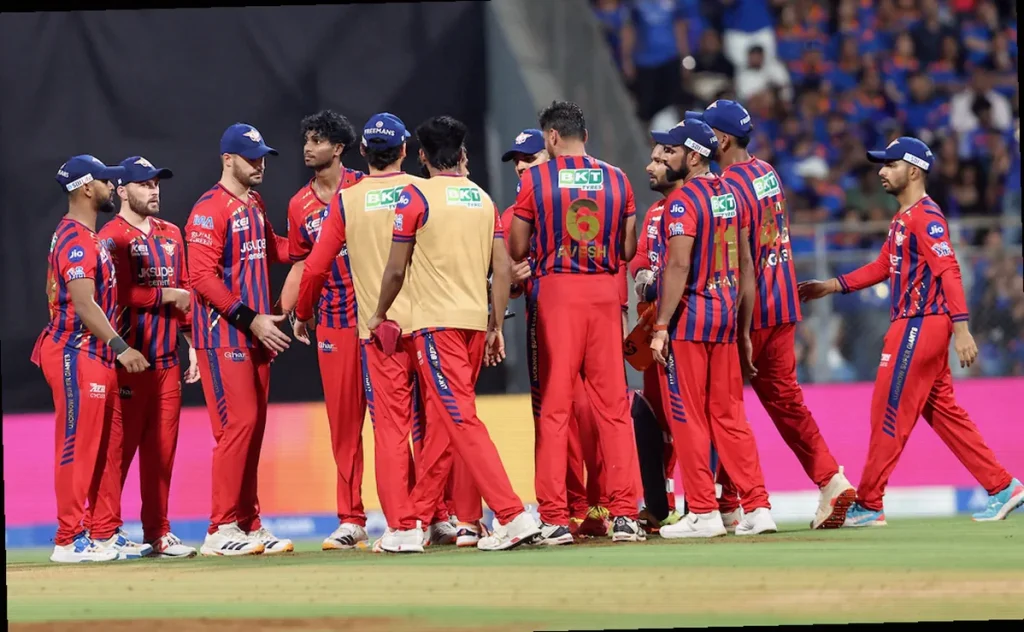
Former India cricketer Ravi Shastri believes Lucknow Super Giants’ struggles in the Indian Premier League 2026 are rooted in one big issue: a lack of steady support between their batting and bowling performances. LSG were dealt another heavy blow on Monday, slipping to their sixth straight loss after falling to Mumbai Indians by six wickets at the Wankhede Stadium. Lucknow had put up a challenging total of 228/5, but Mumbai chased it down with four balls to spare, reaching the target in 18.4 overs thanks largely to a dominant opening stand worth 143 runs between Rohit Sharma and Ryan Rickelton. Rohit struck 84 while Rickelton made 83, setting the tone for Mumbai right from the start.
While assessing Lucknow’s campaign, Shastri pointed to a disconnect in how the side performs as a unit. In his view, when the bowlers manage to keep things under control, the batters do not consistently deliver at the other end; and when the batting starts flowing, the bowling often fails to maintain that pressure. That pattern, he argued, has prevented the team from building momentum game after game. Shastri also said the psychological impact of repeated defeats is significant, adding that losing back-to-back matches can shake even a well-set squad and introduce doubt during moments when the result should be secured.
“The problem with LSG is that when their bowling unit does well, the batters don’t back it up, and when the batters start scoring runs, the bowlers end up leaking plenty. There’s no consistency. Six defeats in a row can really dent a side’s confidence. Even in games where you look comfortable, you start thinking, ‘Will we win, won’t we?’” Shastri said.
Shastri further highlighted that Lucknow have not always converted promising phases into solid totals, particularly in conditions that favour batters. He noted that the team has shown an ability to get off to strong starts, but then loses momentum for long stretches, allowing opponents to come back into the contest. His criticism was blunt: a score progression like the one he referenced, where fast gains are followed by a dramatic slowdown, points to missed opportunities and a failure to sustain innings control.
“You’re 100 for one in 7 overs, and then in the next 13 overs you score less than 130, which means you’ve faltered. You won’t get better batting conditions than this,” he added.
With the playoffs still within reach but increasingly difficult, Shastri said the LSG management must take a hard look at the way the team handles key moments. He suggested that reviewing the final overs of innings—particularly what goes wrong with batting execution—should be a priority, along with tightening the bowling plans in the same critical phases. In his assessment, small tactical tweaks and better in-game decision-making could be the difference between competitive totals and match-winning ones.
He also urged the bowlers to show more adaptability across venues, emphasising that conditions can change drastically from one ground to another. In Lucknow, he believes the wicket often supports fast bowlers, but once the team travels to places like Bengaluru or Mumbai—where the batting surfaces can be more favourable—the challenge becomes completely different. Shastri’s message was that length and line must be adjusted according to what the pitch offers, rather than relying on a single template.
“So, they’ll have to sit down and think about what went wrong in the last three overs while batting, and how they can tighten up their bowling,” Shastri said. He then added, “The bowlers have to adjust their lines and lengths according to the conditions. The Lucknow wicket tends to assist fast bowlers, but when you go to Bengaluru or Mumbai and get good batting wickets, that’s where the real test lies.”
