
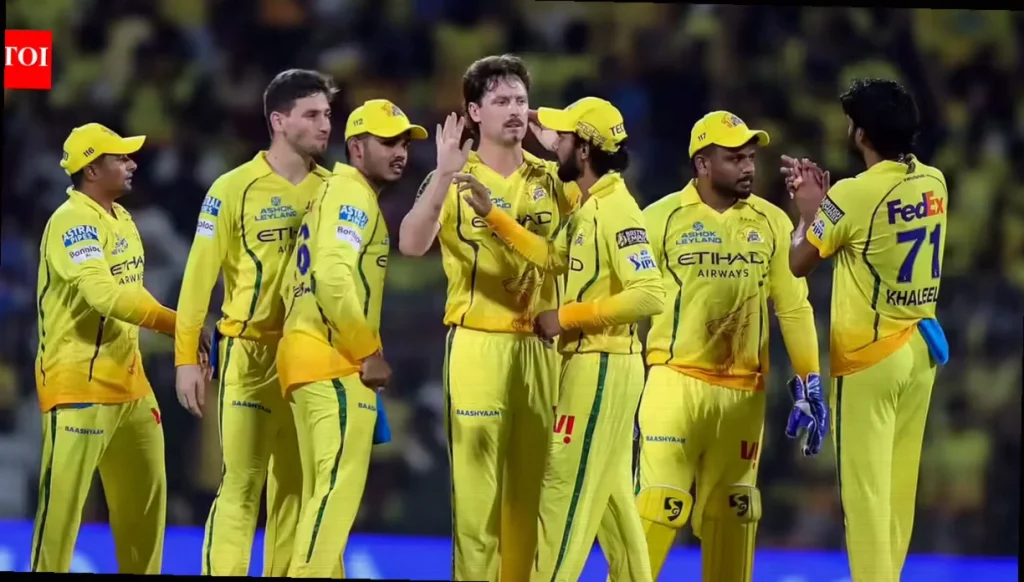
Ambati Rayudu, the former Chennai Super Kings batter, has taken aim at CSK’s bowling approach after the franchise suffered a 43-run defeat to Royal Challengers Bengaluru in IPL 2026. Rayudu’s criticism centred on the lack of flexibility under pressure, arguing that the team failed to adjust once the contest started slipping in RCB’s favour. The match turned into a stern test for CSK after Bengaluru posted 250/3 at the M Chinnaswamy Stadium, a total that demanded disciplined execution from the first over to the last.
Rayudu highlighted how the game’s turning point arrived in the closing phase, with Tim David and Rajat Patidar combining for a rapid 99-run partnership off just 35 balls. That late acceleration swung momentum decisively, putting CSK on the back foot and forcing them to chase a target that kept climbing. Even though CSK showed intent with the bat, they were ultimately dismissed for 207, unable to bridge the gap as Bengaluru’s late surge proved too strong.
When asked to assess CSK’s bowling performance, Rayudu suggested the issue went deeper than a single tactical error. In his view, the bigger problem was that the side did not reassess its plan after RCB started striking consistently. “More than a bad plan, they just stuck to that bad plan. There was nobody to intervene and to just take some time off, take those 20-30 seconds, just make it slightly more slow and then guide the bowler with a message. I think they should have slowed it down a little bit,” Rayudu said, pointing to the need for timely course correction rather than rigid adherence to the initial execution.
He also drew attention to the final overs, when Bengaluru produced a decisive 97-run burst in the last five. Rayudu felt that CSK struggled particularly at the death, where the ability to respond quickly after being hit is crucial. “Their follow-up balls after a boundary or a six aren’t great,” he added, underscoring that in T20 cricket the next delivery often determines whether a bowler regains control or lets the batter continue to dominate. Rayudu compared it with the standards set by top end-overs specialists, noting that even after conceding a big hit, the best death bowlers immediately follow it with a high-quality ball.
While CSK’s bowling faltered at the most critical moments, Rayudu acknowledged that Bengaluru’s overall work was not uniform across the innings. He pointed out that RCB’s powerplay and middle-overs bowling had been stronger than in their previous match, but insisted that the contrast in execution during the end phase ultimately made the difference. “But their powerplay bowling and middle-overs bowling was much better than what it was last game,” he said, framing Bengaluru’s improvement as another factor behind their ability to keep pressure building.
Rayudu also praised Bengaluru’s awareness and control as the contest progressed. In his assessment, RCB did not allow key situations to drift; they consistently looked to dictate the tempo over every over and every scenario, which has been central to their recent run of dominance. He referenced the wider context of their form, including a fourth consecutive win over CSK. “RCB, meanwhile, are not letting anything just pass by; they just want to control every scenario, every over,” Rayudu said.
With Bengaluru’s late assault proving decisive and CSK unable to adapt when the match demanded it most, the result reflected a sharp difference in game planning and in-the-moment decision-making—one that enabled RCB to take complete control and secure the win.
