
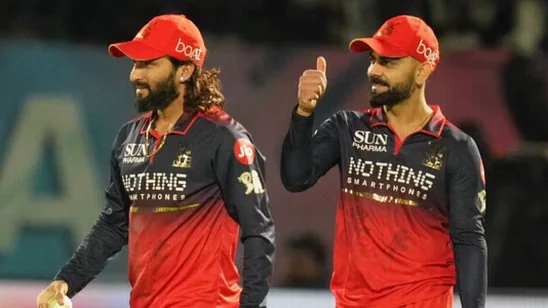
Royal Challengers Bengaluru didn’t just win Qualifier 1 against Gujarat Titans—they detonated the first playoff night with a performance that shifts the feel of an entire campaign. Their 92-run victory left the rest of the tournament looking up at a new benchmark of control, power, and nerve.
Quick facts
- RCB beat GT by 92 runs in IPL Qualifier 1.
- The win is the biggest victory by runs in IPL playoff history.
- It surpassed Chennai Super Kings’ 86-run win over Delhi Daredevils in the 2012 Qualifier 2.
- RCB made 254/5 in 20 overs.
- Rajat Patidar scored 93* off 33 balls.
- GT were all out for 162 in 19.3 overs.
The margin wasn’t a late, accidental flourish—it was a complete playoff statement. RCB built their dominance from the moment the bat hit the ball, then closed the door with the ball, turning the knockout stage into a night of command.
Patidar’s unbeaten 93 powers the assault
Rajat Patidar was at the heart of it. His unbeaten 93 came off just 33 deliveries, turning a strong platform into a total that looked increasingly untouchable as the overs moved on. RCB finished on 254 for 5, and the numbers reflected how continuously they pressed.
Virat Kohli struck 43 off 25 to give the chase a sense of early control, while Devdutt Padikkal contributed 30 off 19. Krunal Pandya’s 43 off 28 ensured the momentum didn’t fade once the innings entered its later phase.
Patidar’s impact went beyond the final tally. His nine sixes and five fours disrupted GT’s bowling rhythm completely, forcing errors in length, line, and pace. Kagiso Rabada picked up two wickets but still conceded 54, while Prasidh Krishna gave away 53. Mohammed Siraj leaked 46 in just three overs, and as the innings stretched, the scoreboard became a blunt measure of RCB’s intent—one GT couldn’t dull.
GT’s chase unravels early
Gujarat Titans needed near perfection, but the chase broke down almost immediately. Sai Sudharsan fell for 14, caught hit wicket, Shubman Gill managed only 2 from 7 balls, and Jos Buttler’s 29 off 11 offered a brief spark rather than a platform to recover.
By the time GT had slipped to 51 for 5 within six overs, the contest had already lost its balance. Rahul Tewatia tried to drag the innings back with 68 off 43, taking the chase from embarrassment toward respectability, but it never gained genuine weight.
RCB’s bowling took wickets in clusters, steadily stripping away the required rate. Jacob Duffy ended with 3 for 39, Bhuvneshwar Kumar took 2 for 28, Rasikh Salam claimed 2 for 24, and Krunal wrapped up proceedings with 2 for 16.
GT were bowled out for 162 in 19.3 overs. The final wicket didn’t just finish the chase—it underlined the bigger theme of the night: RCB hadn’t merely survived Qualifier 1. They had seized it.
For a franchise often defined by near-misses, noise, and unfulfilled promise, this was a rare playoff showing with no ambiguity. RCB batted with refusal to hesitate, bowled with intent to protect more than a total, and marched into the final with a record that will ring loudly in IPL memory. The 92-run headline was the first message—but the deeper one was sharper: RCB didn’t stumble into the last match. They arrived with thunder in their boots.
