
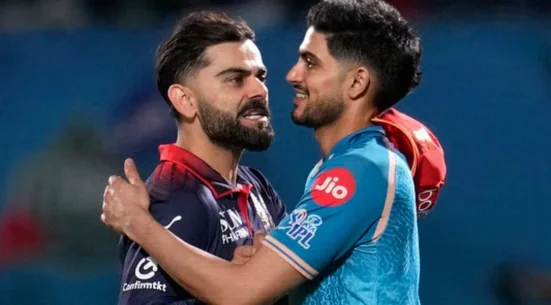
The two most consistent franchises across a grueling two-month league phase have reached the IPL playoffs, setting up a title showdown between Royal Challengers Bengaluru and Gujarat Titans. Both sides are chasing a second piece of silverware, but their journeys have taken very different paths to get here. One outfit has finally ended an 18-year wait and is now aiming to make it a run of back-to-back celebrations, while the other lifted the trophy on their very first attempt and will stage the final at their home ground in a season that has refused to be dictated by anyone else’s script.
Match-up and venue
- Final: Royal Challengers Bengaluru vs Gujarat Titans
- Venue: Narendra Modi Stadium, Ahmedabad
- Theme: Trophy is one win away for RCB
RCB are returning to Ahmedabad, a place that proved pivotal 12 months ago when they finally secured their maiden IPL title. The opportunity to step onto this stage again has arrived quickly, and the team in red has looked like a well-built unit rather than a collection of individual talents. Their progress has been shaped by steady work behind the scenes throughout the year, along with planning that fits modern T20 cricket—ultimately forming a side that knows how to win when it matters.
No obvious gaps for RCB
Rajat Patidar’s group reached the finals on the back of nine convincing wins in the league phase, with only minor slip-ups along the way. The captain has been a key presence, including during the tournament’s earlier pressure moment when he starred in a run against this same opponent in Qualifier 1 at Dharamshala. That kind of composure in playoff settings is not new to him, but what stands out is how RCB rarely leave meaningful openings for rivals to exploit.
Their brand of cricket has been built on multiple layers: aggressive starts are there, middle-overs reliability is there, and the ability to close strongly is also present. Add to that the consistent impact in the powerplay and disciplined control at the death, and the number of places where opponents can realistically outdo them becomes small.
Gujarat’s response after being outplayed
Gujarat were reminded of that reality on Tuesday night, when RCB dominated them across facets of the game. Still, GT are not a team that allows one bad performance to become a habit. A growing talking point heading into the season was whether their batting carried enough raw firepower compared to the rest of the league—especially in a competition where teams routinely punish bowlers for mistakes. In that context, GT’s batting has leaned heavily on a top three that plays a long, grind-it-out role, more “stay in the contest” than “strike every ball,” with patience and consistency acting as the backbone.
That steadiness has been their defining advantage: make it hard to beat, and the margin for error for opponents shrinks. It is also why this will mark the third time in five years, since the franchise began, that Gujarat have made it to the final. Their blueprint has stayed consistent—championships tend to come from bowling that wins matches, and they have carried that philosophy through every knockout run.
With the likes of Mohammed Siraj, Kagiso Rabada and Rashid Khan in their ranks, GT have often made it uncomfortable for even well-set batters to score freely. Even when opponents produce impressive knocks, it has not always been enough. That was visible in Qualifier 2, when Rajasthan Royals pushed hard after setting a target of 215, only for Shubman Gill and Sai Sudharsan to chase it down with ease. The chase looked so smooth that it seemed as though the fielding side had been left without answers on the ground.
Where the final could hinge
Gujarat’s most important strength is the combination of Sudharsan and Gill, with their partnership tally already featuring 11 century stands together—an IPL benchmark for any wicket. Still, for GT, the final will ultimately live or die on how dangerous their bowling is once the opposition’s innings begins. They carry an advantage in playing in Ahmedabad, a venue where they have shown they understand the conditions well enough to turn that knowledge into control.
For RCB, the biggest caution is wicket management early in the chase-or-attack cycle—especially during the opening phase of the innings. They have a clear blueprint for how to trouble Gujarat, but they also know that depending on late magic from Rajat Patidar or David is not the safest way to approach a match of this magnitude. Virat Kohli remains the key stabilising influence, keeping the innings connected between the freedom given to Venkatesh Iyer and Devdutt Padikkal’s more aggressive instincts. The deeper Kohli goes, the stronger RCB’s chances become.
After that, the decisive detail could be how Gill and Sudharsan handle the new-ball bowling from Bhuvneshwar Kumar and Jacob Duffy/Josh Hazlewood—depending on which combination RCB field. If GT’s batters fold under that early pressure in the same way they did in Dharamshala, the final outcome is likely to resemble that earlier script. But if they deliver the kind of response they showed in New Chandigarh instead, Gujarat could look to target the weaker middle-overs and seize the game before it gets too late.
Predicted playing XIs
- RCB predicted XI: Virat Kohli, Venkatesh Iyer, Devdutt Padikkal, Rajat Patidar (c), Jitesh Sharma, Tim David, Krunal Pandya, Bhuvneshwar Kumar, Suyash Sharma, Josh Hazlewood, Jacob Duffy, Rasikh Dar
- GT predicted XI: Shubman Gill (c), Sai Sudharsan, Jos Buttler (wk), Washington Sundar, Nishant Sindhu, Rahul Tewatia, Jason Holder, Rashid Khan, Kagiso Rabada, Arshad Khan, Mohammed Siraj, Prasidh Krishna
