
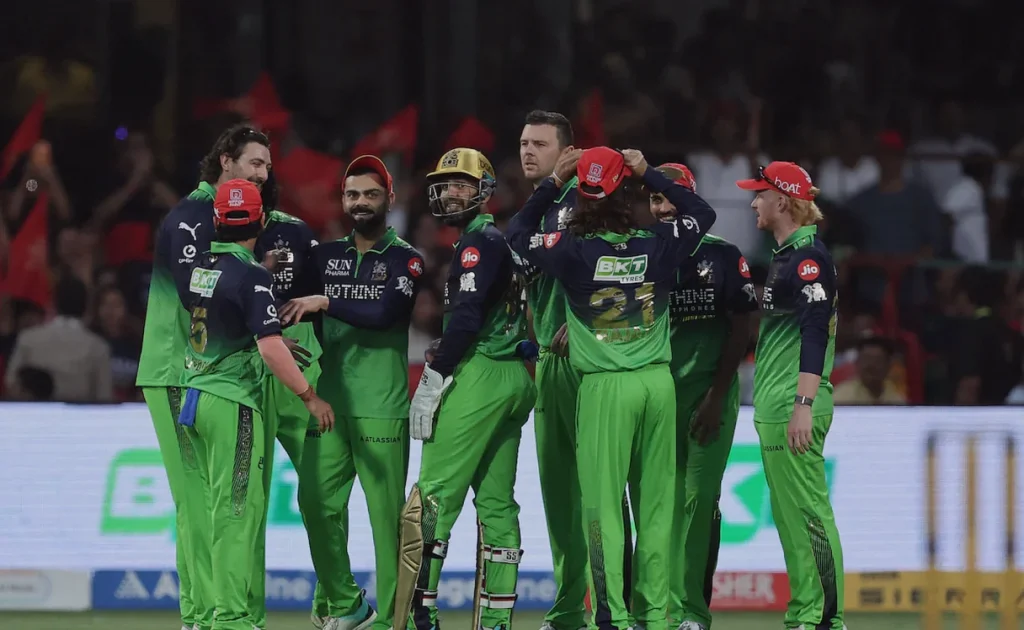
Royal Challengers Bengaluru director of cricket Mo Bobat said the franchise will conduct a “straightforward review” of its narrow six-wicket loss to Delhi Capitals, while insisting the team will not “overthink” the result. Bobat pointed to a largely subdued batting display as RCB suffered their second defeat in IPL 2026, finishing on 175 for six.
Key takeaways
- Mo Bobat described RCB’s response to the defeat as an honest assessment rather than an overreaction.
- He said the batting unit looked less fluent than usual, contributing to the team not reaching its typical rhythm.
- Bobat acknowledged the side struggled to deal with a slow, sticky Chinnaswamy surface on the day.
- He explained RCB’s bowling strategy involved using key frontline options earlier, despite the risk it created.
- Bobat said the team will take specific lessons from the match and aim to return to its normal groove next time out.
RCB’s review: focus on improvement, not panic
Speaking after the match, Bobat said the side would consider both positives and areas for improvement. He noted that RCB have been batting well across the competition so far, and therefore the learning from this game would be used to fine-tune rather than to dwell on the outcome.
“We’ll always consider things that we did well and things that we could improve,” Bobat said, adding that the plan is to absorb lessons from the contest and get back to their usual patterns in the next fixture.
Pitch conditions and the challenge of scoring
Bobat also admitted that RCB batters were unable to counteract the conditions created by a pitch that played tacky and difficult for timing. He referenced that parts of the track had already looked low and slow in preceding games, and claimed that the first innings on Saturday was similarly sluggish.
In his assessment, the ball did not come on to the bat, making it harder for batters to build momentum. While he said the wicket had shown some variation, Bobat stressed that the team still had to read the conditions quickly and put a competitive score on the board—something he felt they did not manage in that match.
Bowling call: chasing depth and the final-over risk
On the bowling side, Bobat revealed that RCB made a deliberate decision to deploy its leading bowlers, including Bhuvneshwar Kumar and Josh Hazlewood, rather than holding them back. The strategy meant that a part-time option, Romario Shepherd, was tasked with defending 15 runs in the last over against two established finishers—David Miller and Tristan Stubbs.
Bobat explained the reasoning behind that choice: when a team senses it is trailing, it must use its “champion” bowlers to drag the contest back or even move ahead. He said RCB felt it needed to bowl both Hazlewood and Bhuvneshwar at that stage to make the situation as difficult as possible later in the game.
He also acknowledged the downside of the plan. With Shepherd required to bowl the final over to international batters and hitters of that calibre, the task was always going to be demanding. Even so, Bobat said RCB felt it was necessary to push the match as deep as possible to create a chance to defend the total.
