
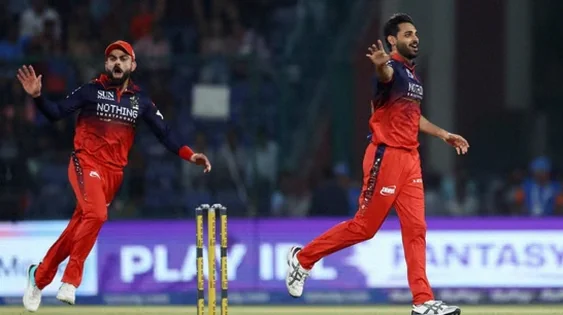
Royal Challengers Bengaluru’s nine-wicket rout of Delhi Capitals looked dominant on the surface, but the conversations afterwards revealed a deeper theme: how experience and communication are shaping the franchise’s collective thinking. Delhi were dismissed for 75 at Arun Jaitley Stadium on Monday, and the powerplay collapse ensured the contest was effectively over long before the chase began.
Delhi’s collapse and the powerplay turning point
RCB’s bowling set the tone early, turning the opening phase into a steady dismantling rather than a competitive battle. Josh Hazlewood and Bhuvneshwar Kumar swung the game decisively, leaving Delhi with no realistic platform to rebuild.
- Delhi Capitals were bowled out for 75 at Arun Jaitley Stadium.
- RCB completed the chase in 6.3 overs to win by nine wickets.
- Josh Hazlewood finished with figures of 4/12.
- Bhuvneshwar Kumar took three wickets, finishing with 3/5.
Bhuvneshwar’s take: Kohli’s tactical influence beyond statistics
After the match, Bhuvneshwar Kumar pointed to an extra layer behind RCB’s control—highlighting Virat Kohli’s role in their preparation and in-match conversations, even when he isn’t wearing a formal leadership title. For Bhuvneshwar, Kohli’s value is not limited to runs on the scoreboard, but extends to the mental and tactical details that help the team execute.
Bhuvneshwar’s comments came in a video filmed for the IPL’s official website following RCB’s win. He stressed that Kohli’s input before matches often proves useful in ways that are small, yet meaningful to how a side approaches a contest.
Kohli’s 9,000-IPL milestone in the same game
Kohli also reached a landmark during the chase. He became the first player to score 9,000 runs in IPL history, requiring 11 runs entering the match and reaching the milestone during Bengaluru’s short pursuit.
- Kohli entered the game needing 11 runs to reach 9,000 IPL runs.
- He achieved the 9,000-run mark during RCB’s chase.
- Bhuvneshwar framed Kohli’s contribution as tactical and communicative, not only statistical.
The mindset message: team impact, shared pressure, and what “works”
In the same post-match discussion, Bhuvneshwar made it clear that individual performances should be judged by the effect they produce together. He described how momentum can be created when one bowler applies pressure from one end while another delivers breakthroughs from the other, making it difficult for batters to find rhythm.
He said that while many people evaluate performances by the final result, his approach is shaped by the team-game nature of T20 cricket—particularly the importance of complementing roles.
- Bhuvneshwar said the focus should remain on the overall team impact rather than looking only at the final outcome.
- He highlighted the value of complementing each other—especially when one bowler strikes while another maintains pressure.
- He linked effective communication and experience to how match plans are acted upon, even through small tactical notes.
Why the bowling plan delivered on the day
The backdrop to Bhuvneshwar’s remarks was visible throughout the match. Hazlewood grabbed the headline with his spell, but Bhuvneshwar’s control ensured Delhi never escaped the squeeze. One bowler attacked the stumps and forced edges, while the other restricted scoring options, culminating in a batting collapse that produced one of the most lopsided results seen in the league’s history.
Points table push and the next challenge
The victory lifted RCB to second place in the IPL 2026 points table, collecting 12 points from seven matches. Their next fixture is against the Gujarat Titans on April 30, but the Delhi result also reinforced a broader message about Bengaluru’s campaign: they are not relying on a single department to carry them.
- RCB moved to second on the IPL 2026 points table with 12 points from seven games.
- Next match: Gujarat Titans on April 30.
- The win reinforced that RCB’s strength is spread across bowling rhythm, senior decision-making, and Kohli’s ongoing influence even when captaincy duties are elsewhere.
