
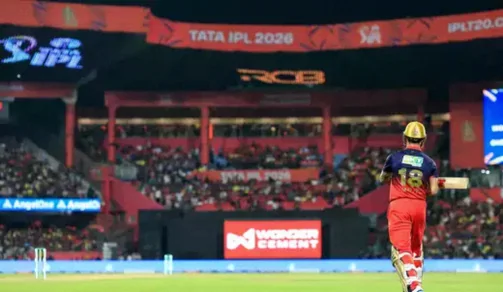
Could the M. Chinnaswamy Stadium be turning into an RCB fortress? For a stretch that lasted years, that idea sounded far-fetched. From 2017 through 2024, no franchise posted a poorer record at the venue than Royal Challengers Bengaluru, losing 18 of their 34 matches there in that window. But the script has shifted dramatically, and by the middle of the 2025 campaign it looked as though the old doubts were still lingering—until a late-season surge kicked the door open. RCB have now extended their winning momentum at home into the current season, and the underlying reasons appear far more deliberate than accidental.
Why Chinnaswamy used to be a tough hunting ground
The difficult home story wasn’t just about one season slipping—it was a pattern. RCB’s struggles at Bengaluru had multiple contributors, ranging from the venue’s smaller boundaries to the specific balance of players available in different years. During 2016 to 2023, RCB reached the playoffs three times, yet in none of those campaigns did the Chinnaswamy act as their true launchpad in the way it does for teams that consistently dominate at home.
Even as hopes of change lingered, the start of the 2025 season at home brought little comfort. RCB dropped their first three matches on their own turf, adding another chapter to the “bogey” narrative. Their historic title run earlier in the tournament cycle also carried a familiar blemish: they were less effective in front of their demanding home crowd than they were on the road, where results had come more readily.
Home winning streak: how it began and where it stands now
Still, something clicked after the early wobble in 2025. RCB managed back-to-back home wins, and that momentum didn’t stop there—it has grown into a three-match streak this season. To find an RCB run of that length at the Chinnaswamy, you have to go back to 2013, in a totally different era of T20 cricket.
The transformation is visible in both outcomes and form. Different players have walked away with “Man of the Match” honours during this stretch, pointing to a collective that’s operating with real confidence. At the same time, there are repeatable patterns within their approach that suggest the improvement is structural rather than coincidental.
- RCB’s poor Chinnaswamy record from 2017 to 2024: 18 defeats in 34 home matches.
- In 2025, RCB lost their first three home games, before turning the corner with consecutive wins.
- This season, the home-winning run has extended to three matches.
- The last time RCB won as many consecutive matches at home goes back to 2013.
LSG match: Hazlewood’s impact and the “wicket-smart” blueprint
In the recent home game against Lucknow Super Giants, Josh Hazlewood delivered the kind of spell that captures the new RCB rhythm. He bowled 23 balls in his four-over stint, consistently targeting the good length and back-of-length areas, and he finished with Man of the Match recognition.
Hazlewood’s first-innings dominance—especially during the powerplay—spelled out what RCB have been aiming to do: make batting difficult by controlling the lengths. A surface with pace and variable bounce has introduced a layer of uncertainty for batters, and that unpredictability can be brutal to read in real time.
Rishabh Pant’s experience illustrated the point. Shots that look “cross-batted” can still go wrong: a delivery can be guided outside the stadium, only for the ball to take a slightly lower bounce and chop the batter on. Hazlewood’s value, particularly as he returns to top-level cricket, has been tied to his ability to exploit those fine margins and keep hitters under pressure.
It also matters that RCB leaned into Hazlewood early. Tosses have played a role too. In the prior season, RCB lost all five home tosses, and that often meant they were asked to bat—only for them to take early damage. With roles reversed in the current run, the effectiveness of Hazlewood’s impact at the right moment becomes easier to see.
How RCB used the powerplay and full-length control
Against LSG, Hazlewood delivered a third straight over in the initial phase of the innings, tightening the noose during the first half. That spell also brought a wicket—Nicholas Pooran, who was struggling into the contest, slashed across a length delivery and was caught in the chop-on.
RCB’s tactical thinking at the Chinnaswamy has been developing for a while, and Rajat Patidar’s group appears more polished in both defending totals and chasing them. The same match offered a telling indicator: the RCB bowling unit struck five wickets from full-length deliveries.
Those numbers become even more meaningful when paired with another stat. RCB bowled over 82% of deliveries either at good length or back-of-length. So far, no other team has managed to mirror these tactics—or consistently negate them—at the venue.
- Hazlewood’s spell versus LSG: 23 balls across four overs, with Man of the Match in return.
- Key focus area: good length and back-of-length targeting.
- Hazlewood’s powerplay control underlined a pattern of making batting hard.
- RCB wickets from full-length deliveries versus LSG: five.
- Share of deliveries from RCB at good length/back-of-length versus LSG: over 82%.
Mindset changes, bowling variety, and Jitesh Sharma’s verdict
RCB’s improved home fortunes haven’t been sold as a “secret formula,” but there has clearly been a shift in mindset. Mo Bobat—RCB’s Director of Cricket—spoke about the challenge of getting home advantage at the Chinnaswamy, noting that it “was not easy.” In an earlier interview, he also reflected on a disappointment from the 2025 campaign: the last home game versus KKR being washed out by rain.
In that same conversation, Bobat declined to reveal too much detail about what has been changing internally, saying he didn’t want to “give too many answers away,” while inviting others to interpret what RCB need in their squad and how they’re building for it.
By 2026, that “answer” appears to be getting louder. All three visiting outfits—Sunrisers Hyderabad, Chennai Super Kings, and Lucknow Super Giants—have struggled to exploit the Chinnaswamy conditions as effectively as RCB. The common thread is that RCB look clear and composed in their plans, whether the match is set up for defending or chasing.
Another element of the evolution is how RCB are shaping their spin. Instead of leaning heavily into the style associated with Yuzvendra Chahal or Wanindu Hasaranga, they’ve leaned toward a more defensive spin approach. Krunal Pandya and Suyash Sharma, in this framework, bring “street smarts” and fit the overall puzzle seamlessly.
Batting has also shown adaptability. In the two previous home victories this season, RCB outbatted the opposition, and in the latest match they also outbowled them. At the end of the LSG game, vice-captain Jitesh Sharma summed up the thinking: RCB believe they have been very smart about the wicket, adjusting to conditions, working tactically, and that’s why they are winning at home.
- Mo Bobat’s comment in the past: home advantage at Chinnaswamy is “not easy.”
- 2025 reference point: disappointment that the KKR home match was rained off.
- Bobat’s stance: he avoided giving “too many answers away” about the internal blueprint.
- 2026 observation: SRH, CSK, and LSG have not exploited the Chinnaswamy conditions as well as RCB.
- Spin direction: RCB now favour a defensive spin identity rather than the Chahal/Hasaranga mould.
- Jitesh Sharma’s takeaway: smart wicket-reading, tactical work, and efficient execution leading to home wins.
Looking ahead: only one team ahead at home in IPL since 2025
For all the momentum at Chinnaswamy, the broader record underlines how real the improvement has become. Since 2025, only one franchise—Mumbai Indians—has a better home record than RCB across the IPL.
If that trajectory continues, the “fortress” question may stop sounding like a joke and start sounding like a description.
- Since 2025, Mumbai Indians are the only team with a superior IPL home record compared to RCB.
- RCB’s improving home performance at Chinnaswamy suggests the fortress narrative is gaining substance.
