
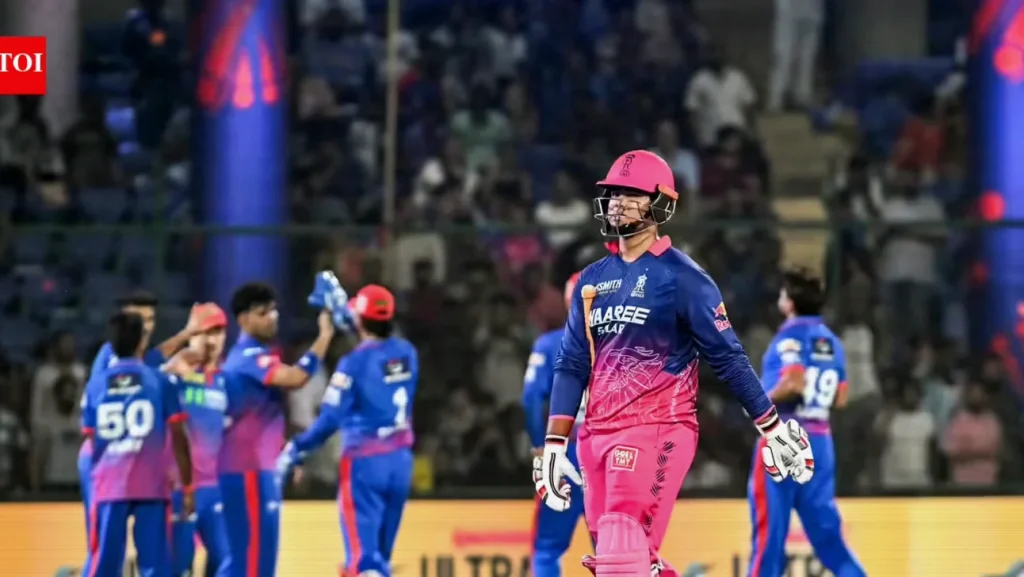
Vaibhav Sooryavanshi has kept IPL 2026 firmly in his grip with his fearless approach at the top for Rajasthan Royals, routinely attacking from ball one and forcing fast momentum changes. The 15-year-old opener has not always turned those rapid starts into huge totals, but his Powerplay dominance has become the foundation of RR’s innings tempo time and again. So far this season, he has amassed 486 runs in 12 appearances, including a century and two half-centuries, with his aggressive intent regularly pushing Rajasthan beyond 60 runs by the end of the first six overs.
Sooryavanshi once again delivered in a high-energy clash against Delhi Capitals, launching a rapid 46 from just 21 deliveries. By the close of the Powerplay, RR had raced to 75/1, and the innings reflected the same pattern: quick runs early, pressure sustained for the middle overs, and confidence carried forward. In doing so, he surpassed Abhishek Sharma’s previous IPL record of 42 sixes from 2024, and now stands alone at the summit of the six-hitting charts with 43 maximums this season.
Rajasthan Royals coach backs fearless batting over conversion
Rajasthan head coach Kumar Sangakkara heaped praise on Sooryavanshi during the broadcast, focusing less on whether starts become match-defining innings and more on the impact the opener creates immediately. Sangakkara suggested that RR value the speed and freedom of his early assault, even when conversions are not always what the team wants.
“It’s better to take something like 30 than to leave it with not much on any given day, particularly at the pace he gets those runs. Yes, he hasn’t carried on as much as we’d like, and as he’d like. But the key point is that he’s striking the ball well, giving us really quick-fire starts, and then we’ve got six or seven other batters who can take over, keep the pressure on, and grow those partnerships,” Sangakkara said.
Sangakkara also highlighted what he sees as Sooryavanshi’s natural, instinctive way of batting—more curiosity and game-reading than mechanical power-hitting. He described the opener’s mindset as that of a young player who genuinely enjoys the craft, while also stressing that it is not mindless aggression.
“The most exciting thing is how he approaches batting. He looks at it the way all of us should when you’re 15—like a kid. He loves the process, he’s out there batting for long hours, and that’s what makes it so exciting. He reads the game as well, so it’s not just random hitting,” Sangakkara added.
Another theme in Sangakkara’s comments was how RR manage the youngster’s development without overwhelming him with too much technical instruction. He said the coaching staff stays cautious about how often they pull him into extended chats, preferring to let him settle, relax, and play his natural brand of cricket.
“He’s very curious, but I’m careful not to have too long a conversation with him. He needs to relax and bat. If we do chat, it becomes about other things rather than cricket—some little pieces here and there. But I’d rather leave him alone so he can enjoy what he does,” he said.
Net work focuses on situations, not constant technical changes
On preparation, Sangakkara explained that discussions during practice sessions are largely about scenario awareness—what bowlers may try and how Sooryavanshi can recognise the plan—rather than frequent technical overhauls. He noted that the team speaks about specific challenges such as the short ball and the swinging yorker, while also reinforcing commitment to the chosen option.
“In the nets, those are the things we talk about. When he practices, we kind of discuss what the bowlers might do, and he has an idea of what they might do to him—the short ball, the swinging yorker. So we’ll work on those a little bit, but the bigger message is to commit. Whatever you decide to do, once you choose an option, you’ve got to be 100% committed to it,” Sangakkara explained.
When asked whether he takes on a mentoring or father-figure role, Sangakkara dismissed the idea of heavy intervention. He said Sooryavanshi already has the level of ability that requires only light guidance rather than constant direction.
“No, no. He doesn’t need that at all. He’s a much better player than I would ever be, so he needs a little help, but not too much,” Sangakkara concluded.
