
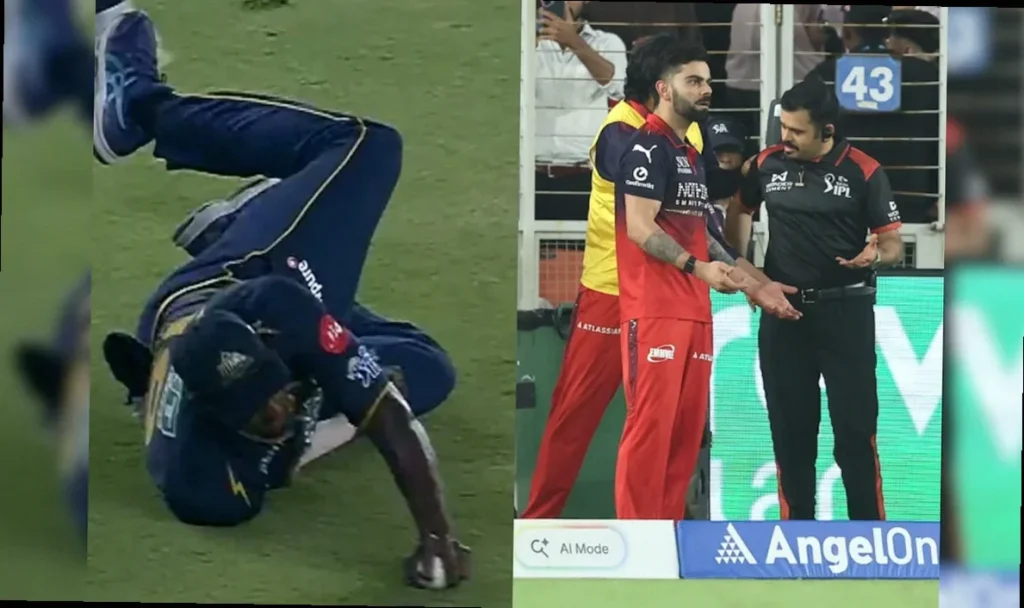
RCB captain Rajat Patidar’s dismissal during the Gujarat Titans game triggered a wave of fury in the visiting dugout after Jason Holder was adjudged to have taken a clean catch at deep backward square leg. The incident sparked immediate debate, with RCB’s leadership and supporters pointing to what they believed were gaps in Holder’s control during the full dive-and-slide and claiming the ball may have touched the turf before he completed the catch.
RCB’s dugout reacts to Holder’s catch call
The RCB camp, including Virat Kohli and head coach Andy Flower, voiced sharp frustration at the decision. Their main contention was that Holder did not have complete control of the ball at the moment it should have been secured, especially as he went to ground and slid after the initial contact. Flower and Kohli were seen challenging the ruling and speaking animatedly with match officials in the aftermath.
Despite the protests, the third umpire moved quickly after reviewing the incident and upheld the decision, sending Patidar back to the pavilion.
Third umpire review ends the debate
Although RCB’s players and staff were left questioning whether the catch met the required standard, the video review process concluded in Patidar being declared out. The controversy, however, did not fade, with former players taking to social media to break down the call in terms of cricket’s laws.
Aakash Chopra and Dodda Ganesh question the ruling
Former India batter Aakash Chopra added weight to the criticism, challenging the legality of the catch on social media. Chopra shared a clip on X and referred directly to the relevant clause under the MCC Laws of Cricket, arguing that Holder was not in full command of both the ball and his own movement once he committed to the dive and slide.
Chopra’s reading of the MCC law
Chopra cited Clause 33.3 under Law 33, which outlines the moment a catch is considered to begin and end:
- The act of making a catch starts when the ball first contacts a fielder’s person.
- The act ends only when the fielder has complete control over both the ball and their own movement.
Chopra’s explanation: control during the slide
In his video, Chopra said his interpretation was that Holder appeared to have control when the catch was first taken, but that control was not as clear once the fielder dived and then slid. He also suggested that if the fielder had stopped and then used the ball to help stand up, the catch might still count—however, that was not the scenario in what replays showed him.
- Chopra felt Holder was “in control” at the moment of taking the catch, but not exactly in control after the dive and slide.
- He argued that if the fielder stopped and then used the ball to regain footing, the catch could still be completed.
- Chopra maintained that, based on the visuals, the ball appeared to have touched the ground.
- His conclusion: “maybe he was not out, but he was given out.”
Meanwhile, former India cricketer Dodda Ganesh took a harsher tone toward the officiating, blaming the decision for disrupting RCB’s momentum. He said that with modern technology available, such a call should not be made, and he claimed the ball was clearly “grassed.”
Ganesh’s post on X also mirrored the wider frustration in the stands, asserting that the ruling spoiled RCB’s flow in the match.
- Ganesh criticised the decision, saying it “shouldn’t happen” despite the amount of technology in use.
- He claimed the ball was clearly grassed.
- He said the call broke RCB’s momentum.
