
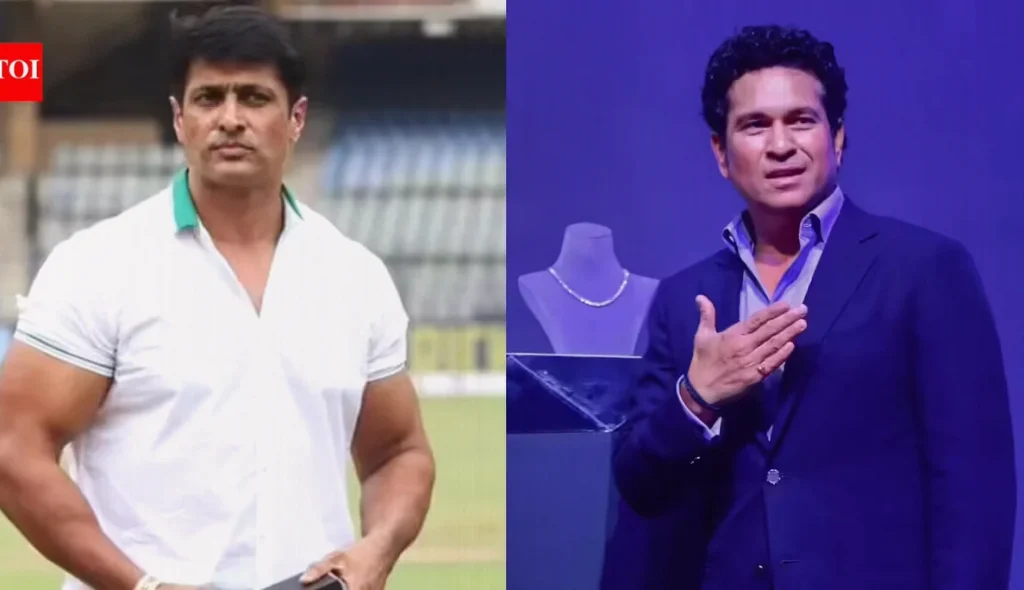
Former India seamer Salil Ankola is again at the centre of attention after reports that the fast bowler is currently receiving care for severe depression at a rehabilitation and mental health centre near Pune. The development has raised fresh concern within the cricket community, while also bringing attention back to the former pace spearhead’s earlier rise—highlighted by a debut that still holds a special place in Indian cricket history.
Key takeaways
- Salil Ankola is undergoing treatment for severe depression at a rehabilitation and mental health care facility near Pune.
- Ankola’s Test debut came in Karachi in 1989, the same match that marked the arrival of Sachin Tendulkar and Waqar Younis.
- In domestic cricket, Ankola made an impact early for Bombay, including a hat-trick and a 43-run contribution against Gujarat.
- His international career included 20 ODIs, while his first-class record stands at 181 wickets from 54 matches.
- After retiring at 28 due to a tumour in his chin, Ankola later moved into entertainment and later took up selector roles, serving Mumbai’s chief selector from 2021 to 2023.
- Family members have said he has been struggling emotionally since his mother’s death in October 2024, prompting him to seek professional help.
Ankola’s debut and early international imprint
Salil Ankola broke into international cricket for India in Karachi in 1989, in a Test that simultaneously introduced two future global superstars of the sport—Sachin Tendulkar and Waqar Younis. Against Pakistan, spearheaded by Wasim Akram, the tall Mumbai pacer struck early, taking two wickets in his lone Test outing for India.
Domestic breakthrough and first-class record
Before his national call-up, Ankola had already made a statement in domestic cricket. He burst onto the scene for Bombay in the 1988-89 season with a debut campaign that drew attention for its immediacy and threat. He started the year with a hat-trick and followed it with a useful 43 runs against Gujarat. He then built on that momentum by producing a six-wicket haul against Baroda, performances that quickly paved the way for his entry into the Indian team.
Even though his international stint was brief, Ankola still represented India in 20 ODI matches and went on to remain a well-regarded figure in domestic cricket. Over 54 first-class games, he claimed 181 wickets. His best bowling returns were 6 for 47, underlining the kind of ceiling his pace offered when fully fit and in rhythm.
Setbacks, action changes, and return to the ODI setup
Injuries repeatedly disrupted Ankola’s momentum and affected the continuity of his rise. In a bid to improve his effectiveness and manage physical stress, he worked with the legendary fast-bowling coach Frank Tyson. The focus was on reshaping his action and shortening his run-up, with the goal of sharpening control and reducing strain.
Ankola returned to India’s ODI set-up in the mid-1990s. He was also part of the squad for the 1996 World Cup, though he later lost his place again as selection shifted. His playing career ended far sooner than anyone expected, finishing at the age of 28 after a tumour in his chin forced him to retire.
Life after cricket and selector roles
After hanging up his boots, Ankola successfully moved into the entertainment space. He appeared in multiple television serials and films, including the well-known horror show “Sshh… Koi Hai.” Over the course of his screen career, he worked with a range of personalities such as Sanjay Dutt, Renuka Shahane, Sunny Leone, Adnan Sami, and Asha Bhosle.
Even with his shift towards acting and production, Ankola stayed connected to cricket. He later returned to the sport through administrative and talent roles, including serving as Mumbai’s chief selector from 2021 to 2023. In January 2023, he went on to become a national selector, continuing in that position until August 2024.
Family account of the emotional struggle
As per Ankola’s family, he has been facing emotional strain since the death of his mother in October 2024. His wife, Ria Ankola, said he decided to seek treatment after it became difficult to cope with the loss, and after observing deterioration in both his mental and physical health.
