
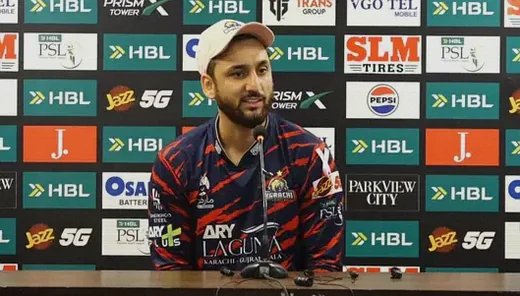
Salman Ali Agha, the current T20 captain for Pakistan, has signalled that his next career decisions may involve stepping away from the shortest format if it better supports his bigger goals. Speaking to reporters, the batter said he is open to taking a break from T20 cricket to fine-tune his preparation for the 2027 ODI World Cup, while also factoring in Pakistan’s commitments within the ongoing World Test Championship cycle.
The timing of the comments is significant. Salman was entrusted with Pakistan’s T20 leadership as the team attempted to recalibrate its plans in the format. However, the recent T20 World Cup has only sharpened attention on Pakistan’s overall direction in T20 cricket and on Salman’s own impact with the bat, making his remarks land with added weight.
Salman on workload, T20 break, and Pakistan’s priorities
- Salman said he believes managing schedule and workload is essential, even though the World Cup is still some time away.
- He added that if a T20 break would help him prepare properly for both the 2027 ODI World Cup and Test cricket, he is willing to take that option.
The context behind those words is clear: Pakistan are moving toward a stretch where planning for 50-over cricket and building consistent performances in Tests will carry extra importance. With the 2027 ODI World Cup looming as the next major global benchmark, Salman’s message suggests he is already aligning his workload and focus toward the formats that he believes will matter most.
His comments also reflect where his game currently stands. His T20 returns have not been particularly convincing, which has naturally led to questions about his effectiveness in the format. At the same time, his recent ODI contributions have looked far sharper, highlighted by a century and a half-century during his run in Bangladesh last month. That contrast provides the rationale behind his stance—this is not simply about rest, but about protecting his readiness for the roles and formats where Pakistan may be able to rely on him more strongly right now.
Beyond his personal planning, Salman used the same interaction to address another recurring debate in Pakistan cricket: how players performing well in the PSL should be transitioned into international cricket. He argued that the pathway should be more structured and based on evaluation over time rather than immediate promotion.
He said he would prefer a system where strong young talent is identified in the PSL, then given the chance to test themselves in domestic cricket, before their performances are assessed to determine whether they are truly ready for international cricket.
In effect, Salman’s view supports a more measured route to selection. The PSL remains Pakistan’s key T20 breeding ground, but his point is that league form alone should not automatically become a direct ticket to the highest level. Instead, he believes players should have an additional proving stage in domestic cricket before being pushed into the international arena.
Overall, the central takeaway is not just that Pakistan’s T20 captain might consider a break. It is that Salman appears to be positioning his future around the two areas he sees as the real tests ahead: the 2027 ODI World Cup and Test cricket.
