
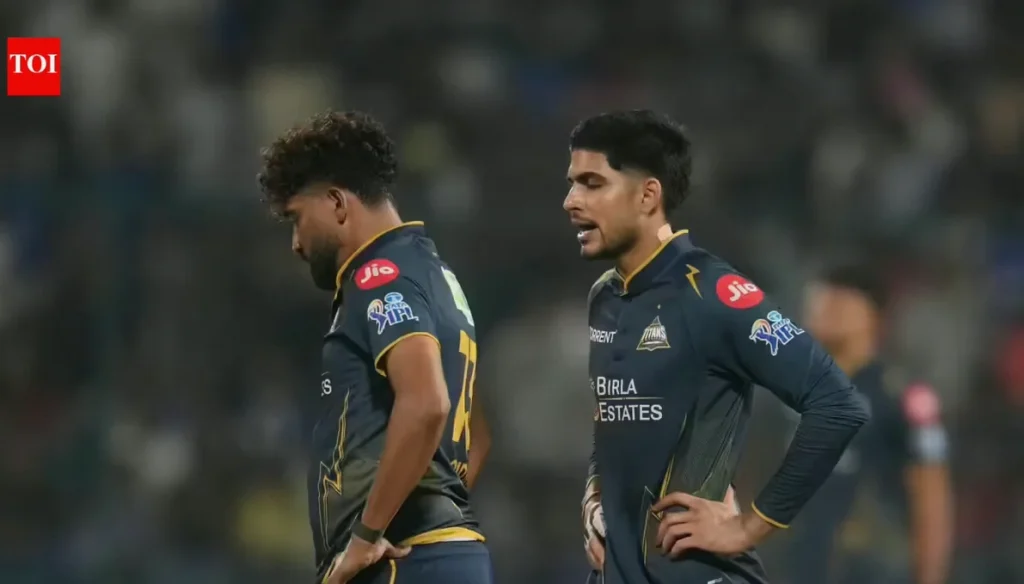
Gujarat Titans’ defeat to Royal Challengers Bengaluru at the M Chinnaswamy Stadium wasn’t only about falling short of a target of 205. The loss quickly became a talking point for the way the match was managed in the latter stages, especially because GT had engineered a comeback and were positioned to make the chase genuinely uncomfortable for RCB. For long stretches, Bengaluru looked in command, with Virat Kohli striking 81 off 44 balls and Devdutt Padikkal contributing 55 off 27. That opening control meant GT were chasing a moving target throughout, but once the established batters departed, the game shifted again and suddenly the chase could swing on one or two key overs.
By the time the 16th over concluded with the score reading 173 for 5, the situation had narrowed sharply. RCB required 33 runs from 27 balls, and with the set batters gone, the contest had opened up. At that stage, the match’s direction hinged on how Shubman Gill used his bowling options. Mohammed Siraj had already delivered a strong spell, bowling three overs for 25 and also taking a wicket, which made him GT’s most dependable pace option during that night. Yet, when the pressure phase arrived, Siraj was not brought back into the attack.
Instead, Manav Suthar was introduced in the 18th over, with Krunal Pandya facing him. The decision backfired. Fifteen runs were scored off that over, and the chase shifted from something still reachable to a near-finished situation. The equation reduced to seven needed from the final two overs, leaving little room for a late twist.
Virender Sehwag did not hold back his criticism of the call after the match. Speaking on Cricbuzz, he questioned why GT didn’t use Siraj during the moment when runs were required to be squeezed. Sehwag argued that if Siraj had been deployed around the time 22 to 25 were needed from the last three overs—and if he had managed a wicket—then the demand could have been cut down enough to set up an even more tense finish. “They could have at least taken the game to the last over. The match did not even go till the final over,” Sehwag said, adding that the issue went beyond a single over and pointed to a wider reluctance to trust main bowlers after they had been hit earlier.
His concern was that, once the innings turned, the captain’s role is to bring strike options back into play rather than hesitate because runs were conceded at some point in the match. Sehwag noted that Prasidh Krishna, Rashid Khan and Kagiso Rabada had all allowed boundaries and runs, but insisted that captains still have to trust their best resources in crunch moments. In his view, the logic of avoiding a bowler due to an expensive spell reflects a deeper loss of belief. “If you think that you cannot use a bowler because he has conceded 31 runs off two overs, then you have lost courage, right? That means you have given up. I think that was the mistake there,” he added.
There was also a tactical element to how the overs unfolded. Krunal Pandya, as a left-handed batter, was able to line up Suthar’s left-arm spin, and once that 18th over completed without any sustained pressure, GT’s comeback momentum disappeared. Gill later suggested that the franchise had observed something on slower deliveries earlier in the innings and believed spin could create a breakthrough. However, the plan didn’t deliver when it mattered most—particularly because Siraj’s control and hard lengths appeared more suited to the stage of the chase.
Beyond the immediate result, the defeat underlined a recurring issue for Gujarat Titans. Their execution in the death overs has been inconsistent across the season, and this match followed the same pattern: they managed to regain control briefly, but still failed to convert that advantage into a close finish. For Gill, continuing to develop as a captain in the IPL, the night served as a reminder that timing and trust in key bowlers can decide matches far earlier than many teams expect. On paper, the chase looked comfortable in the end, but the real turning point arrived well before the final over—when the bowling resources were not used at the most critical moment.
