
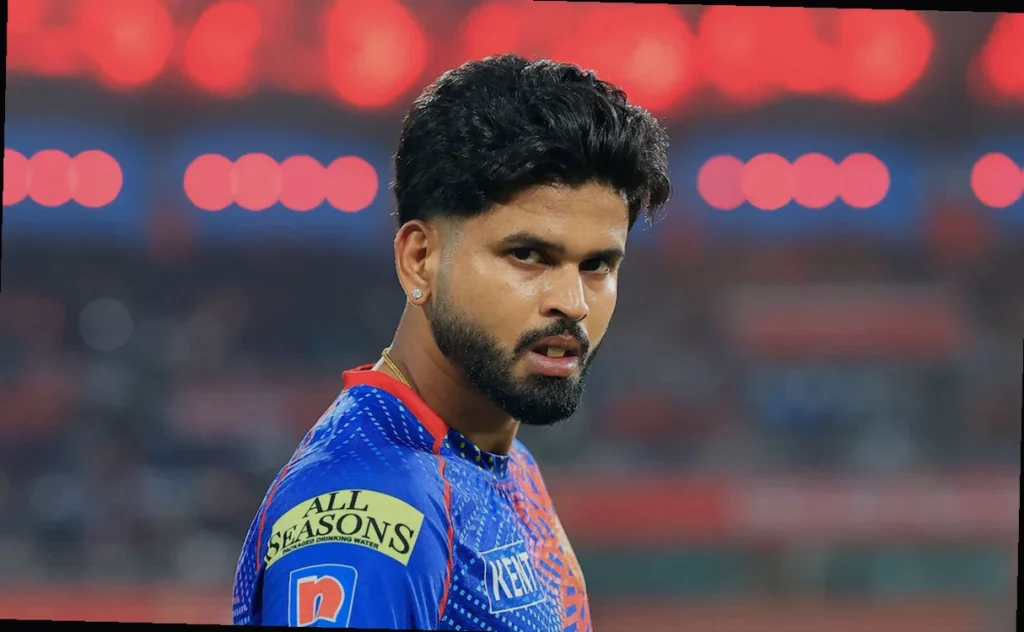
Shreyas Iyer has already been viewed as one of India’s most reliable one-day batters, but his T20I evolution has taken that reputation to a sharper edge. The middle-order batter has reshaped his approach in the shortest format, turning himself into a dependable presence, a late-innings finisher, and a captain who has guided Punjab Kings to more than a few wins this season. Behind the improvement, though, there have been moments of irritation—taunts that stuck and ultimately pushed him to “prove people wrong.”
From taunts to answers
- Shreyas Iyer credits his recent T20I consistency to a mindset shift driven by criticism.
- He previously faced doubts about his ability against bouncers/short balls.
- Iyer struck a memorable six versus Mumbai Indians’ Jasprit Bumrah during the season.
- He discussed his motivation on JioStar’s “Believe”.
- He says injury setbacks also sharpened his drive to return stronger.
Iyer’s rise has been especially notable because the doubts were not abstract. He was often targeted for what many saw as a vulnerability against pace and bouncers, and the response had to be more than words. One of the clearest statements came when he launched a striking six off Mumbai Indians’ Jasprit Bumrah—widely regarded as one of the world’s best fast bowlers—quieting the narrative around his limitations.
Speaking on JioStar’s “Believe”, the Punjab Kings skipper explained how that kind of talk fuels his preparation rather than draining it. He said that when people around him insist that certain things are “impossible” in a given situation, he refuses to accept it at the highest level. Instead, the challenge becomes personal: he asks himself how he can come back stronger, then pushes himself harder—particularly after injuries—so he can prove those voices wrong.
He recalled a period involving a back issue when some questioned whether he would ever look the same again. Iyer’s response was rooted in mindset: he argued that what you choose to focus on after an injury matters, and what you ignore matters just as much. For him, that mental recalibration is part of the work, not an afterthought.
Changing the short-ball story
The “short ball weakness” refrain continued to echo in Iyer’s head for a long time. In his own words, the criticism “triggered” him, prompting a decision to put in the necessary hard labour to fix the problem. He admitted that earlier he might have settled for safer outcomes—taking a single or trying to keep the ball down—but that his mindset has now shifted completely.
Now, if a short delivery appears in his hitting zone, he expects to punish it rather than manage it. He also highlighted the role of routine and coaching relationships, including his long association with Pravin Amre and ongoing discussions with coaches such as Abhishek Nayar, where ideas are shared and refined.
In training, Iyer described a specific kind of volume-based practice: during batting sessions, he looks to cover roughly 50 overs and face more than 300 balls. He says that helps him learn what truly works for him, rather than relying on a rigid formula. He also emphasised that he gives himself more time in the middle and faces genuine bowlers, not just sidearm throwdowns—because the more he faces, the clearer the movement becomes and the easier it is to time the ball.
Finally, he pointed to one more detail behind his consistency: rhythm right up to the point of delivery. Iyer explained that he tries to get into his position quickly just before the bowler starts the run-up and release, creating a smooth flow into the shot. He noted that players like AB de Villiers also use that kind of rhythm, and he believes Rohit Sharma and Virat Kohli do it as well—then added that he is working to replicate the same timing and balance in his own batting.
