
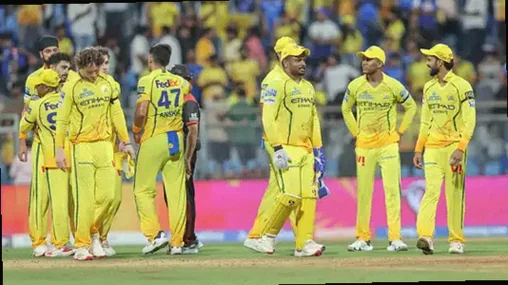
Chennai Super Kings’ IPL 2026 journey ended in Ahmedabad on Thursday, May 21, with a heavy 89-run loss to Gujarat Titans—an outcome that knocked CSK out of contention while also ensuring GT finished in the top two. After Gujarat posted a challenging 229/4, CSK struggled throughout their chase and were dismissed for 140 in just 13.4 overs, bringing a turbulent campaign to another abrupt close.
CSK’s exit and GT’s top-two confirmation
- Gujarat Titans set the tone first, compiling 229/4 in Ahmedabad.
- Chennai Super Kings’ reply never gained traction, with the chase ending at 140 all out in 13.4 overs.
- The defeat sealed CSK’s elimination from the season, while Gujarat’s result secured a top-two finish.
Following the match, CSK bowling coach Eric Simmons said the franchise would still take valuable takeaways from a season marked by the emergence of several younger and less experienced players.
“I think each player goes away with something to work on,” Simmons said. “As a bowling coach, I put reports together for each guy to focus on over the next nine months, so they come back as a better performer—just like we saw Anshul (Kamboj) return from last season.”
Simmons also felt the tournament helped CSK assess their strengths and weaknesses more clearly as a team. “We know ourselves a lot better as a unit, and we also know more about the individuals—what they can do and what they can’t,” he said.
He pointed to Kartik as an example of growth during the campaign. “Someone like Kartik has come along magnificently this season. We know what he’s about. Obviously, we’ve always known what the established players bring and what they’re capable of,” Simmons added. “But this tournament has helped us understand ourselves as a unit better, and that should stand us in good stead. That kind of learning is important for Stephen (Fleming) too—understanding the balance of the side and what it looks like when we’re at our best. When we play well, we’re a really good unit. So we leave with a clearer sense of who we are as a group and how we need to approach games.”
Injuries were another major theme in Simmons’ reflections, which he said disrupted CSK’s consistency, particularly the loss of Jamie Overton at a crucial point in the competition. “Just as we were building some momentum, we lose someone like Jamie Overton, who’s such a balancing factor in our team,” Simmons said.
He explained how Overton’s absence affected both bowling stability and batting flexibility. “He’s so important to our bowling attack through the middle, which means we don’t have to make frantic changes. And later in the innings, he can also contribute with the bat at the back end,” Simmons noted.
On the batting-order tweaks CSK made against GT, Simmons said the adjustments were driven by Gujarat’s pace plans at the venue. Matt Short returned to the XI as an opener, while Ruturaj Gaikwad, Urvil Patel and Kartik Sharma moved one spot down from their usual positions.
“We looked at what Gujarat have done on this ground—what lengths they’ve bowled and where they’ve been bowling,” Simmons said. “We identified Short (Matt) as a particularly strong player against short bowling, so we thought we’d counter it by putting someone like him at the top of the order. I felt he batted really well. They bowled very well throughout the innings, and across the tournament they’ve consistently bowled well in their conditions. That’s why we made the adjustment at the top—to get the balance right.”
When asked whether MS Dhoni would feature in IPL 2027, Simmons reiterated that the decision would remain with the veteran. “He’s hit the ball so well. He obviously had a leg injury, which made running very difficult,” Simmons said. “But only MS will know, and MS will decide when he’s ready and when he’s right. If he feels he’s not, he won’t play. If he’s right, he will. He’ll make that call in the best interest of the team.”
Rashid Khan: adapting faster and sticking to the plan
For Gujarat, spinner Rashid Khan said the match conditions in Ahmedabad stayed largely the same across both innings, and he credited GT’s ability to adapt quicker than CSK.
“I think the wicket didn’t change,” Rashid said. “It’s not a day-and-night match, it’s a night game. And the bowling attack we have—especially the fast bowling unit—has done a really great job throughout the tournament. On this wicket, if you hit the right area consistently with good pace, there’s something for the bowler.”
Rashid added that Gujarat’s quicker read on the surface and conditions played a key role in backing up their performance. “I feel like we adjusted ourselves with the condition and the wicket quicker than them, and that’s the reason behind why we won again,” he said.
He also highlighted the importance of sticking to a bowling routine with the new ball rather than becoming overly defensive as soon as batters find rhythm. “On such wickets, you have to bring consistency and keep hitting the right area,” Rashid explained. “Yes, you’ll go for runs, but there’s reward. You can also get wickets.”
Rashid argued that modern T20 bowling can tilt toward chasing the “death overs” mindset too early. “Nowadays, if someone hits a couple of boundaries straight away, you start thinking about death bowling—how you’re going to get through that over. But I feel like when you’re bowling in the early stage, you need to be very aggressive. For us, whoever is bowling up top needs to go for it and hit the right area consistently. If you start thinking—‘I need to go to the death overs’—that’s when you’ve already lost it,” he concluded.
