
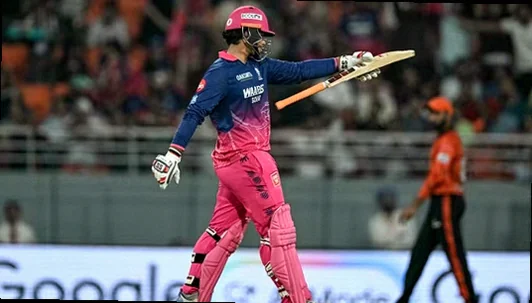
Vaibhav Sooryavanshi has looked close to unstoppable this season, yet SRH have entered the Eliminator with a clear, hard-earned blueprint for dealing with him. In New Chandigarh, the Rajasthan Royals opener again showed why he has become the most difficult batter to contain in the IPL—while SRH’s attempt to choke his scoring options highlighted both the planning and the pressure that come with playoff cricket.
Key takeaways
- Sooryavanshi was previously dismissed for a duck by Praful Hinge in Hyderabad earlier this season.
- In the reverse meeting at Jaipur, Sooryavanshi responded with a rapid 36-ball century that included four sixes in the very first over.
- SRH used a death-over emphasis, taking five wickets while conceding just 36 runs in the final four overs of their match plan.
- Pat Cummins bowled with fuller, straighter lengths and positioned two fielders on the leg-side ropes to take away Sooryavanshi’s elevation.
- By the end of the powerplay, Sooryavanshi had reached 60 off 20 balls, with 56 of those runs coming via boundaries.
- Sooryavanshi said his approach is rooted in thinking about the opposition bowlers, the pitch, and the size of the boundaries.
Why SRH believed they had answers for Sooryavanshi
Only two bowlers have truly managed to keep Vaibhav Sooryavanshi quiet in a season that has otherwise belonged to him: Mohsin Khan for Lucknow Super Giants and Praful Hinge for Sunrisers Hyderabad. Hinge’s most notable success came when he dismissed Sooryavanshi for a zero at Hyderabad earlier in the campaign. But that moment of control was short-lived. Twelve days later, when the same teams met again in Jaipur, Sooryavanshi swung the balance completely the other way, smashing four maximums in the opening over before accelerating to a remarkable hundred off just 36 balls.
Having observed both sides of that contest, the biggest question facing SRH before the Eliminator in New Chandigarh was straightforward: what is the best way to stop him? Pat Cummins acknowledged that SRH would not rely on a single plan. In his pre-match interaction, the Australian captain revealed that they had multiple backup approaches ready depending on how the game unfolded.
The central idea was to attack Sooryavanshi with SRH’s most trusted strength this season—death-style bowling. Even on Wednesday night, SRH produced a sharp finish, taking five wickets for only 36 runs in the final four overs. Cummins also took personal responsibility with the new ball, opting for fuller deliveries and a straighter line to reduce the space Sooryavanshi needs to launch. Alongside the bowling, SRH backed the plan with field placements, including two catchers positioned on the leg-side ropes in front of square.
Sooryavanshi’s calm under pressure—and SRH’s attempts to disrupt him
For a 15-year-old appearing in his first IPL playoff game, the pressure of the occasion could have tightened even the most gifted players. Instead, Sooryavanshi played with striking composure. He worked the opener of the over calmly—finding a single after digging out the first ball—and then immediately punished the smallest mistake. When Cummins missed his yorker on the last delivery of the over, Sooryavanshi lifted it cleanly over long-on for six.
At the other end, Eshan Malinga tried to match the same aggression. But when he overstepped his length, Sooryavanshi nearly punished him again. Malinga moved quickly away from the previous approach, surprising him with a bouncer aimed at the body. The teenager responded with disdain, pulling it for another six over square leg.
Cummins then shifted gears, mixing in slower balls, altering the field, and making tactical adjustments in an effort to disturb Sooryavanshi’s rhythm and decision-making. However, the Rajasthan Royals opener was not interested in a tactical chess match. The second Cummins over vanished for 25 runs. A half-volley was driven down the ground for four, and that shot helped him reach 600 runs in the season—making him the youngest batter ever to cross that mark in a single IPL campaign.
When Cummins went fuller again, he missed his line and paid instantly. Sooryavanshi launched it straight back over the bowler’s head for another six. The very next ball—short and angled outside off—also disappeared beyond the field at third man.
The most telling moment arrived on the following delivery. Cummins rolled his fingers over a slower ball aimed toward the stumps, but Sooryavanshi stayed still, waited for it to arrive, and slapped it straight back over the bowler’s head. It looked less like reaction and more like anticipation.
After Cummins and Malinga, Sakib Hussain took his turn. He experimented with slower balls across the line. Sooryavanshi initially got beaten by one such delivery, but he adjusted quickly. The next two balls were struck for back-to-back sixes—one clearing extra cover, the other sailing over deep square leg.
By the close of the powerplay, Sooryavanshi had already surged to 60 runs from only 20 balls, with 56 of those coming through boundaries alone. SRH continued to search for angles, pace variations, and field changes, yet nothing truly disrupted his flow. Anything offered short was sent to square leg. Anything arriving slower was lifted over extra cover. Even when yorker length was missed, it was punished with ruthless accuracy.
Inside Sooryavanshi’s mindset—and the next step for SRH
Amid all the external noise—talk of India call-ups, comparisons to legends, and the mounting hysteria around his name—Sooryavanshi’s biggest strength has remained clarity. Before the start of the match, the broadcast cameras caught him near the pitch in a half-kneeling posture with eyes closed, as if he were visualising his plan or shutting out the surrounding chatter.
After collecting the Player of the Match award, he explained his thinking: “I just think about who the bowlers are in the opposition team, how I can face them on this wicket, how big the boundaries are—just these kinds of things.” He added: “I try to stay positive with my intent. When I do that, the bowlers stay under pressure. So I try to continue that and dominate the game.”
Sooryavanshi then extended the impact further, adding another 37 runs in the next nine balls he faced. That innings ultimately became the difference between the two sides.
And Rajasthan Royals’ message about him was just as direct. “Leaving him alone,” captain Riyan Parag said. There was no over-analysis, no excessive technical interference—just trust.
Cummins’ plans did not fully work, leaving SRH to lean on their next options at the top. Now it is Kagiso Rabada and Mohammed Siraj—two of the season’s most impressive new-ball bowlers—who are expected to set the tone. The key question remains: can Gujarat Titans find a way to succeed where others have struggled to keep Sooryavanshi under control?
