
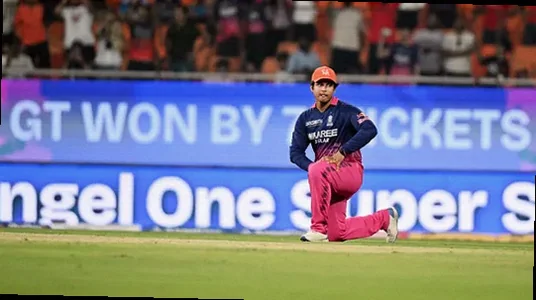
Seven hundred and seventy-six runs. A strike rate of 237.3. Seventy-two sixes. The Orange Cap. And the Most Valuable Player award to boot. Royal Challengers Bengaluru clinched a second straight IPL crown at the Narendra Modi Stadium in Ahmedabad on Sunday night, but the real story was Vaibhav Sooryavanshi, who dominated the evening by sweeping five individual awards in front of a captivated audience. That immediately sparked a much bigger debate: could this be the finest personal season in IPL history?
Key takeaways
- Royal Challengers Bengaluru won their second consecutive IPL title at the Narendra Modi Stadium in Ahmedabad.
- Vaibhav Sooryavanshi finished the season with 776 runs at a strike rate of 237.3, along with 72 sixes.
- In IPL 2024, Sunil Narine delivered a landmark all-round campaign with 488 runs, 17 wickets, and an economy of 6.7.
- Rayudu, Finch and Tom Moody all placed Narine’s 2024 season above other individual peaks while discussing IPL’s greatest-ever debate.
- Before Qualifier 2, Sooryavanshi made 96 off 47 balls versus Gujarat Titans, adding weight to the “more than a six-hitter” argument.
Was Sooryavanshi’s season the IPL’s best-ever?
The conversation is difficult to keep objective because the IPL moves fast and the spotlight shifts quickly. With the drama of IPL 2026 still fresh and constant chatter around Sooryavanshi, comparisons have ranged from parallels with Sachin Tendulkar to even calls for an immediate India debut. Yet it is precisely the scale of what the young prodigy achieved at only 15 years old that makes the accomplishment feel almost unreal.
Even so, the panelists did not want to be swept away by the hype. Ambati Rayudu, Aaron Finch and Tom Moody acknowledged the brilliance and the greatness, but they refused to ignore Sunil Narine’s extraordinary all-round season in IPL 2024—one that played a decisive role in Kolkata Knight Riders securing their third title.
Narine’s 2024 benchmark and why it still wins debates
Narine’s impact in 2024 was staggering: he scored 488 runs at a strike rate of 181 and took 17 wickets with an economy rate of 6.7. For Rayudu, Finch and Moody, that combination remains unmatched as the top individual IPL season to date.
They pointed out that the IPL has seen legendary all-round runs before. Shane Watson, the Most Valuable Player of the inaugural season in 2008, put up 472 runs and grabbed 17 wickets for Rajasthan Royals. But even Watson’s numbers were not enough to move Rayudu away from Narine’s campaign.
Rayudu’s reasoning leaned heavily on context. He stressed that Narine was not a polished top-order batter by trade, and yet was asked to carry a makeshift role at the top against some of the world’s best fast bowling. In Rayudu’s view, Narine’s ability to reshape his game in that setting is what elevated the season beyond many other greats.
Rayudu also compared Narine’s work with David Warner’s iconic 2016 spell. Warner scored 848 runs at a strike rate of 151.42 and guided Sunrisers Hyderabad to their first IPL title, but Rayudu still ranked Narine above him. He said Narine stands out because he had to open the batting despite not being a well-established batter, doing so against high-quality pace. Rayudu added that he believes Narine’s season even surpasses several other celebrated years, including Warner’s, and that the two are “right at the top” for him.
Finch agreed strongly with Narine at the summit. He said Narine was brilliant with the ball, took crucial wickets, and scored important runs, striking at 181 while maintaining an economy of 6.7. Finch highlighted the all-round nature of the job—opening the batting, bowling across phases of the innings, and ultimately winning the title—which he described as the “icing on the cake” for the greatest season.
Moody underlined a different angle: the balance between runs and control. He noted that Narine conceded fewer than seven runs per over in a season where he was scoring at almost 11 runs per over. Moody called him a champion and said the kind of runs Narine produced had “never been seen before,” while also pointing to the rarity of taking 17 wickets while keeping the economy at 6.7.
Where does Kohli’s 2016 season fit?
That led to another comparison—Virat Kohli’s 2016 campaign. Kohli amassed a record 973 runs at a strike rate of 152.03, including four centuries, a benchmark that still stands. Rayudu placed Kohli in third for him, saying he vividly remembers that season and describing it as extraordinary.
Finch, who had faced two of Kohli’s centuries during that run, also agreed Kohli belonged near the top. However, Finch still ranked Warner’s 2016 season ahead of Kohli’s.
Sooryavanshi’s place in the conversation
The panel also discussed whether Sooryavanshi belonged on the same tier. The debate occurred before Qualifier 2, when Sooryavanshi produced a composed 96 off 47 balls against Gujarat Titans. That innings reinforced the idea that he is more than just a big-hitting option.
Finch said Sooryavanshi fits into the discussion, but he was not ready to put the teenager at the very top yet. He compared the impact of Sooryavanshi to Chris Gayle at his peak, pointing out that Sooryavanshi has more sixes than Gayle. Finch said he remembers playing against Gayle in his prime, describing it as though Gayle was batting “on a different planet.” Finch added that the youngster seemed to come in with the confidence that he could chase records immediately—“for breakfast,” as the panel phrased it.
However, Rayudu and Moody identified two key caveats. For Rayudu, the main concern was adaptability. He said that whenever the surface slowed down, Sooryavanshi tended to get out early. In Rayudu’s view, the youngster still needs to prove consistency on slightly tougher pitches.
Moody’s concern was broader and tied to how IPL cricket itself has evolved. He said the league has become increasingly batting-friendly over time due to flatter pitches and the Impact Player rule. He argued that this is now the era of the Impact Player, where conditions are often easier for batters than in earlier years. Moody contrasted the modern environment with the past, when bowlers such as Narine, Amit Mishra and Rashid Khan were able to dominate more frequently. He stressed that this difference is a major factor when comparing players across different IPL eras.
In other words, Sooryavanshi may already be producing one of the greatest seasons the tournament has ever seen—just not the single best, at least for now.
