
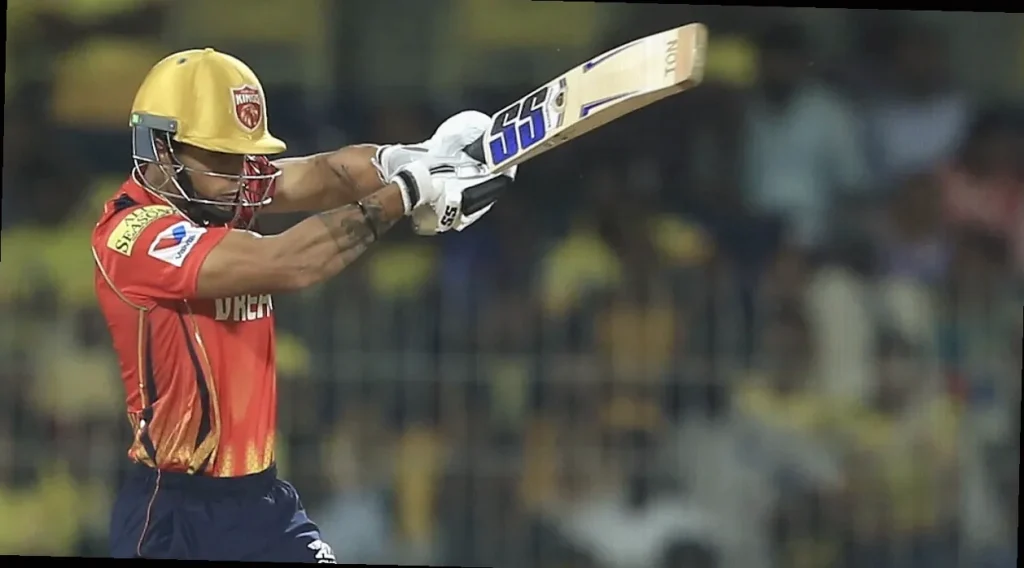
More than a month into IPL 2026, Punjab Kings finally handed Suryansh Shedge a place in the starting XI, giving the young finisher a long-awaited runway at the top level. The call-up also came in a moment when PBKS have been searching for impact from the middle overs and lower down the order—an area where Shedge’s instincts have been steadily sharpening.
How Shedge earned his spot
- IPL 2026 had been underway for over a month when PBKS included Shedge in their initial lineup.
- Breaking through wasn’t straightforward because Marcus Stoinis, with a similar skill set and a blend of international and franchise experience, occupied the kind of role Shedge was chasing.
- PBKS captain Shreyas Iyer played a key part in Shedge’s confidence. The two also shared a leadership connection from the Syed Mushtaq Ali Trophy 2024-25, when Shedge first came into wider focus for his finishing ability.
Speaking ahead of PBKS’ match against Delhi Capitals in Dharamsala on Monday, Shedge said Iyer had told him to avoid overthinking during a PBKS practice game before the tournament began. “I think that stuck with me before the season started… I think he always keeps me on my toes,” Shedge said. “And we talk a lot about cricket: when it comes to technique, when it comes to attitude, and what can both of us do better.”
Guidance also comes from head coach Ricky Ponting. The 23-year-old Shedge described feeling “honoured” to work alongside Ponting, adding that the coach keeps repeating a simple message: “preparation, preparation, preparation – nothing else.” Shedge said Ponting has also pushed him to believe in his own abilities—encouraging him to be brave, commit to the moment, and trust that he belongs in PBKS’ plans.
Recalling a “heart-to-heart talk” with Ponting this season, Shedge described how it happened after the fourth or fifth match. “After the net session, he took me aside. He asked me if I’m frustrated. I said ‘no’ at first. He said, ‘be honest’. So I said, ‘yes, sir. At nights, I do feel it sometimes’,” Shedge said. Ponting then explained that it’s easy to sink into negative thinking, but staying present and focused on preparation is what keeps a player ready when opportunity arrives. Shedge said the conversation helped him significantly: “So I think that talk helped me a lot.”
There was also a clear domestic pathway behind Shedge’s rise. In the 2024-25 Syed Mushtaq Ali Trophy, when he was 21, Shedge played for Mumbai as a finisher and produced three major cameos: 30 not out off eight balls, 36 not out off 12, and 36 not out off 15. Those innings reflected the kind of acceleration T20 cricket demands. The last two came in Mumbai’s quarter-final and final, as the franchise went on to win the trophy.
From domestic finishes to IPL pressure
- Shedge now believes the last two years, including his Under-23 work, have placed him in situations where his team was down 40 or 50 and he had to deliver a key spell of hitting.
- He believes he is not only older but also more seasoned, having learned to capitalise when loose balls and opportunities appear.
- He cited a similar test in his recent PBKS innings against Gujarat Titans, where the start was difficult but the finishing role remained central.
Shedge explained how he has learned to manage game plans when the required run-rate shifts and the match demands immediate intent. “I think in the last two years… if you look at my Under-23 also this year… I’ve been put into situations where we were four down for 40 or 50. And then I had to play that spell and capitalise on the loose balls,” he said.
Last week, the script looked familiar. PBKS were 36 for 4 in the sixth over against Gujarat Titans, just five days after a run of six straight victories in completed matches had ended. In that context, Rashid Khan and Kagiso Rabada—two of the most respected names in modern bowling—were in the opposition attack.
Despite the pressure, Shedge said he stayed calm. He first saw off Rashid when PBKS were in trouble. Then, once the rebuild began and he was settled at the crease—Shedge was 13 off his first 14 balls—he trusted his process and started accelerating.
He credited that development to exposure at higher levels. “I think once you’re exposed to higher cricket, you kind of learn a lot of new things,” Shedge said. “And there [in the Syed Mushtaq Ali Trophy] my role was only [being] the finisher. I only got to bat for a certain amount of time.”
He added that in the GT game he had more time left in the match, which changes how batting preparations should be approached. “If you look at the GT game, I had a lot of time left in the game. So when you’re preparing in the nets, you also have to prepare for that—what if you go into bat early and then you have to spend time there?”
Shedge began the attack by striking Arshad Khan for six. He then produced a sequence of scoring bursts against left-arm spinner Manav Suthar—6, 6, 4, 4, 6—throughout different parts of the ground. The boundaries came in a variety of ways, including two sixes straight down the ground and another over midwicket. He also found the fence through deep cover and deep point, showing both power and range.
His preparation appeared to be working. Shedge brought PBKS closer to a more manageable total, reaching his half-century in 24 balls. He finished with 57 off 29 deliveries in a rescue effort that gave the innings momentum. Although it ultimately wasn’t enough to change the match outcome, Shedge’s impact was clear.
On the transition from domestic cricket to the IPL, Shedge said the fundamentals remain similar, but the mental adjustments are what separate the best performers. “As you progress in cricket, you get the hang of playing in different situations,” he said. “So I think preparation-wise, it’s not much different from what I did two years back. But I think the mindset shift is what gives a player the edge.”
He also credited former India and Mumbai batter Jatin Paranjape, who worked with him on the mindset element. Paranjape’s advice mirrored Ponting’s approach: focus on the present. Shedge said the guidance was simple—when he begins to overthink, reach out and talk through it, whether it’s about cricket or life. “You just need to feel light when your head hits the pillow, and [be] ready for the next [game],” he added.
There is also a structural challenge for finishers in T20 cricket: they receive a limited number of deliveries, the boundary options are spread out, and yet they are expected to take the bowling down from the first ball they face. For Shedge, the journey has not been immediate, even after his domestic success.
Why IPL opportunity took time
For all his domestic performances, Shedge did not immediately receive extended IPL chances. In IPL 2025, he batted three times in five matches and faced just 11 balls, even though PBKS still went on to reach the final.
In IPL 2026, he again had to wait while a more settled PBKS side continued to collect wins. However, Shedge used the time away from regular match action to work on technique and other details. He described a specific adjustment made during the period he spent on the bench—tweaking his initial movement to get the best chance of moving quicker.
During that phase, he said PBKS training also included short-ball work and practice against spin. To build confidence, he broke the process into parts. Instead of overthinking, he went into the nets and spent around 30 minutes focusing purely on watching the ball and hitting, returning to basics without trying to force outcomes.
He believes the biggest improvement is the shift from rehearsed intent to instinctive execution. “That one shift which I made was being instinctive, and not premeditative. I think that has helped me,” Shedge said. “Even in practice, if I’m just instinctive and I let my body take control and I just focus on watching the ball, I think I have better chances of succeeding in the game.”
He noted that sometimes pre-planning still makes sense, such as when there is a set field for wide yorkers or wide lines. But once the bat meets the ball, he stressed the need to remain instinctive. “But when you go into bat, you always need to be instinctive,” he concluded.
With PBKS at a critical moment—having lost three games in a row—Shedge’s role is arriving at the right time. If he can contribute in the way he has been preparing for, he is unlikely to have to return to the bench anytime soon, and PBKS may finally find the finishing edge they have been searching for.
